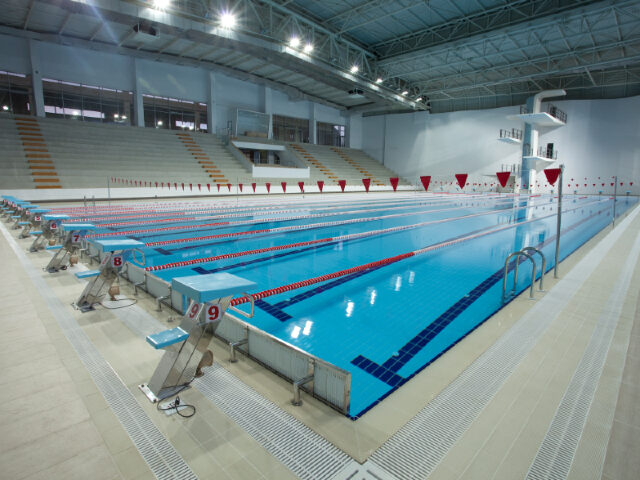

The pipeline to America’s Olympic greatness is imperiled, as spending on college football and basketball programs has led to hundreds of Olympic and other non-revenue-generating programs getting cut.
College sports and the future of Team USA Olympics stand at a crossroads this week as the U.S. House and Senate bring forth two bills for debate that lawmakers hope will empower the NCAA and insulate it from lawsuits while helping to preserve the non-revenue sports that form the talent pipeline for the overwhelming majority of America’s Olympic talent.
But that pipeline has been gutted by a spending race that began in earnest when the two major revenue-generating college sports – football and basketball – began spending more to ensure their competitive position in a post-name, image, and likeness (NIL) world.
While many things in college sports are changing, some are staying the same. Money generated by college football and basketball programs has always “paid the freight” for all of the Olympic and non-revenue-generating programs in a given school’s athletic department.
What’s different now is that the soaring salaries of athletes and coaches have led football and basketball programs to spend far more of what they make.
Following the $2.8 billion lawsuit brought against the NCAA, which ushered in the NIL era, schools were permitted to make payments of up to $20.5 million to athletes. Unsurprisingly, nearly all these payments went to football and basketball players. While the unprecedented distribution of money to student-athletes led to some roster trimming, it didn’t result in program cuts.
This increase in spending on football and basketball has cut dramatically into the funds available to other sports.
As WRAL reports, “Football and men’s basketball generated more than $103 million in revenue at North Carolina during the 2024-25 academic year. They had $66 million in expenses, generating more than $37 million in extra revenue. The Tar Heels are paying football coach Bill Belichick $10 million per season and new men’s basketball coach Michael Malone an average of $8.3 million per season.
“The university’s other 26 sports reported $26 million in revenue and $48 million in expenses. The school also reported $44 million in revenue unrelated to a specific sport with more than $73 million in expenses.”
What do those vast financial discrepancies look like on a national scale?
“More than 415 college teams have been cut, merged or reclassified since March 2024, according to one report due to financial strains,” WRAL reports. More than 40 Division I Olympic sports programs — including swimming, tennis and track — were cut between May 2024 and July 2025, according to Bloomberg Law. Arkansas, from the mighty Southeastern Conference, recently cut its men’s and women’s tennis teams only to reinstate them after donors rallied with short-term funding.”
Those program losses are catastrophic, given that 40 percent of Team USA Olympians who participated in the 2026 Winter Olympics were current or former NCAA athletes.
The impact is even more grim for U.S. athletes competing in the Summer Games, with 65 percent of Team USA composed of current or former NCAA athletes.
The best hope for legislative assistance to avert the coming Olympic disaster lies with the Cruz-Cantwell legislation. A bipartisan bill sponsored by U.S Sens. Ted Cruz, R-Texas, and Maria Cantwell, D-Washington, that attempts to bridge the partisan divide of the SCORE Act, which is viewed as dead on arrival in the Senate.
President Trump has been vocal in his demand for congressional action, saying, “This chaotic state of affairs has undermined competition, reduced opportunities for student-athletes, and jeopardized support for the current range of college athletics, particularly women’s and Olympic sports,” Trump said in his April executive order detailing his proposal to “Save College Sports.”
COMMENTS
Please let us know if you're having issues with commenting.