More Student Protests Break Out in Iran as Reports Suggest U.S. Military Strikes
A fresh round of protests broke out in Iran on Saturday as student demonstrators clashed with the regime’s thuggish Basij militia.
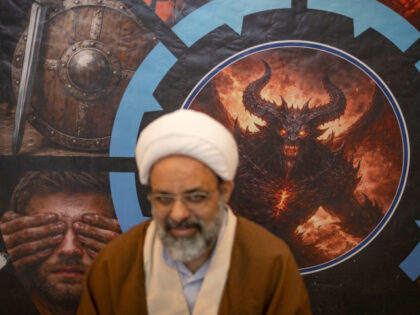
A fresh round of protests broke out in Iran on Saturday as student demonstrators clashed with the regime’s thuggish Basij militia.
A two-day crackdown that new reporting says killed as many as 36,500 Iranians — a death toll placing it among the deadliest short-term mass killings documented in modern history — followed an order by Iran’s Supreme Leader Ali Khamenei to mercilessly crush nationwide protests “by any means necessary,” including accounts of wounded civilians executed inside hospitals, living victims stuffed in body bags, and a surgeon who described the scenes as a “nightmare” unlike anything he had seen.
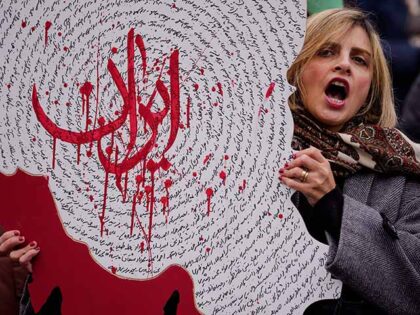
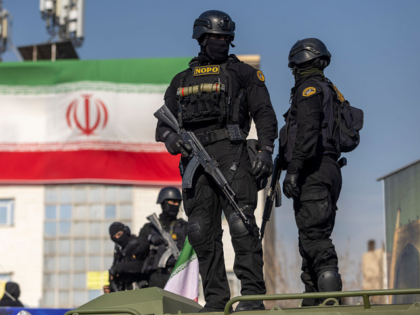
Residents of Iran’s capital of Tehran told Radio Free Europe/Radio Liberty (RFE/RL) on Monday that the city remains under “virtual martial law” after last week’s murderous crackdown on protesters, with a heavy security presence rolling through the largely-deserted streets.
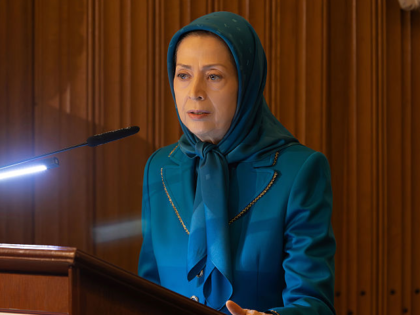
Iranian opposition leader Maryam Rajavi warned that the Islamic Republic’s escalating violence against protesters has exposed a regime under strain — but not one on the verge of collapse — arguing that Tehran will not fall through foreign military intervention or external pressure alone, but only through an organized, nationwide resistance capable of dismantling its repressive core.
Protests against the Iranian theocracy spread to most of Iran’s 31 provinces as of Tuesday, including cities that have long been seen as firmly loyal to the ayatollah.
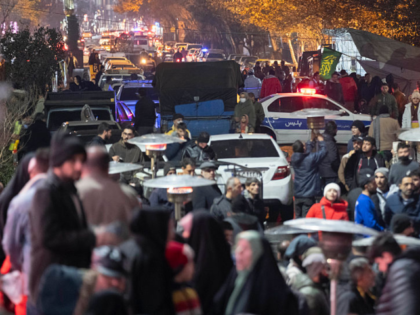
The Iranian theocracy was utterly humiliated by Israel and the United States during what President Donald Trump christened the “12-Day War,” and reports indicated this week that the regime is unsurprisingly taking out its frustrations on its own people.
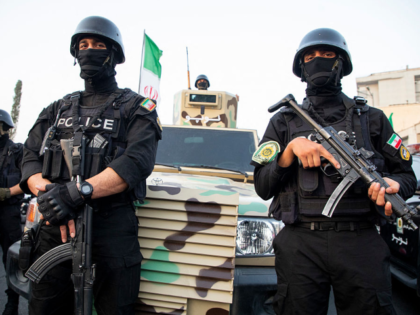
Mehri Talebi Darestani, head of the Women and Family Department of the ominous Headquarters for the Promotion of Virtue and Prevention of Vice in Tehran, announced on Wednesday that a “hijab removal treatment clinic” will be created to provide “scientific and psychological treatment” for women who refuse to obey Iran’s harsh headscarf laws.
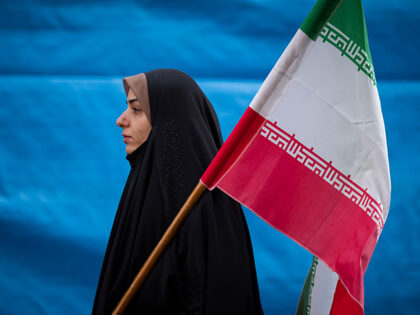
Mint Sandstorm, the suspected Iranian state hackers who stole a trove of emails from several of former President Donald Trump’s campaign staffers this spring, reportedly succeeded in getting some of the pilfered documents published this fall, Reuters reported on Friday.
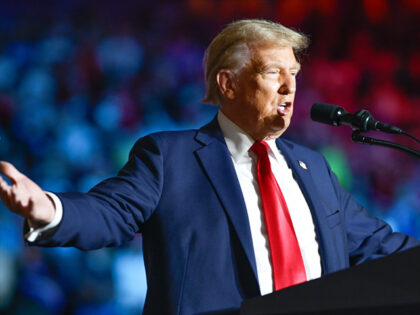
Over a dozen people were killed across Iran on Tuesday and Wednesday, as the anniversary of the momentous November 2019 protests dovetailed with the massive demonstrations against Iran’s harsh hijab laws and the killing of Mahsa Amini, a young woman accused of violating them.
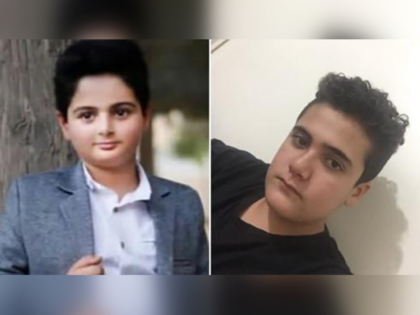
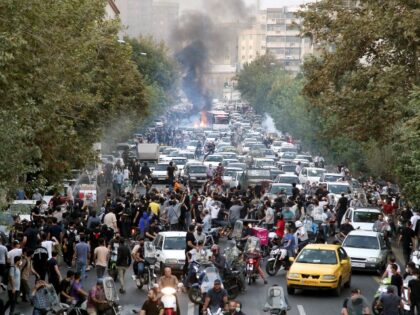
Protests in Iran over the killing of a young Kurdish woman for not wearing her headscarf properly continued to spread on Thursday, despite an increasingly brutal crackdown from the theocratic regime.
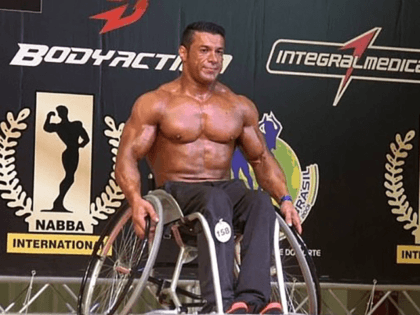
The Iranian regime arrested Paralympian athlete Reza Tabrizi on Tuesday because he dared to question the government’s response to the Wuhan coronavirus, specifically the decision to keep religious shrines open while shutting down fitness facilities.
Iran’s Islamic Revolutionary Guard Corps (IRGC), the designated terrorist force controlled by the theocratic side of the Iranian regime, reportedly announced this week that it has formed paramilitary “strike teams” to suppress protests in the national capital of Tehran and the oil-rich province of Khuzestan.
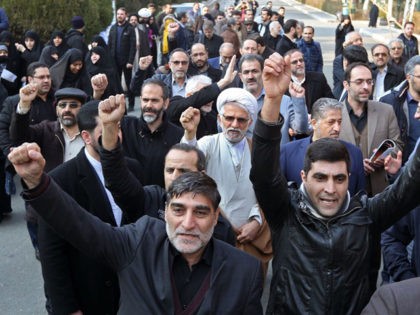
Iranian security forces rushed to suppress a new wave of demonstrations across Iran on Thursday and Friday. The regime is clearly nervous about a possible repeat of the 2019 protests, which featured some of the same grievances and defiant slogans.
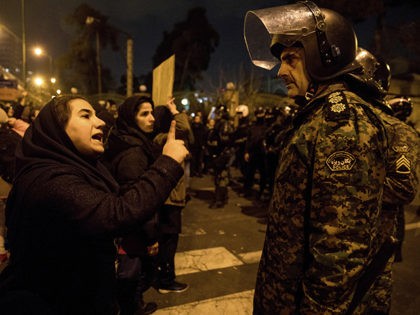
Iranian media on Friday reported the deaths of Hossein Sheikholeslam, formerly ambassador to Syria and an adviser to Foreign Minister Mohammad Javad Zarif, and Mohammed Haj Abolghasemi, an intelligence officer and commander in Iran’s brutal Basij paramilitary unit, a division of the designated terrorist organization known as the Islamic Revolutionary Guard Corps (IRGC).
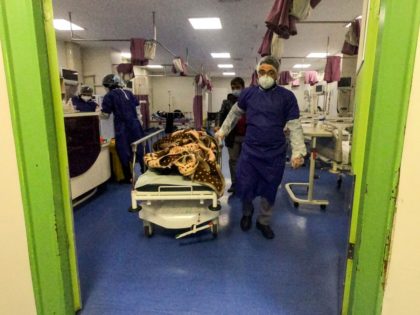
Amnesty International said on Tuesday that Iranian security forces have killed at least 106 civilians in 21 cities during five days of protests, and there are “some reports suggesting as many as 200 have been killed.”
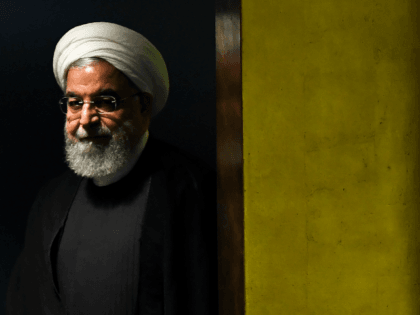
Iran on Tuesday claimed “calm has been restored in the country” following protests triggered by a massive hike in gasoline prices, but the Internet remained down and the Islamic Revolutionary Guard Corps (IRGC) announced it was mobilizing half a million members of a brutal paramilitary force known as the Basij to control the streets.
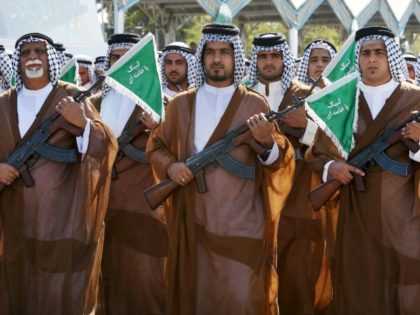
Iran will “slap” the United States by defeating new sanctions targeting the Islamic Republic, the country’s supreme leader warned Thursday.
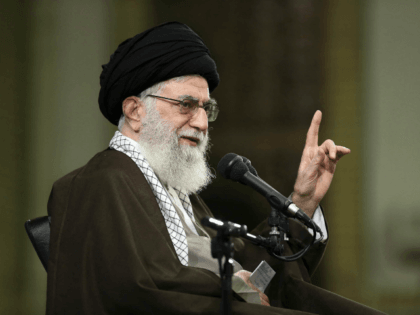
A video has surfaced on social media showing a former member of Iran’s Basij militia burning his ID card in solidarity with the people of Iran and against the Islamic Regime.
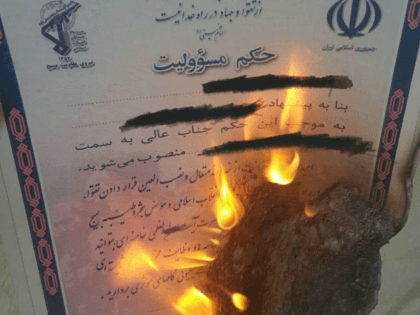
A video surfacing on social media appears to show protesters in Iran apprehending an Islamic Revolutionary Guard Corps (IRGC) member and taking his pants off amid increasingly violent protests against the regime.
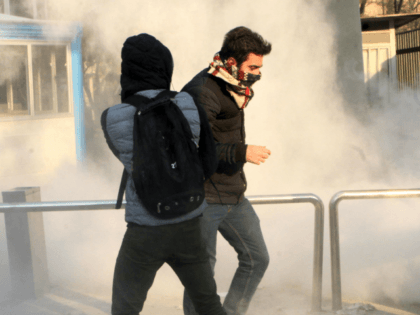
The former leader of the student branch of the Islamic Republic of Iran’s Basij forces, who arrived in the United States to work as a medical scholar at a prominent Boston hospital, was deported back to Iran on Thursday after being detained at Logan International Airport.
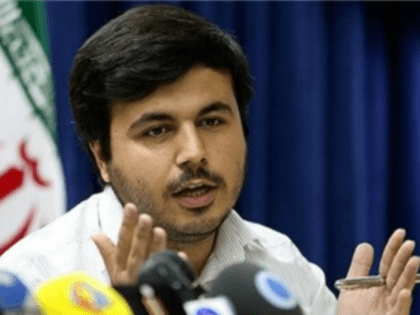
Iran arrested more than thirty men between the ages of 16 and 30 at a private party in Isfahan last week, all of whom are suspected of being homosexuals.
The Basij, Iran’s paramilitary forces, this week awarded President Trump their 5th annual “Wet Gunpowder Award” for being the most “anti-Iranian” and “wicked.”
The United States’ sent Iran $400 million in debt plus $1.3 billion in interest, and the money was disbursed as a ransom payment for four American hostages of the Islamic regime, a top Iranian commander said Wednesday afternoon. Therefore, the U.S. paid the Iranian regime $425 million dollars per American hostage, according to the commander.