Report: Google Failed to Disclose ‘Secret’ Microphone in ‘Nest’ Home Security System
Google reportedly failed to disclose a “secret” microphone featured on its home security product, Nest Secure.

Google reportedly failed to disclose a “secret” microphone featured on its home security product, Nest Secure.
According to the Washington Post, Facebook is in the process of negotiating with the FTC over a multi-billion dollar fine that would settle the agency’s investigation into Facebook’s privacy breaches.
Amazon founder and Washington Post owner Jeff Bezos launched a tirade against the invasion of his privacy, last week, after the National Enquirer reportedly obtained private images of the billionaire. Bezos’ company Amazon, however, helped create the culture of invasion of privacy he now protests.

Google reportedly hosted a “malware” app on its Google Play store that stole users’ cryptocurrency, leading tech site Ars Technica to claim the company “can’t be trusted to proactively keep malware out of Play.”

Germany’s antitrust regulator, the Bundeskartellamt, is cracking down on Facebook over its collection of user data. The agency promises, “Facebook will no longer be allowed to force its users to agree to the practically unrestricted collection and assigning of non-Facebook data.”

A new Facebook feature will roll out at the end of February will reveal to users why advertisers were given their contact information.

Popular iPhone apps, including Expedia, Abercrombie & Fitch, and Air Canada, are reportedly secretly recording users’ screens.

14-year-old Grant Thompson, who found the recent Apple FaceTime bug that allowed users to spy on others before a call had been answered, could reportedly receive a financial “bug bounty” from Apple for identifying the problem.

Facebook has reportedly been paying teenagers to install a “Facebook Research” VPN, which allows the social network company to “suck in all of a user’s phone and web activity,” while skirting Apple’s developer rules.
Mozilla Firefox announced the introduction of anti-tracking privacy settings in its browser, Tuesday.

A bug in Apple’s FaceTime allowed users to spy on others before their call had been answered, transmitting both audio and video from the call recipient’s device without their knowledge, according to a report.

Facebook’s decision to merge Facebook with Instagram and WhatsApp has “implications for privacy,” according to a report.
The Senate has passed a bill – with only a voice vote and no debate – during the Christmas holiday season that parent activists say will essentially create a “de facto national database.”

Amazon may have used data from Facebook users, which was given to the company as part of a secret data-sharing partnership, to better enforce its rules, according to a report.

An “error” granted a man who uses Amazon’s Alexa voice assistant access to another user’s 1,700 voice recordings, according to a report.

China now requires tech companies to keep “detailed records” of user activity, according to a report.

The U.S. Postal Service has reportedly exposed the data of 60 million users due to faulty web programming.
Playboy has announced its departure from Facebook, removing its collection of pages, following user data mishandling allegations against the social network.

Professor Tim Wu, a former advisor to the Federal Trade Commission (FTC), has claimed “privacy” is “like kryptonite” to Facebook’s business model.

Facebook’s Android app has been collecting data on its users’ phone calls and texts outside of the platform, prompting privacy concerns from consumers who didn’t know just how far Facebook’s data collection efforts really go.

Despite evidence suggesting that Facebook has been unable to properly look after user data, Facebook CEO Mark Zuckerberg has insisted that the company will investigate itself.
Turkish people who went online to download some of the most popular software available on the market instead received government spyware, according to a report.

Best Buy’s Geek Squad tech support service has been accused of having a “close relationship” with the FBI, allegedly taking money in return for information and evidence of customers’ criminal activity, according to a report.

Chinese gaming company Kunlun’s acquisition of popular gay dating app Grindr has prompted privacy concerns.

A former Twitter engineer claimed “there is no way” to protect users if their private information harvested by the company gets into the “wrong hands.”

Clay Haynes, a senior network security engineer at Twitter, claimed the company “disturbs him,” and called it “creepy Big Brother” during a secret recording made by Project Veritas as part of their investigation into the company.
Pranay Singh, a direct messaging engineer at Twitter, claimed in a Project Veritas undercover video that every private message users send on the platform is stored on his server, even if you delete them.
VTech, the Chinese electronics manufacturer of children’s toys and games, has been fined $650,000 after failing to protect the privacy of their young tech users.

A security vendor has discovered a massive searchable database of 1.4 billion stolen credentials on the dark web, according to a report.

Nearly $64 million in bitcoin has been stolen following a hack that affected “bitcoin mining marketplace” NiceHash.

Apple’s iPhone X shares face scan data with third-party app makers, prompting privacy concerns.

Uber, Tinder, Snapchat, Twitter, and other top apps have allegedly been secretly tracking users, according to a report.
Only five percent of Amazon Prime customers “definitely” want to buy the company’s new Amazon Key, which allows couriers to deliver packages inside your home, according to a survey.
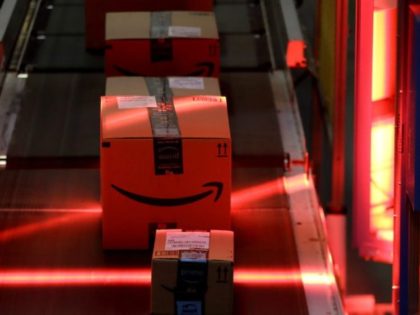
Amazon has revealed its new Amazon Key service, which will allow couriers to enter your home and drop off your package inside, even if you are not there.
After a journalist asked Tinder to send her all the personal data that the company had stored on her, she received 800 pages of information, according to a report.
Equifax accidentally encouraged people to use the wrong website to check if their personal information was included in a massive security breach on numerous occasions.

Despite the fact that search engines such as Google keep user search data for long periods of time, the data retention does not improve search result quality, according to a report.
An online chatbot which was originally created to help users overturn parking tickets could be used by those affected by the Equifax data breach to help sue the company for up to $25,000.

Malware could potentially be hosted on the Federal Communication Commission’s official website due to a security vulnerability, according to a report.

Health care company Aetna potentially revealed the HIV status of thousands of customers after sending out letters with their details clearly visible through the envelope window.