Trump’s Tariffs Are Working: Trade Deficit Narrows To Smallest Since 2009
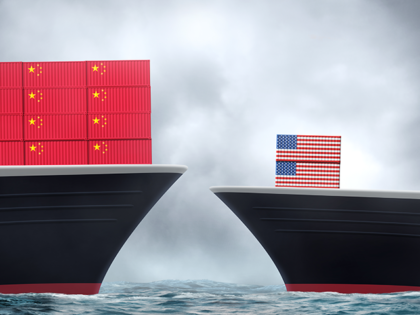
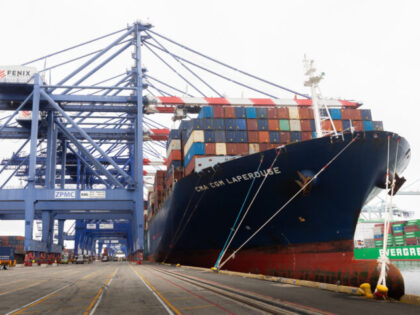
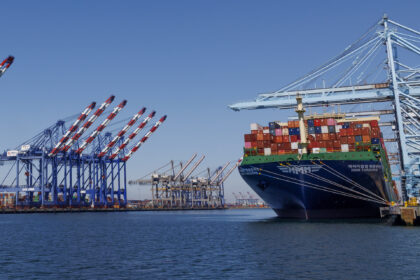
This is the third straight monthly decline in the trade deficit, suggesting that changes to U.S. tariff policy are driving deep changes in the global economy.

This is the third straight monthly decline in the trade deficit, suggesting that changes to U.S. tariff policy are driving deep changes in the global economy.

Each year, more of what Americans buy is made abroad, and more of what Americans earn comes from borrowing that replaces the income lost to trade. The system sustains itself not through productivity but through the continual creation of dollar assets.

The U.S. fiscal deficit is the mirror of the trade deficit. Attempts to close one without addressing the other merely shift the imbalance around the balance sheet.

Trump’s critics insisted tariffs would be the spark that lit a global trade war. But the trade war never arrived.

The U.S. trade deficit surged in July to its highest level in four months as American businesses rushed to import goods ahead of expected tariff increases, the Commerce Department said Thursday.

South Korea’s central bank, the Bank of Korea (BOK), estimated on Friday that North Korea’s economy grew by 3.7 percent in 2024, its fastest rate of growth in eight years.

A new working paper asks what would have happened if the country had heeded Pat Buchanan’s warnings about unchecked globalization and adopted his trade policies sooner.

Steep drop in consumer goods imports likely to boost second-quarter GDP.

Japanese Prime Minister Ishiba Shigeru said on Tuesday he found it “deeply regrettable” that President Donald Trump announced he would impose reciprocal tariffs of 25 percent on exports from Japan.

After the pre-tariff surge in March, imports crashed in April.

When Trump calls for tax cuts to boost American growth, we can debate their fiscal merits; but let’s not pretend they’re a guaranteed path to trade imbalance. The theory behind that claim is old, contested, and, in many cases, simply wrong.

Many economists have successfully challenged the idea that budget deficits lead to higher trade deficits.

Tariff front-running led to a historic surge in imports in March.

On Monday’s broadcast of the Fox Business Network’s “Kudlow,” Treasury Secretary Scott Bessent defended using trade deficits to calculate tariffs and stated that the trade deficit is “a result of the terms of trades, it’s a result of our budget

On Monday’s broadcast of the Fox Business Network’s “Kudlow,” host Larry Kudlow said that he doesn’t really think using trade deficits to calculate tariffs is a good idea and that if the Trump administration gets tax cuts and deregulation, it

Taiwanese President William Lai Ching-te proposed zero tariffs, lower trade barriers, and more investment in the United States in response to Trump’s tariffs.

EU Commission President Ursula von der Leyen said on Monday that the bloc has offered a “zero-for-zero tariff” trade arrangement on industrial goods with the United States in a bid to avoid a full-on trade war.

America’s trade deficit with the European Union ballooned to over $215 billion last year as U.S. exports decreased and imports from the bloc increased, a trend that President Donald Trump seeks to reverse.

Rather than reversing the U.S. trade deficit, D.C. policymakers have allowed it to expand while simultaneously increasing the role of government to compensate for the damage it causes.

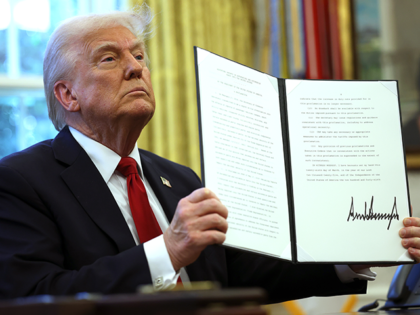
President Donald Trump signed a memorandum Thursday announcing that he would introduce a plan to impose reciprocal tariffs on all countries that tariff U.S. exports.

A much larger drop than expected after the port strike was put on hold until next year.

Indian Foreign Minister Subrahmanyam Jaishankar said on Sunday that India is not “nervous” about Donald Trump’s return to the White House.

It has been much higher under Biden-Harris.

A growing trade deficit usually means the budget deficit will grow also as government payments are needed to fill the hole in the economy created by unbalanced imports.

President Joe Biden’s State of the Union (SOTU) speech included a brief mention of China, but the language was carefully trimmed to avoid saying anything that might offend Beijing, beyond the most cursory mention of Taiwan.

The trade deficit has been higher in each year of Biden’s presidency than it was under any of his predecessors.

The South Korean Foreign Ministry said Tuesday that high-level diplomats from South Korea and Italy met in Rome to discuss enhanced bilateral cooperation on economic and security issues.

The trade gap with the rest of the world increased to $74.6 billion in April.

Exports of goods for February were $167.8 billion, $6.7 billion less than January exports. Imports of goods for February were $259.5 billion, $6.2 billion less than January imports.

China’s trade deficit with Russia tripled in 2022, a report revealed on Friday, thanks in part to skyrocketing energy prices that made Russia’s discounted oil and gas irresistible to Chinese buyers.

The nation’s trade deficit widened 5.4 percent in October to a four-month high of $78.2 billion, data from the Commerce Department showed Tuesday.

The stronger dollar hurt exports but imports fell by even more.

A strong dollar and weakening demand for imports sent the trade deficit tumbling in July.

The U.S. trade deficit rose an astonishing 22 percent in March to $109.8 billion.

After a record high in February, economists through the trade deficit in goods would shrink. Instead, it rose to a new record high in March.

Imports rose while exports fell, pushing the trade deficit up to $89.7 billion at the start of the year.

During the State of the Union Address on Tuesday night, President Joe Biden announced that products will be manufactured and bought in USA.

And they wonder why the ports are clogged.

A huge surge in imported goods pushed the deficit back to the record set in September.

President Joe Biden declared he has the “strongest first-year economic track record of any president in the last 50 years.”