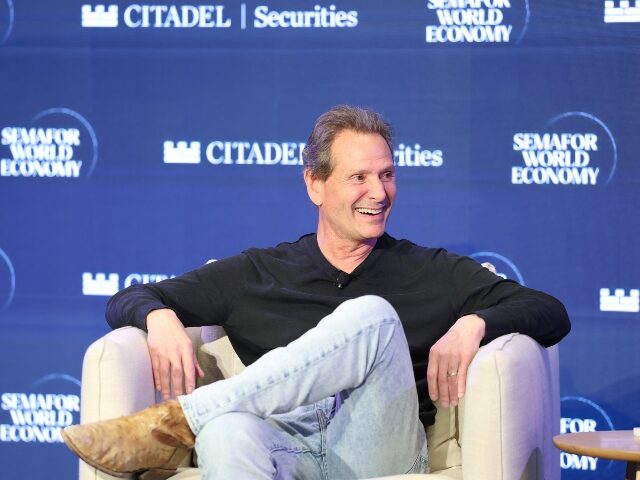

Verizon’s CEO is taking an unusually candid approach to discussing AI’s potential to disrupt the American workforce, setting himself apart from many of his corporate peers.
The Wall Street Journal reports that Dan Schulman, who became CEO of Verizon in October, has made waves in the business community with his frank assessments of how artificial intelligence could reshape employment in the coming years. Unlike many corporate leaders who emphasize the technology’s benefits while downplaying workforce concerns, Schulman has been direct about the challenges ahead.
In his first months leading the telecommunications giant, Schulman has made bold predictions about AI’s impact on jobs. He has forecast that unemployment could reach 20 to 30 percent within the next two to five years and has cautioned that advances in humanoid robotics might threaten even manual labor positions currently considered secure. His approach includes advocating for expanded education and reskilling initiatives to help workers navigate the technological transformation.
Central to Schulman’s message is a call for other chief executives to be honest about the disruption that AI will bring. He argues that candor is essential to avoid public backlash against the technology and its implementation.
“It’s a very difficult time, and everyone knows it is,” Schulman said in an interview with the Wall Street Journal. “So I think being authentic, being realistic, telling the truth, as best you can” is key. That belief, he said, is why Verizon created a $20 million career-transition and retraining fund for the “age of AI” when the company began laying off 13,000 workers last year.
This transparent approach contrasts sharply with messaging from other prominent technology executives. Nvidia CEO Jensen Huang recently dismissed concerns about job losses, stating that technological advancement historically brings greater productivity and prosperity. Amazon CEO Andy Jassy has similarly suggested that while some positions may be eliminated, new jobs will emerge to replace them.
Public sentiment reflects concerns about how AI will impact jobs. A Quinnipiac University survey of 1,400 American adults in March found that 55 percent believe AI will cause more harm than good, an increase from 44 percent in the previous year’s poll.
Schulman’s transparency has coincided with major organizational changes at Verizon. The 13,000 layoffs announced shortly after his appointment represented the company’s largest workforce reduction ever, part of an effort to eliminate $9 billion in costs. Verizon has stated these cuts were not AI-related but were necessary to make the organization more efficient and less bureaucratic.
Beyond cost-cutting, Schulman envisions AI fundamentally transforming Verizon’s operations, from customer service improvements to more personalized consumer offerings. He has urged employees to embrace the technology and has personally used AI tools to analyze thousands of employee responses about reducing bureaucracy.
In an unusual move, Schulman has encouraged staff to experiment with AI in personal ways, including asking children about it at dinner and using the technology to write poems for loved ones. He has even suggested employees ask AI to compose their obituaries to better understand how the technology works.
“Like it or not, we live in the age of AI. I happen to like it,” Schulman said in the interview. “It’s like we all wanted to live in the Renaissance or, like, when fire was first invented—how cool would that be? We’re in that stage. We’re just not appreciating it for what it could be.”
Schulman predicts that AI could achieve human-level capability, known as artificial general intelligence or AGI, by the end of next year, an earlier timeline than most industry forecasts. He expects quantum computing and humanoid robots to follow shortly thereafter, bringing further transformation.
“That’s definitely the world that we’re in right now,” Schulman said. “It’s really fast, fast changing.”
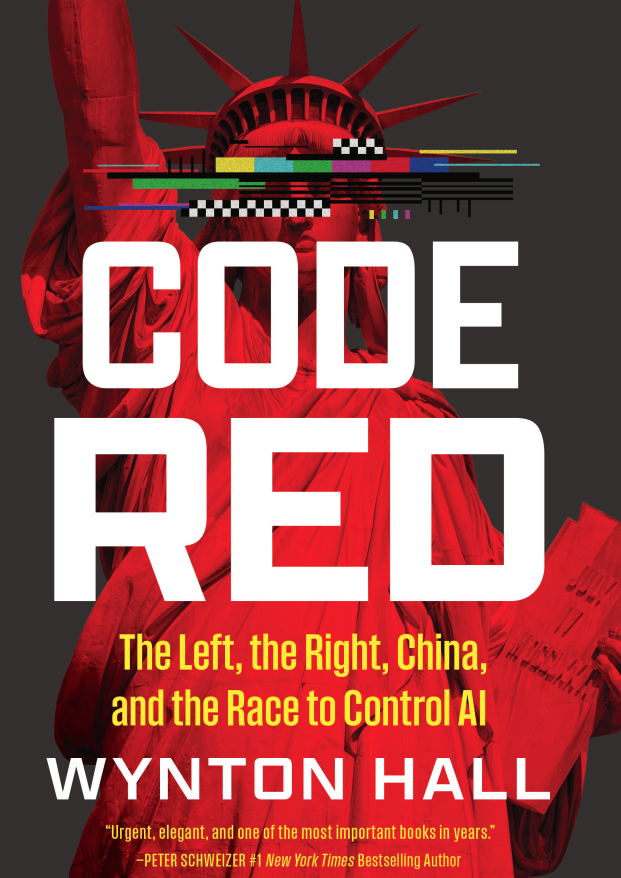
The instant bestseller Code Red: The Left, the Right, China, and the Race to Control AI, written by Breitbart News social media director Wynton Hall, serves as a blueprint for conservatives to create effective policies around AI not only for the nation, but also their family. This becomes even more crucial as newer and more powerful AI systems hit the market and CEOs attempt to cut jobs by replacing them by chatbots.
Senator Marsha Blackburn (R-TN), who was named one of TIME’s 100 Most Influential People in AI, praised Code Red as a “must-read.” She added: “Few understand our conservative fight against Big Tech as Hall does,” making him “uniquely qualified to examine how we can best utilize AI’s enormous potential, while ensuring it does not exploit kids, creators, and conservatives.” Award-winning investigative journalist and Public founder Michael Shellenberger calls Code Red “illuminating,” ”alarming,” and describes the book as “an essential conversation-starter for those hoping to subvert Big Tech’s autocratic plans before it’s too late.”
Read more at the Wall Street Journal here.
Lucas Nolan is a reporter for Breitbart News covering issues of AI, free speech, and online censorship.
COMMENTS
Please let us know if you're having issues with commenting.