Golden Age: Consumer Sentiment Rises as Fears of Tariff-Led Inflation Fade
After five months of better than expected inflation reports, Americans are no longer worried about a tariff-led price surge.

After five months of better than expected inflation reports, Americans are no longer worried about a tariff-led price surge.

Waller says that tariffs will not create lasting inflation and the Fed should cut at its meeting later this month.

Coca-Cola decision in 1984 to use high-fructose corn syrup instead of real cane sugar was caused by Cold War diplomacy, subsidized overproduction, and a technological leap that turned surplus grain into shelf-stable sweetener.

Economists keep underestimating the strength of the U.S. economy.

June data show falling import prices despite rising inflation, pointing to tariff absorption abroad.

U.S. import prices rose modestly in June, suggesting little evidence of inflationary pressure from foreign-sourced goods, according to data released Thursday by the Bureau of Labor Statistics. The import price index increased 0.1 percent last month, following a downwardly revised

The June Producer Price Index (PPI) delivered another blow to the inflation hawks who insist tariffs are driving up prices.

Since February, the price of eggs has fallen by 61.2 percent. By contrast, in the final months of Joe Biden’s presidency, the price of eggs rose by 227.1 percent.
Prices paid to American businesses for goods and services held steady in June, defying predictions that tariffs would create inflationary presssures in the U.S. economy.

June’s CPI data showed what tariffs can do and what they haven’t done. They’ve jiggled a few prices, but they haven’t unmoored the economy.

Consumer prices continue to defy predictions that tariffs would create inflationary pressures.

If you were trying to make tariffs look like a policy disaster, you’d do exactly what a team of economists at the Federal Reserve Bank of San Francisco just did: assume every trading partner hits back just as hard and that America just stands there and takes it.

The Trump administration is turning up the heat on Fed chairman Jerome Powell.

The S&P 500 is up 25 percent since the Liberation Day sell-off.

One of the best kept secrets in the world today is that Americans are feeling far better about the economy than they have in years.

The $27 billion surplus reported Friday by the Treasury Department stood in stark contrast to forecasts for a $50 billion deficit, representing one of the largest upside surprises in recent budget data.

President Donald Trump said Thursday that the U.S. will impose a 35 percent tariff on goods coming into the US from Canada. The tariff will take effect on August 1.

In a recent series of Truth Social posts, the president made the case that the strength of the U.S. economy justifies lower interest rates.

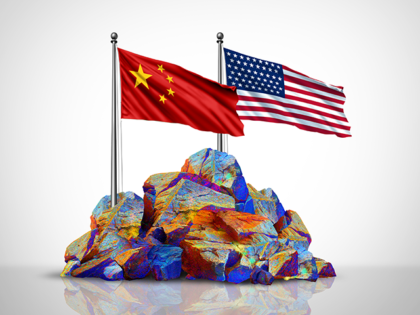
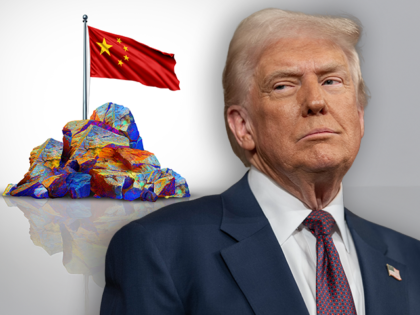
The Trump administration is deepening its effort to sever U.S. reliance on Chinese rare earth supplies, committing $400 million in equity financing to MP Materials Corp. as part of a broader plan to expand domestic production of rare earth magnets used in advanced weapons systems and industrial technologies.

If you were wondering how Federal Reserve officials view Donald Trump’s tariff plans, the latest Federal Open Market Committee (FOMC) minutes make one thing perfectly clear: they all think tariffs are inflationary.

When Superman first appeared in Action Comics #1 in 1938, America wasn’t grappling with border policy or multiculturalism. It was staring down something more existential: a collapse in fertility.

President Donald Trump said Tuesday he plans to impose a fifty percent tariff on copper imports as part of a new wave of industry-specific trade measures, while suggesting pharmaceutical manufacturers may receive at least a year’s reprieve before facing steep

President Donald Trump on Tuesday reaffirmed that a new round of tariffs will take effect on August 1, brushing aside earlier signals of flexibility and warning trading partners that no further delays will be granted. “TARIFFS WILL START BEING PAID

The intellectual scaffolding for Trump’s tariff policy is now in place, built not by political appointees but by credentialed economists with publication records.

President Donald Trump on Monday announced new tariff rates for South Africa, Laos, Myanmar, Malaysia, and Kazakhstan, posting letters to the leaders of each country on his Truth Social account.

President Donald Trump on Monday sent letters to the leaders of Japan and South Korea announcing that each will face a 25 percent tariff on goods exported to the United States.

President Donald Trump said late Sunday that imports from countries aligning with “the Anti-American policies of BRICS” would face an additional ten percent tariff.

Strip away the noise and the June jobs report tells a clear story. The economy is still adding jobs. But it’s doing so in a new way.

Compared with the start of the year, foreign-born employment is down by over half a million workers and American-born employment is up by over two million.

Employers in the United States added 147,000 workers to their payrolls in June, the Department of Labor said Thursday, and the unemployment rate declined to 4.1 percent, defying predictions of labor market sluggishness following the implementation of President Trump’s tariffs.

The critics said tariffs would start a trade war. Instead, Donald Trump may have just ended one.

Vietnam runs a very large trade surplus with the U.S. and a trade deficit with China, essentially recycling dollars from the U.S. into China.

The ADP report was expected to show a gain of 100,000. Instead, it showed a sharp contraction in employment for June.

It’s been a good start to the year for Breitbart Business Digest.

Andy Jassy, Amazon’s chief executive, said Monday that newly enacted tariffs on Chinese goods have not led to meaningful price increases on the company’s platform, joining a growing body of evidence suggesting that recent trade measures have not produced the

The S&P Global US Manufacturing Purchasing Managers’ Index (PMI), a closely watched gauge of economic activity, climbed to 52.9 in June from 52.0 in May.

U.S. job openings rose more than expected in May, led by strong demand in the private sector, even as federal job postings and hires fell sharply.

The Home Depot–GMS deal shows us that forward-looking firms are planning for a world where labor is scarce, immigration is limited, and scale is king.

Texas business leaders say prolonged economic policy uncertainty and high interest rates are weighing heavily on investment, hiring, and overall growth, according to the latest Texas Business Outlook Surveys released by the Federal Reserve Bank of Dallas. More than 300

Businesses will be able to immediately deduct 100 percent of the cost of new “qualified production property,” including newly built American factories.