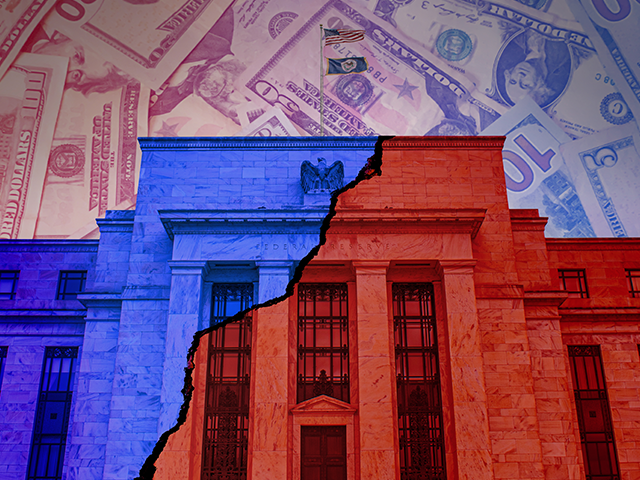
Can a Fed House Divided Stand?
Americans tend to think of the Federal Reserve as having a single pilot.
The Fed chairman speaks, markets convulse, and interest rates move. It feels like a tidy hierarchy: one office, one steering wheel.
The statute books tell a messier story, one that normally stays hidden because the institution prefers consensus. But a confirmation standoff now brewing in Washington could expose a structural seam Congress built into the Fed nearly a century ago.
At the center is a simple, under-appreciated fact: the office everyone assumes controls the traditional lever of monetary policy is not the office Congress actually empowered to do so. And beneath that is a trickier, and even more under-appreciated fact: that the traditional lever of monetary policy is not controlled by the same office that controls the actual operational lever of monetary policy.
Confused? You are not alone.
There Are Two Fed Chairs
Under the Federal Reserve Act, the president nominates—and the Senate confirms—the Chairman of the Board of Governors. That role runs the Washington headquarters: regulation, supervision, institutional management, and the Fed’s congressional interface.
But interest-rate policy—the lever markets obsess over—belongs to a different statutory creature: the Federal Open Market Committee (FOMC). The FOMC directs open-market operations and, by law, elects its own presiding officer. Confusingly, this role is also called chairman.
The distinction between the chairman of the Fed Board and the chairman of the FOMC has never mattered in practice because the system assumes smooth confirmations and internal alignment. In the Fed’s modern history, the FOMC has always chosen the sitting Board chairman to be its chairman as well. Politics, however, has a habit of stress-testing assumptions.
What Happens if The Board Chair Is Vacant?
Enter Senator Thom Tillis (R-NC), who has publicly said he won’t support confirming a Trump nominee to lead the Fed while a Justice Department investigation involving Fed Chair Jerome Powell remains unresolved. (That investigation is tied to Powell’s testimony on the Fed’s headquarters renovation.) Whether one sees this as institutional defense or political brinkmanship is beside the point. The practical implication is unmistakable: the Senate confirmation pipeline could freeze.
Now imagine the clock runs out on Powell’s chairmanship without a confirmed successor. Judging by the statements of Sen. Tillis and others, there appears to have developed in the nation’s capital a folklore version of the Federal Reserve Act in which Powell would remain chair if no one else is confirmed. But that’s not how the statute works. Fed governors can hold on to their seat until a successor is appointed but the chairman loses his as soon as his term expires.
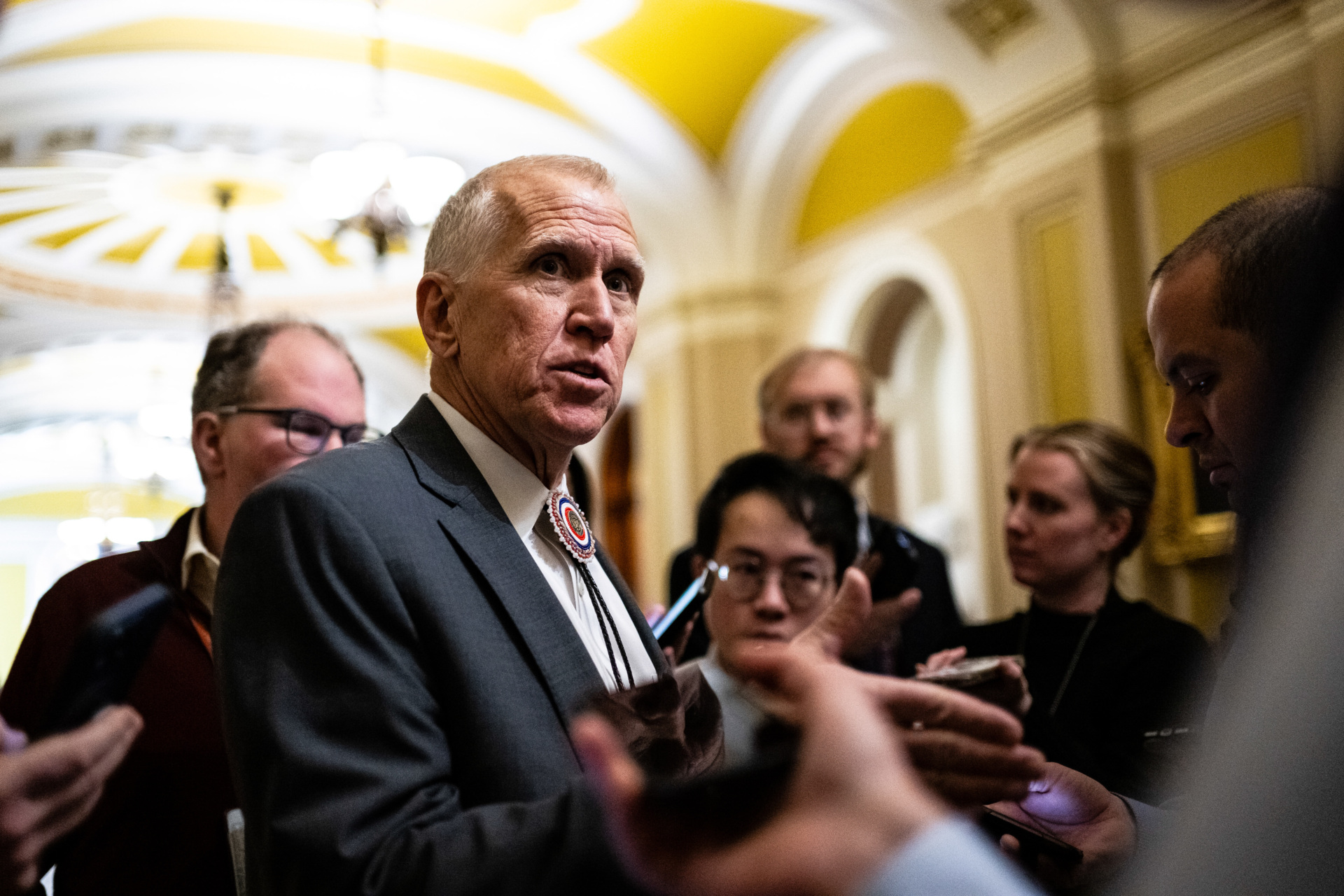
Senator Thom Tillis (R-NC) speaks to the press at the U.S. Capitol in Washington, DC, on Jan. 30, 2026. (Graeme Sloan/Bloomberg via Getty Images)
So, who becomes chairman of the Board if a delay causes a vacancy? The law says that the Board itself elects a temporary chair if the sitting chair is absent. But that’s meant to handle what happens in the case of a temporary absence. Perhaps the chairman is sick or traveling. In the case of a vacancy, the law is silent.
There were three times in recent years in which a vacancy temporarily arose. The most recent occurred during Jerome Powell’s term. President Biden had nominated Powell for a second term, but the Senate hadn’t confirmed him before his first term expired. In that case, the Board voted to keep Powell as temporary chair until his nomination. Almost the same situation occurred when there was a confirmation gap between Alan Greenspan’s terms. In both cases, there was no question of succession because the president was appointing the sitting chair, and the Senate was expected to confirm.
The more interesting and relevant case occurred in Jimmy Carter’s presidency. Carter decided at the last minute not to reappoint Arthur Burns as chairman, nominating G. William Miller to the job instead. The Senate did not have time to confirm Miller before Burns’ term expired. When Carter’s Office of Legal Counsel looked into the question, it determined that the president had the inherent authority to appoint a temporary chairman from among the sitting governors. It considered and rejected the ideas that the Board could appoint its own chairman or that the sitting chairman could hold the position on his own. Complicating things, however, Carter went ahead and appointed Burns as the temporary chair.
That memo is still the governing view of the executive branch. The president designates a Board chair pro tempore from among sitting governors.
So, if Tillis were to block Trump’s chair nominee, Kevin Warsh, the president could appoint any of the sitting governors as Board chair. Most likely, he would appoint one of the Board members he nominated: Michelle Bowman, Christopher Waller, or Stephen Miran.
But the FOMC—exercising its independent statutory authority—elects its own chairman. The committee consists of the seven Board governors plus five rotating regional bank presidents. A majority of that twelve-member body could, in theory, elect a presiding officer independent of White House or Senate preference. And if Powell’s term as Board chair expires but his separate term as governor has not, he could remain on the FOMC and remain eligible for election even after losing his institutional leadership role.
For the first time, the Fed’s legal architecture would allow a split between the institutional head and the presiding officer over monetary policy.
Which Monetary Policy Tool Really Matters?
This is where the plot thickens, because modern Fed mechanics adds another layer of possible chaos.
Today’s interest-rate regime is anchored by Interest on Reserve Balances, the rate paid to banks for holding reserves at the Fed. This is not trivia. In the post-crisis “floor system,” that rate effectively pins overnight markets. Banks won’t lend reserves below what they can earn risk-free at the Fed. Interest on reserves is the operational lever of monetary policy today.
And unlike the target rate for federal funds—the benchmark rate that everyone typically obsesses over—this is not set by the FOMC. The authority to set that rate belongs to the Board of Governors.
In ordinary times, the Board adjusts the reserve-rate settings in lockstep with the FOMC’s target range. The choreography is seamless. But the statutory split remains. Policy direction flows from the committee. The instrument that enforces market reality sits with the Board—acting by majority vote, not by chair decree.
If institutional unity cracked, markets would suddenly confront dual centers of authority: an FOMC chair presiding over rate deliberations and statements and a Board majority controlling the operational lever anchoring short-term rates.
The Fed has never operated under visible internal division, much less a bifurcation between the Board chair and the FOMC chair. And almost no one has contemplated a world in which the FOMC makes one rate decision for fed funds while the Board goes a different direction with interest on reserves.
We’re not forecasting this chaos. Think of it as an institutional thought experiment. Congress designed the Fed to disperse authority, partly to prevent any single official from monopolizing monetary power. The arrangement works smoothly when confirmations proceed and personalities align.
A Senate blockade changes the calculus. Governors can remain in place until successors are confirmed, preserving a full Board vote. In a narrow split, one member becomes pivotal in decisions that determine the rate floor markets actually follow. And if Powell remains a governor after his chairmanship expires, he retains both FOMC voting rights and potential eligibility for committee leadership, creating a scenario in which an outgoing chair could continue directing the body that controls Fed funds rate while a new Board chair manages the institution and the Board that controls the part of monetary policy that actually matters, interest on reserves.
Central banking runs on confidence as much as statute. A confirmation standoff would test both.
COMMENTS
Please let us know if you're having issues with commenting.