
The British government is significantly shaking up the migration system, with some of those who came to the country in the most recent high-arrivals period facing a 30-year wait to get Indefinite Leave to Remain, but others will be fast-tracked instead.
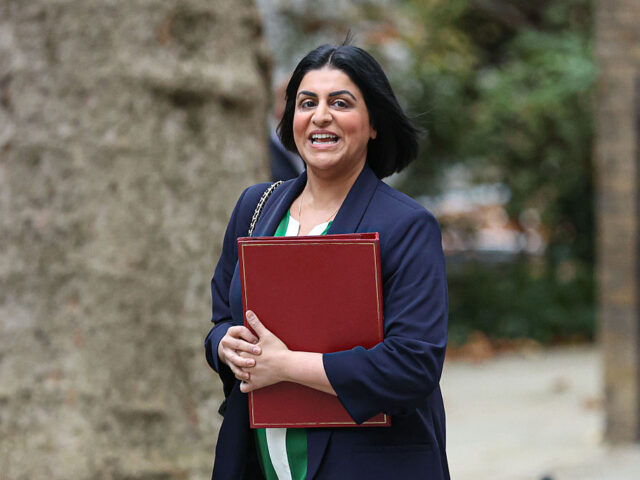
UK Home Secretary Shabana Mahmood specifically cited the “Boriswave”, confirming the adoption of the online-right neologism for the massive migrant wave that hit the UK this decade, as she announced a programme of reforms on settled status for migrants.
Under the changes, some migrants will have to wait for as long as 30 years before they’d become eligible for settled status — which puts migrants on the road to British citizenship — while others could get it in as little as three years. The rules will apply to all new arrivals but, crucially, will be back-dated for those migrants who arrived during the Boris Johnson-era migrant wave of 2021-onwards.
The efficacy of the new rules, especially given the number of loopholes provided, is totally unclear. Nevertheless, by considerably expanding the time horizon for migrants already in the country to get settled status and to essentially become permanent residents of the country from as soon as this coming January gives breathing room for future governments to have a discussion about deportations for the Boriswave cohort, should a robustly pro-border-control party be elected in future.
Under the Mahmood ‘Earned Settlement Rules’ plan, there would be certain baselines for different types of migrants, with years added or subtracted depending on their behaivours and achievements, to benefit the most desirable migrants and disadvantage the most harmful. For instance, with a baseline of 10 years for many migrants, having a high income — more than £125,000 a year for three years — would cut seven years off the waiting time. Being the partner of a British citizen would be worth a five year reduction.
A clean criminal record, high standard of spoken English, and not being in debt to the government or a court ruling would also be requirements.
Weighing on the other side of the scale would be a history of receiving state welfare payments. And claims on welfare would add five years to the settlement wait, while claiming for over 12 months would see that doubled to ten years. Arriving in the United Kingdom by an “illegal route” — such as on a migrant smuggler boat, for instance — would see ten years added. So an illegal migrant who claimed any sort of benefits for a year or more would wait some 30 years.
The route to getting access to a full suite of benefits available in Britain is also to be lengthened, Mahmood said, with all payments only available to British citizens, not just those with settled status.
The change in rules is something of a victory for the British online right, which has campaigned relentlessly on the looming hazard of the 1.6 million 2021 ‘Boriswave’ migrants getting Indefinite Leave to Remain under the old five-year-rule from January 2026.
Speaking in the House of Commons on Thursday, Mahmood said: “this consultation addresses the question of the so-called ‘Boriswave’. Specifically the cohort of low-qualified workers who entered the country along with their dependents through the health and care visa, some of whom are never expected to be net economic contributors. It is right to apply stricter controls to this group.”
The comparatively robust changes announced today come in apparent response to promises from Nigel Farage’s Reform UK, which vowed to go further and deport hundreds of thousands. In September Mr Farage said: “both Labour and Conservative governments have been happy to have open-door migration, the Liberal Democrats would not criticise… and that’s why we have not had a proper, full national debate about this.
“What we are attempting to do today is make people realise that large-scale migration into Britain, where 50 per cent at least of those who come will never work and live off the British state, is actually making this country substantially poorer.”
As reported in October, Boris Johnson admitted that opening the borders had been a conscious decision to engage in a programme of human quantitative easing, cooling inflation by flooding the economy with labour. He has complained the criticism of his is “so unfair”.
COMMENTS
Please let us know if you're having issues with commenting.