
The Kremlin on Tuesday refused a request from Japan to dismantle or modify a new World War 2 memorial in the city of Khabarovsk that some Japanese found offensive because it incorporates the 16-petal chrysanthemum crest from the Imperial Seal of Japan.
The statue, unveiled on Friday, is about 50 feet tall and depicts a Soviet soldier using his rifle butt to shatter a border marker. Similar border stones once marked the division between Russian and Japanese territory on the contested island of Sakhalin, which was split between the two countries by the treaty that ended the Russo-Japanese War in 1905.
Japan later gained complete control over Sakhalin Island, and then completely withdrew after the end of World War 2. Roughly 3,000 Japanese residents of the island were sent back to Japan, awkwardly leaving behind thousands of Koreans they had brought to the island as laborers.
Japanese Prime Minister Takaichi Sanae objected to the statue in Khabarovsk after its unveiling on Friday, but not because of the fraught history of Sakhalin Island. Takiachi took issue with the depiction of the Chrysanthemum Crest on the marker that the giant Russian soldier was destroying.
“The chrysanthemum crest is widely recognized as a symbol of Japan, and the installation of a monument depicting its destruction is completely unacceptable,” she said.
“This is a matter concerning the sentiments of the Japanese people. The government has strongly demanded that Russia halt the installation and remove the monument. We will continue to urge its removal,” she added.
The chrysanthemum is a beloved flower in Japan, symbolic of health and longevity. The Japanese imperial family adopted the chrysanthemum as a crest in the 12th Century, and the 16-petal chrysanthemum symbol became the official crest in 1926.
The Japanese consulate in Russia also requested the removal of the chrysanthemum crest from the monument, as did Japanese Foreign Minister Motegi Toshimitsu.
“Such a monument is not constructive for relations with our country. It is deeply regrettable that Russia has not responded to Japan’s demands to date. We will continue to strongly urge Russia to remove the monument,” Motegi said.
The Kremlin said on Tuesday that it considers the chrysanthemum symbol to be entirely appropriate, and it will not be removed.
“It is hard to say what has been forgotten and what is still remembered in Tokyo, but at the very least, we have not forgotten Japanese militarism; we have not forgotten that victory,” said Kremlin spokesman Dmitry Peskov.
“In this regard we can hardly take such demands and statements into account in any way,” he said.
Nikolai Ovsienko of the Russian Military Historical Society, which created the statue in coordination with the Khabarovsk regional government, said it was Japan’s request to modify the statue that was “highly inappropriate.”
“The chrysanthemum is not only a symbol of Japan’s imperial house but also a symbol of militarism responsible for horrific crimes,” Ovsienko said.
Russian Foreign Ministry spokeswoman Maria Zakharova rejected Japan’s request in bitterly sarcastic terms.
“All that remains is to demand that the wind stop blowing and the sun stop shining,” said Zakharova. “Our land was defended by our ancestors; our history is based on facts; our memory is enshrined in this monument.”
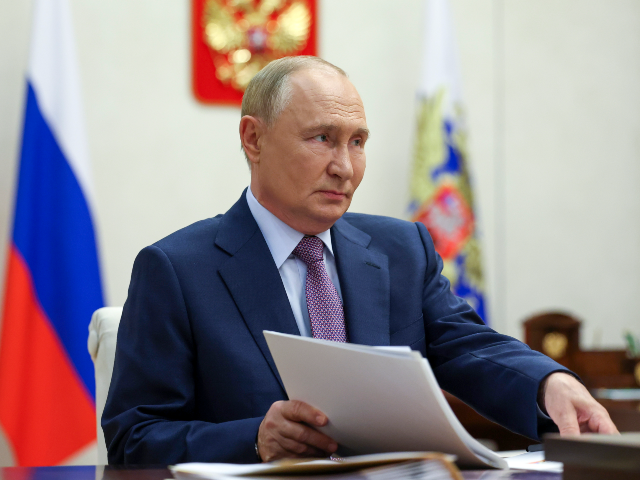
The Khabarovsk government said construction of the statue was personally ordered by President Vladimir Putin, who has been emphasizing Russian nationalism and World War 2 nostalgia to keep the Russian public under control during his long and bloody war in Ukraine.
Japanese observers noted that Putin paid his first visit last month to the disputed Kuril Islands, whose disposition remains an unresolved issue from World War 2. Only one other Russian leader, Dmitry Medvedev, has visited the islands since the end of the war.
Takaichi said Putin’s trip to the islands was “absolutely unacceptable” and summoned the Russian ambassador to Tokyo to lodge a complaint.
COMMENTS
Please let us know if you're having issues with commenting.