The U.S. Supreme Court began a new term on Monday and is set to rule on several cases that will impact a wide range of highly consequential issues.
The High Court’s hearings for the next two months are scheduled (see here and here), and several other cases await scheduling in the coming months. The 6-3 conservative majority court is set to review 39 argued cases, not including any that may arise on the emergency docket.
Here are the Top Cases to Look Out For:
President Trump’s Tariffs
On November 5, the Supreme Court will hear arguments on President Trump’s broad-sweeping tariffs. In Learning Resources v. Trump, the court will specifically weigh in on whether or not the International Emergency Economic Powers Act authorizes a president to impose tariffs.
The High Court will review lower court decisions that found President Trump did not have authority to issue many of his global tariffs under the emergency powers law.
President Trump’s Firing of Rebecca Slaughter and Lisa Cook
The Supreme Court has agreed to hear a case about President Trump’s firing of Federal Trade Commission (FTC) commissioner Rebecca Slaughter. In early September, Chief Justice John Roberts issued a brief order blocking a lower-court ruling that had reinstated Commissioner Slaughter while her legal challenge proceeded.
In Trump v. Slaughter, justices will ultimately consider whether presidents can dismiss FTC commissioners without cause and will examine whether a precedent found in Humphrey’s Executor v. United States, which has largely shielded independent agencies from the executive branch, should be overruled. As Breitbart News reported, the Supreme Court’s decision in the case “could have broader implications for Trump’s removal of Federal Reserve Governor Lisa Cook, which has raised similar questions about presidential authority over independent financial regulators.”
The Supreme Court is also set to hear the case in January surrounding Cook’s firing. The High Court declined on October 1 to immediately remove Cook from her position after a lower court blocked President Trump’s dismissal. Trump moved to dismiss Cook in August, citing mortgage fraud allegations.
The dispute in Trump v. Cook is different than in Slaughter’s case and centers on the question of when a president can remove a Fed governor before the end of a statutory 14-year term. As Breitbart News reported, the law says that a president can remove a governor “for cause” but does not specify what counts as appropriate cause. The district court said the allegations of fraud did not qualify and that Trump failed to provide adequate due process when attempting to remove Cook.
Elections
The Supreme Court is set to hear three election law-related cases this term.
On Wednesday, the High Court will hear Bost v. Illinois State Board of Elections, a case brought by Rep. Mike Bost (R-IL) against the state board of elections for a state law that allows ballots to be received and counted up to 14 days after election day. The Supreme Court is being asked only to rule on whether or not Bost has standing to bring the lawsuit as a federal candidate after lower courts ruled he did not have standing to sue.
On October 15, the Supreme Court will hear arguments in Louisiana v. Callais over Louisiana’s addition of a second majority-black congressional district. The court heard arguments in the last term in June but agreed to hear another round. This time, the court will rule on whether or not race-based redistricting under Section 2 of the Voting Rights Act is constitutional.
The court will additionally hear National Republican Senatorial Committee v. Federal Election Commission, a case surrounding then-candidate Vice President JD Vance and the GOP committees’ effort to scrap limits on the spending of political parties made in coordination with campaigns. The court is being asked to weigh in on whether limits on coordinated party expenditures violate the First Amendment.
Transgender Athletes and Conversion Therapy
The Supreme Court agreed to take up two cases having to do with transgender-identifying males competing in female sports.
The case, Little v. Hecox, surrounds Idaho’s Fairness in Women’s Sports Act, a law passed by the state legislature seeking to protect women and girls’ sports from the incursion of trans-identifying male athletes. A lower court ultimately blocked the law, which is similar to more than two dozen other laws passed around the United States protecting women’s sports.
Idaho is asking the Supreme Court to answer whether laws that seek to protect women and girls’ sports by limiting participating based on sex violate the Equal Protection Clause of the Fourteenth Amendment.
The Supreme Court also agreed to hear West Virginia v. P.B.J, a case surrounding a lawsuit filed by the parent of a transgender-identifying student against a state law barring males from competing in female sports. A lower court blocked the law pending appeal. Now, West Virginia is asking the High Court to answer whether Title IX prevents a state from consistently designating girls’ and boys’ sports teams based on biological sex, and whether the law violates the Equal Protection Clause of the Constitution.
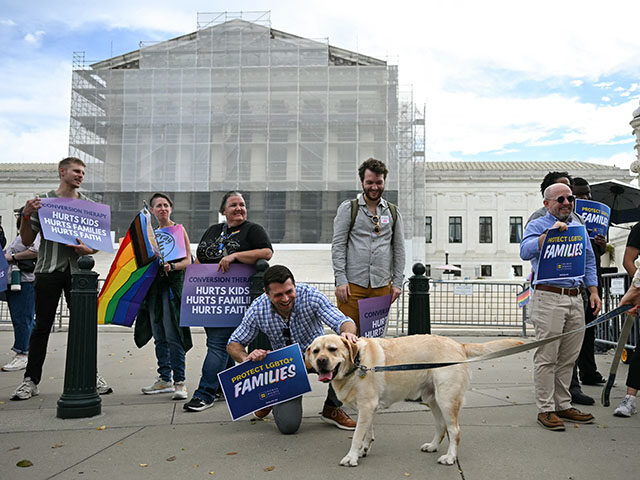
The High Court will also hear a case on Tuesday surrounding Colorado’s ban on “conversion therapy,” which the state broadly defines as “any practice or treatment by a licensee, registrant, or certificate holder that attempts or purports to change an individual’s sexual orientation or gender identity, including efforts to change behaviors or gender expressions or to eliminate or reduce sexual or romantic attraction or feelings toward individuals of the same sex.”
In Chiles v. Salazar, Kaley Chiles, a licensed counselor and a practicing Christian, argues the law bans consensual conversations between her and her clients who seek her counsel based on their beliefs about what God establishes about identity and sexuality. A lower court upheld Colorado’s law, ruling that the ban regulates Chiles’s conduct, not her speech. The Supreme Court is being asked to rule on whether the state’s law censoring such conversations between counselors and their clients regulates conduct or violates the Free Speech Clause of the First Amendment.
Abortion
The Supreme Court agreed to take up a the case First Choice Women’s Resource Centers v. Platkin, which surrounds New Jersey’s seemingly targeted investigation of pro-life pregnancy centers following the end of Roe v. Wade.
The high court will specifically weigh in on whether or not First Choice Women’s Resource Centers, a group of faith-based pregnancy centers, is allowed to challenge New Jersey Attorney General Matthew Platkin’s investigation in federal court — an investigation the organization argues is unconstitutional.
Platkin served a subpoena demanding First Choice identify donors behind nearly 5,000 donations by name and produce ten years of internal documents. First Choice tried to challenge the subpoena in federal court, arguing that the state had violated the First Amendment. Platkin responded by filing his own lawsuit in state court, an action which led lower federal courts to rule that First Choice must pursue federal claims in state court first. In response, Alliance Defending Freedom (ADF) filed a petition asking the Supreme Court to hold that civil rights plaintiffs do not need to litigate challenges to state investigations in state court before they can bring federal claims.
Religious Liberty
The Supreme Court will hear arguments on Nov. 10 in Landor v. Louisiana Department of Corrections and Public Safety. The case surrounds prison officials forcibly shaving a former Louisiana inmate’s dreadlocks, despite his Rastafari beliefs.
The Supreme Court is being asked to answer whether an individual may sue a government official in his individual capacity for damages for violation of the Religious Land Use and Institutionalized Persons Act of 2000 (RLUIPA)
The court will also weigh whether to allow a Christian evangelist to challenge a Mississippi city’s protest ordinance that he was convicted of violating. In Olivier v. City of Brandon, the Supreme Court is being asked whether a precedent found in Heck v. Humphrey barring plaintiffs from seeking purely prospective relief where the plaintiff has been punished before under the law challenged as unconstitutional.
Second Amendment and Death Penalty
The Supreme Court will hear a significant challenge to a Hawaii law that makes it a crime for concealed carry permit holders to carry a handgun on private property unless he or she has been “given express authorization to carry a firearm on the property by the owner, lessee, operator, or manager of the property,” as well as public areas like parks, playgrounds, and beaches.
In Wolford v. Lopez, the Supreme Court is being asked if a lower court erred in allowing the law to stand.
Justices also agreed to hear a death penalty case which could clarify rules for sentencing intellectually disabled people to death.
In 2002, the Supreme Court decided in Atkins v. Virginia that sentencing an intellectually disabled person to death was unconstitutional under the Eighth Amendment, which bars cruel and unusual punishments. The Supreme Court agreed to take up Hamm v. Smith to answer whether a state can require a claimant to prove an IQ of 70 or less and whether/how courts may consider the cumulative effect of several IQ scores under the Atkins precedent.
Katherine Hamilton is a political reporter for Breitbart News. You can follow her on X @thekat_hamilton.
COMMENTS
Please let us know if you're having issues with commenting.