
Inflation unexpectedly fell in November, providing relief to U.S. consumers and supporting President Trump’s contention that the inflation crisis that began during his predecessor’s administration has been overcome.
The consumer price index rose 2.7 percent from a year ago, the Department of Labor said, down from three percent in September and below the 3.1 percent forecast by economists. The report was delayed by the shutdown of the federal government that stretched from early October through mid-November.
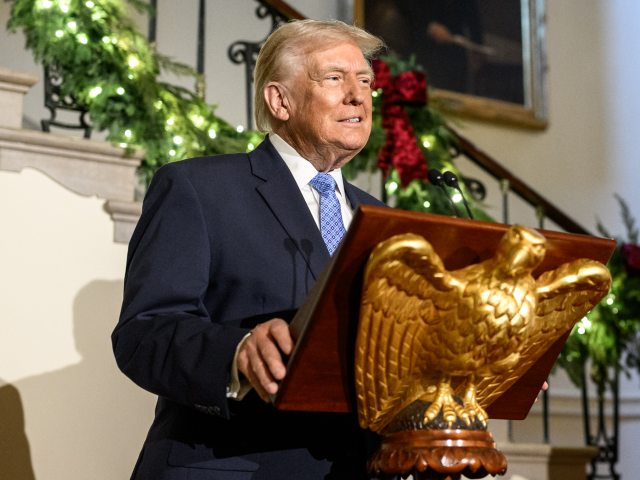
“Very simple, we are making America great again tonight,” Trump said in a prime-time speech to the nation Wednesday night. “After 11 months, our border is secure. Inflation is stopped. Wages are up. Prices are down.”
Consumers paid less in November for hotel stays, recreation, and clothing. Shelter prices, which include rent and a measure of the cost of residential homeownership, rose by just 0.2 percent over the two-month period since the prior report, suggesting the slowest pace of inflation in nearly five years. Food prices rose just 0.1 percent, the slowest rate of grocery inflation in several months.
The prior CPI report released covered September’s prices. The October report was never released because the shutdown created gaps in the collection of data that the Department of Labor uses to construct the index. As a result, the government did not release month-over-month changes in the index.
Compared with September, consumer prices were up a very mild 0.2 percent, much less than expected.
Core CPI, which strips out volatile food and energy prices, rose 2.6 percent from a year ago. That compares with forecasts for a three percent gain. This is the lowest rate of core inflation since early 2021. Compared with September, core prices are up 0.2 percent.
Inflation fell by more than almost anyone expected. The range of forecasts for year-over-year inflation in Econoday’s survey bottomed at 2.9 percent for overall prices and 3.0 for core inflation.
Because inflation can be volatile month to month, many economists prefer to look at annualized longer-term trends. This is particularly the case this month, when the typical month-over-month numbers are unavailable. Headline CPI rose 2.1 percent on a three-month annualized basis and 2.8 percent on a six-month annualized basis. Core CPI rose 1.6 percent annualized over the past three months and 2.6 percent over the past six-months.
Heavily tariffed categories show very little inflation. Core goods prices, which exclude energy and food, are up 1.4 percent from a year ago. Durable goods, those intended to last three months or more, have risen in price by 1.5 percent. Major appliance prices are up just 1.2 percent. Apparel prices are up by just 0.2 percent, while women’s clothing prices have fallen one percent. Prices of new cars are up 0.9 percent and new trucks 0.6 percent.
Most inflation continues to come from the services side of the economy. Excluding energy services, core service prices are up three percent. This includes a three percent rise in shelter prices.
The consumer price index measures the changes in prices paid by U.S. consumers for goods and services. It includes prices paid by consumers for domestic goods and services as well as imports. That means it reflects the effects of tariffs.
The better-than-expected news on inflation was seen as providing more room for the Federal Reserve to cut interest rates next year. Bond yields fell and stock futures rallied, likely because investors believed the report could lead to further easing of monetary policy.
COMMENTS
Please let us know if you're having issues with commenting.