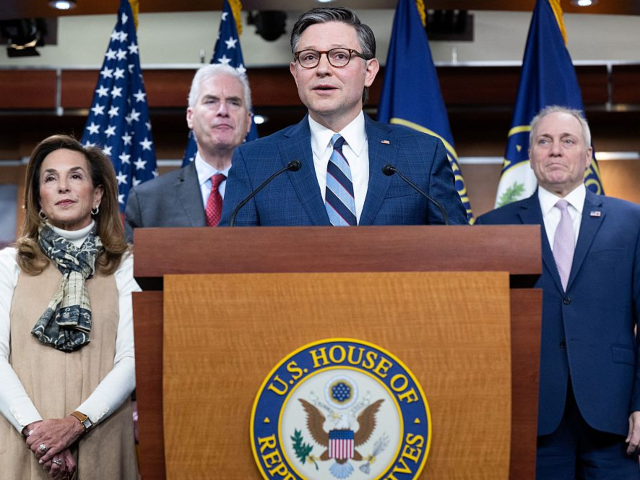
The House on Monday passed a bipartisan housing bill aimed at lowering costs and increasing homeownership.
The House overwhelmingly passed the Housing for the 21st Century Act, 390-9. House Financial Services Chairman French Hill (R-AR) and ranking member Maxine Waters (D-CA) sponsored the legislation and it passed out of committee last December.
“Housing costs have soared beyond the reach of millions of American families thanks to Bidenflation, while outdated and burdensome red tape has constrained our nation’s affordable housing supply and limited our ability to expand it,” Speaker Mike Johnson (R-LA) said in a statement applauding the bill’s passage. “Today’s House passage of the Housing for the 21st Century Act is a critical step toward addressing this shortage by reducing unnecessary regulatory barriers, modernizing HUD [Department of Housing and Urban Development] programs, and giving banks flexibility to deploy capital to increase our housing supply.”
“When there aren’t enough homes, prices go up. The Housing for the 21st Century Act includes real, bipartisan solutions to boost development by clearing out red tape and letting communities and local banks do their job. That’s how we expand supply, lower costs, and give families more options,” Hill and Rep. Mike Flood (R-NE) wrote in an op-ed for the Hill last week.
The legislation, among other things, would direct the Government Accountability Office (GAO) to find gaps in federal housing programs and modernize HUD’s HOME Investment Partnerships Program.
The legislation will go to the Senate, where lawmakers in Congress’s upper chamber may advance their own bill or make changes to the legislation.
Senate Banking Committee Chairman Tim Scott (R-SC) and Sen. Elizabeth Warren (D-MA) have sponsored their housing affordability solution, the ROAD to Housing Act, which they sough to include in the National Defense Authorization Act (NDAA), but ultimately the legislation was not included in the must-pass defense spending bill.
Hill said in a statement in December that he aims to work with the Senate “to send a bill to the president’s desk that reflects the views of both chambers.”
COMMENTS
Please let us know if you're having issues with commenting.