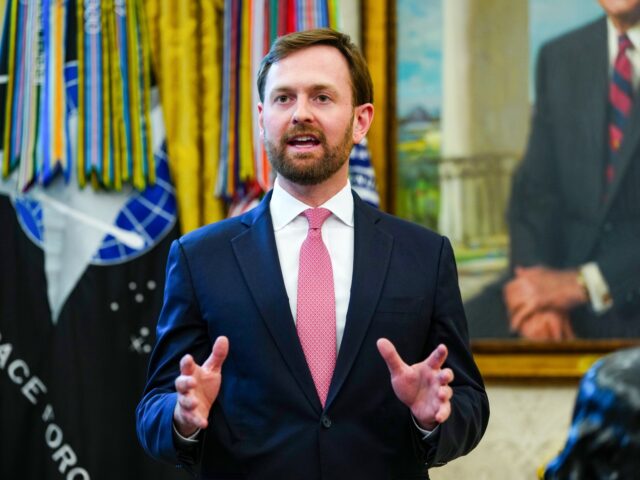

Federal Trade Commission (FTC) Chairman Andrew Ferguson announced a settlement that bars major advertising firms from colluding to boycott platforms based on disfavored political viewpoints.
“The ad agencies’ brand-safety conspiracy turned competition in the market for ad-buying services on its head,” Ferguson said in a written statement. “The antitrust laws guarantee participation in a market free from conduct, such as economic boycotts, that distort the fundamental competitive pressures that promote lower prices, higher quality products and increased innovation.”
“As we explain in our complaint, the brand-safety agreement limited competition in the market for ad-buying services and deprived advertisers of the benefits of differentiated brand-safety standards that could be tailored to their unique advertising inventory,” he continued. “This unlawful collusion not only damaged our marketplace, but also distorted the marketplace of ideas by discriminating against speech and ideas that fell below the unlawfully agreed-upon floor. The proposed order remedies the dangers inherent to collusive practices and restores competition to the digital news ecosystem.”
The FTC said in its release, that in 2018, major advertising firms such as WPP, Publicis, and Dentus, who all buy ads for clients, “unlawfully colluded” to impose “brand safety” standards across the digital advertising industry. These ad firms, along with competitors such as Omnicom and IPG, operated through trade associations to establish a “Brand Safety Floor” to target “misinformation.”
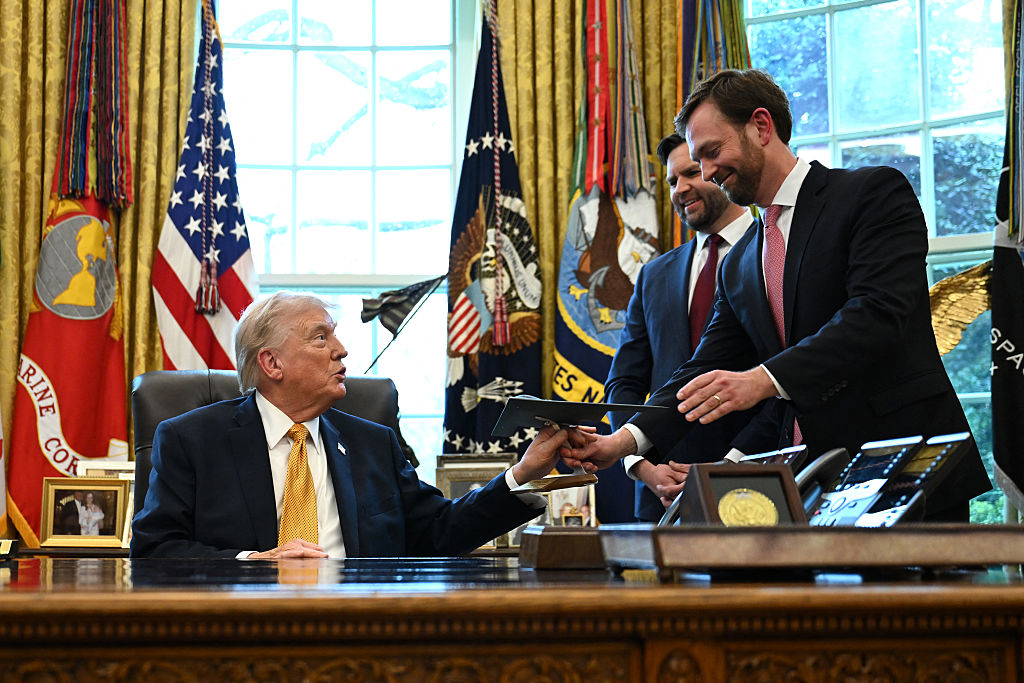
U.S. President Donald Trump interacts with the Federal Trade Commission (FTC) Chairman Andrew Ferguson (R) as Vice President JD Vance (C) looks on after signing an executive order on fraud in the Oval Office in Washington, DC, on March 16, 2026. (ANNABELLE GORDON / AFP via Getty)
The ad agencies agreed to a proposed order that would stop the firms from alleged conduct and prevent similar conduct from concurring in the future.
The complaint alleges that the ad firms, through their trade associations, World Federation of Advertisers’ Global Alliance for Responsible Media (GARM) and the American Association of Advertising Agencies’ Advertiser Protection Bureau (APB) worked to establish this common brand safety standard. If the order would be approved by a federal judge then the ad agencies would be barred from engaging in agreements that would set these so-called safety standards or restrict advertising based on biased or politically motivated criteria.
In June 2025, Ferguson announced, as part of a merger between two of the largest advertising giants, that the advertisers agreed not to collude or discriminate based on political or ideological views. He said that there had long been a history of “collusion in the [advertising] market for media-buying services, and the increased potential for collusion post-merger make this a rare instance where the imposition of a behavioral remedy is appropriate.”
He explained:
Specifically, the proposed decision and order prohibits Omnicom and IPG from entering into or maintaining any agreement or practice that would steer advertising dollars away from publishers based on their political or ideological viewpoints. To be sure, coordinated action by advertising agencies against politically disfavored publishers is tantamount to an agreement not to compete on quality — but obtaining such a ruling in litigation could take years. Today’s decision and order eliminates the potential for costly litigation while ensuring that Omnicom and IPG abide by the antitrust laws post-merger. [Emphasis added]
Ferguson noted that GARM once described the right to free speech as “an extreme global interpretation of the U.S. Constitution” and “‘principles of governance’ … from 230 years ago (made by white men exclusively).”
John Montgomery, the then-executive vice president of Global Brand Safety, wrote to Rob Rakowitz, the leader of GARM:
There is an interesting parallel here with Breitbart. Before Breitbart crossed the line and started spouting blatant misinformation, we had long discussions about whether we should include them on our exclusion lists. As much as we hated their ideology and bullshit, we couldn’t really justify blocking them for misguided opinion. We watched them very carefully and it didn’t take long for them to cross the line. [Emphasis added]
Ferguson added that GARM aimed to “destroy publishers of content which they disapproved.”
COMMENTS
Please let us know if you're having issues with commenting.