
European Union globalists were quick to seize on the defeat of Viktor Orbán in Hungary to further undermine principles of national sovereignty and further empower Brussels.
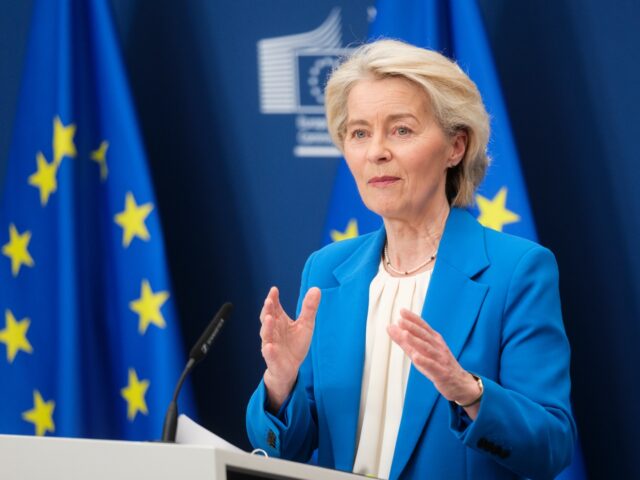
In the aftermath of pro-EU Péter Magyar handily beating populist stalwart Orbán in Hungary’s elections on Sunday, European Commission President Ursula von der Leyen revealed that she intends to take advantage of the moment to push for the elimination of member states’ ability to veto the bloc’s foreign policy decisions.
“Moving to qualified majority voting in foreign policy is an important way to avoid systemic blockages, as we have seen in the past,” the EU chief said per POLITICO in reference to Orbán frequently voting against Western European nations on issues like Ukraine.
Von der Leyen said that it would be critical to “use the momentum now” of his defeat to push through reforms, noting that his likely replacement “is very clear on the European path… committing the new government to continue working with us.”
Brussels will likely have an outsized influence over Magyar’s government, given that it is currently holding tens of billions in funds from the country over conservative policy choices made by the previous Orbán government. Part of Magyar’s election pitch was to reverse this and secure the cash for his countrymen.
Demonstrating the power imbalance, it was reported this week that the unelected EU Commission had issued Magyar a list of 27 demands to be fulfilled before any funding will be released, critically including a loosening of restrictions on alleged asylum seekers entering the country.
However, regardless of whether Von der Leyen and her cohort can put enough pressure on the next Hungarian government to side with them on eliminating the national veto on foreign policy, it remains to be seen if all other 26 member states will cede the powerful tool.
The principle of veto power for member states was a critical component in the development of the European Union. Similar to the concessions on the allocation of senators or the electoral college in the United States, the veto power has given smaller states within the EU the opportunity to be given consideration, rather than larger states like France and Germany steamrolling the decision-making process.
Yet, as in the United States again, elites in Western Europe have long seen this compromise as an impediment to their power and have sought to overturn it.
Orbán previously warned that if the principle of unanimous decision-making on foreign policy is abandoned within the European Union, the citizens of certain countries may be dragged into a war that they opposed and voted against, effectively eliminating national self-determination and sovereignty.
The leader of the fellow Visegrad nation of Slovakia, Prime Minister Robert Fico has also come out against the idea of eliminating the veto.
At a press conference last year with Orbán, Fico said that doing so would lead to the “liquidation of the EU” and that the bloc will only remain strong if it respects disparate opinions and the democratic will of its citizens.
COMMENTS
Please let us know if you're having issues with commenting.