

The Weekly Wrap: Wall Street’s Adventures in Wishful Listening
Welcome back to Friday! This is another edition of the Breitbart Business Digest weekly wrap.
It was inflation week in America. The consumer price index jumped 0.6 percent because greedy drivers keep insisting on paying more than $4 for gasoline. The producer price index jumped 1.3 percent just to show us what it can do if people insist on calling it the wholesale price index, a name it hasn’t used since Jimmy Carter was president. The index of export prices also rose due to the greed of foreigners, and the index of import prices climbed a bit less because we’re less greedy than, say, the French.
Not everything was about inflation this week. The Beige Book came out; and, once again, it demonstrated that no one pays attention to the Beige Book. We have given up trying to make people pay attention to anything beige, so that’s the last time we’ll mention it in this weekly wrap. The Office of the Comptroller of the Currency issued a damning report on debanking that the financial press tried to downplay as much as it could. Tesla made cars fly—at long last bringing us closer to the future we were promised in all 26 sequels to The Fast & the Furious. Kevin Warsh, the Silent Cal of the Fed, spoke without saying anything about the direction of monetary policy. The bond market started to get worried about the sustainability of AI debt in an age of higher interest rates.
Before things get any more expensive, let’s go!
Overheard This Week
“A few months ago, everyone expected oil prices would fall once the Iran war wrapped up. Now no one expects the Iran war to wrap up, so oil is getting priced higher for longer.” — Anonymous Trump administration official.
“You pronounce it AI. In the U.S. we now pronounce it SI.” — Kevin Warsh to IMF Managing Director Kristalina Georgieva.
“The absence of forward guidance is not guidance about the absence of a Fed hike.” — Anonymous bond trader.
One Night in Bangkok
Kevin Warsh traveled into the future this week but refused to tell us what he saw there. At least, that’s what we think happened because we were watching him talk at the IMF meeting in Bangkok on Thursday night, but he was making the speech on Friday morning. Someone told us that this was due to the international date line, but we refuse to believe President Trump would tolerate Asia living in the future while the U.S. is a chronological laggard.
The dynamics of Warsh and the bond market have become interesting. Warsh has made it very clear that he isn’t interested in providing forward guidance, but the market has decided that it is just going to pretend he is doing forward guidance anyway. It’s just now a bit more inscrutable. Forward guidance in disguise.
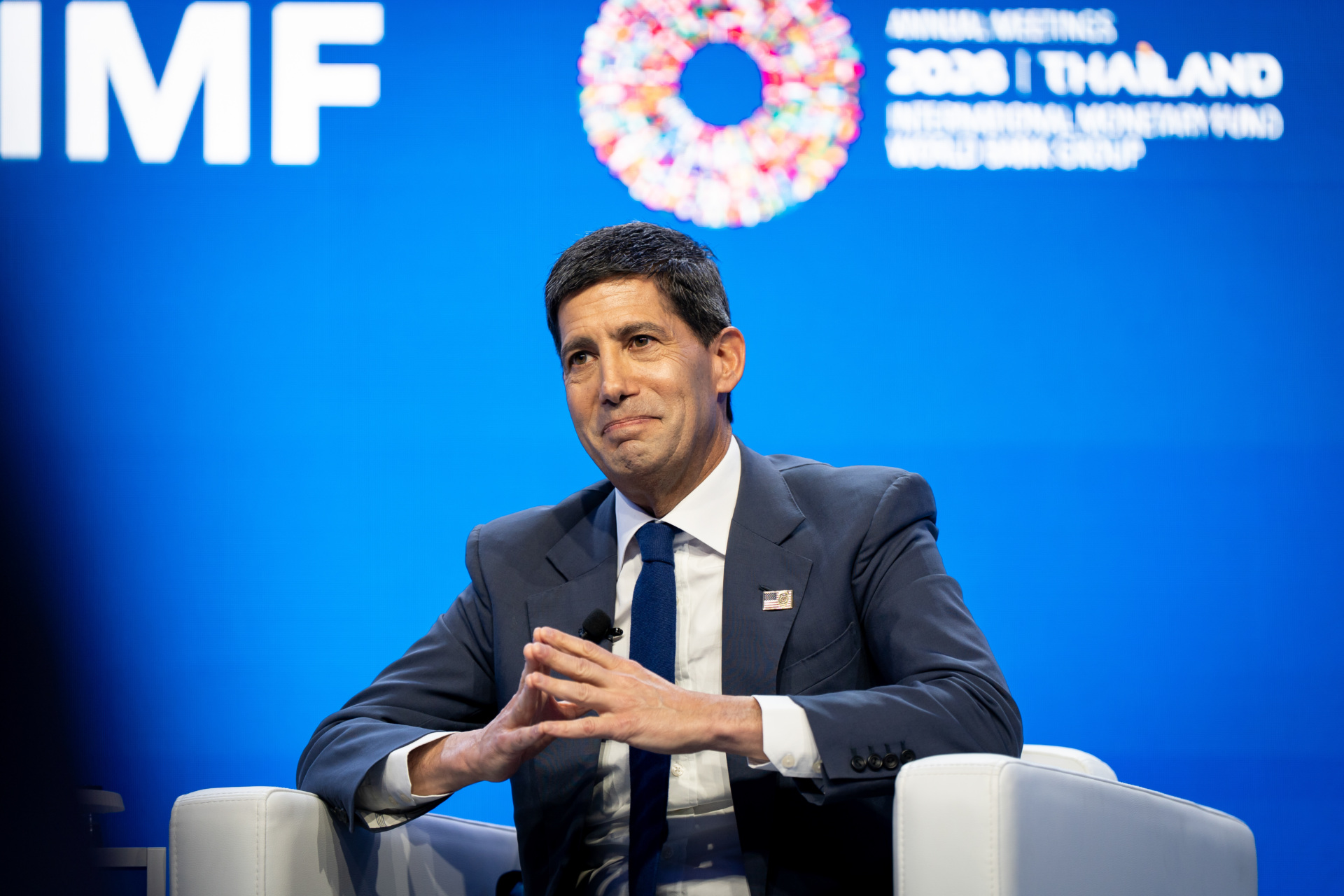
Chair of the Federal Reserve of the United States Kevin Warsh speaks during the International Monetary Fund (IMF) and World Bank Group annual meetings at the Queen Sirikit National Convention Center (QSNCC) in Bangkok, Thailand, on October 16, 2026. (Matt Hunt/Anadolu via Getty Images)
Warsh’s talk was the last we’ll hear from Fed officials prior to the meeting—Fed officials have a self-imposed silent period in the week or so before the meeting—guaranteeing it would get lots of attention. Earlier comments from Fed officials, some of whom are not fully on board with Warsh’s mystery act, had left investors and analysts thinking the Fed could afford to wait to raise rates until later this year. Just prior to the event, the fed funds futures market was pricing in around a 72 percent chance of the Fed staying on hold this month and a 90 percent chance of a hike in December.
“I don’t prejudge meetings. I don’t believe in saying now what I might do at the meetings we have in the balance of this year,” Warsh said from Bangkok. “It’s a new chapter at the Fed, and we’re not in that business anymore.”
The reaction was not to accept this as lacking meaningful content about the odds of a Fed move. Instead, the market heard Warsh as confirming what the market had already priced in. The absence of forward guidance was transformed by the miracle of Wall Street magic into a form of forward guidance itself. After Warsh spoke, the market was pricing in more than an 85 percent chance of a hold in October.
This is a dangerous game. It is practically begging Warsh to surprise the market with an unexpected move. Could that be a hike at the October meeting? That’s a lot more likely than people think. It would help reinforce the Fed’s credibility on price stability, especially after this week’s scary inflation reports. It might bring down long-term yields, which would ease the pressure on the housing market and also likely dial back worries about AI debt. Perhaps most importantly, it would show that Warsh is serious about the end of the forward guidance era. No one is really going to believe guidance is over until the Fed does something unexpected.
Up, Up, and Away
The worst things about this week’s inflation reports were not the headline numbers. Those were very bad. CPI is up 0.6 percent in a single month, which annualizes to 8.1 percent, and up 3.7 percent from a year ago. PPI is up 1.3 percent for the month, which annualizes to 17.4 percent, and 6.3 percent over 12 months. The import price index rose 1.1 percent on a monthly basis and is up 8.1 percent from a year earlier.
The worst thing was that the reports made it clear that inflation has escaped the oil barrel. Import prices excluding fuel rose 0.7 percent. The CPI had goods excluding food and energy rising 0.3 percent, which annualizes to around three percent inflation. Core CPI—goods and services excluding food and energy—also rose 0.3 percent. Services less energy services in CPI climbed 0.4 percent. Final demand PPI excluding food and energy shot up by 0.7 percent. Final demand services in PPI rose 0.8 percent.
The economy withstood the oil price shock very well for the first few months, with competition for consumer dollars holding down price increases and preventing pass-through inflation. But there’s now no end in sight to the oil price shock—futures prices have oil staying higher for as far as the eye can see—and this is now leaking out into the rest of the economy.
The Beige Book reported this week that “higher oil prices permeated all District reports.” No kidding. And, yes, we promised at the top we weren’t going to mention the Beige Book again. You should not have taken that as forward guidance for the rest of this weekly wrap. It was a forward-looking statement that should not have been relied upon.
Debanking 1.0 Was Crazy
It’s almost hard to believe how crazy cancel culture got in the Biden years. Not only were the social media companies censoring news, stripping Donald Trump of his accounts, and suppressing ideas deemed too much at variance with the official views of the White House, many of our biggest banks were denying services and financing to conservatives, uppity Christians, gun dealers and manufacturers, prison companies, and anyone who gave their internal woke reputation risk guardians the ick.
The Office of the Comptroller of the Currency’s report on this is especially valuable because the left, the media, and the banks have tried to brush all of this under the carpet. We’ve heard quite a few journalists claim that debanking was not a real thing. Even after the report, the stories in the financial press downplayed the findings. “Nine Large Banks Engaged in So-Called Debanking, OCC Says,” was how Bloomberg headlined its article. Get it? So-called? Didn’t really happen. Many of the stories omitted the most damning evidence of banking cancel culture and included leftists disguised as “consumer advocates” denying that this was a widespread problem. The report didn’t quantify the prevalence of debanking, they whined.
They also tried to turn it into a boring story about the nuances of regulation. They did everything except focus on the evidence presented that banks decided that the politics of the American right needed to be reined in.
Imagine for a moment if the OCC had found evidence of debanking racial minorities, complete with documents showing that they were being debanked because doing business with members of certain minority groups might hurt the bank’s reputation. Would the financial press sweep this under the rug because the prevalence of racist debanking hadn’t been quantified and consumer advocates said it wasn’t a big deal? Okay, you’d better stop imagining that now or someone might close your bank account.
There was, of course, a regulatory role in all this. The idea that bank regulators should require institutions to police reputational risk was always a front for smuggling progressive policy preferences into bank supervision. But the banks weren’t dragged kicking and screaming into this. What happened is that the regulatory rules loaded the dice in favor of the closed society of wokeness. True believers inside the banks got ahead while those who disagreed were shoved out of positions of power.
People Are Worried the AI Bubble Is Popping
Worries about an AI bubble took hold of markets this week.
It started, as these things often do, in the bond market. The hot CPI report triggered concerns that interest rates might have to go much higher, which would make life difficult for the debt-financed AI boom babies. The cost of insuring CoreWeave’s debt against default briefly topped 1,140 basis points, with market pricing implying a roughly 63 percent probability of default over five years, up from about 30 percent a year ago. The company that many of you have probably never heard about carries more than $51 billion in debt and obligations, and the yield on its bonds rose to nearly 16 percent.
The 20 biggest AI and chip stocks lost more than $1 trillion over the week, and the Nasdaq posted its first weekly loss in five weeks. Oracle’s credit spread widened too, and a downgrade to junk would force some investment-grade-only funds to sell.
As scary as things looked if you focused on the highly leveraged AI companies, the S&P 500 is still near the record it set last week. The Nasdaq finished Friday down 2.14 percent and lost about 4.5 percent for the week, which isn’t great but isn’t quite a debacle.
And the fundamentals in the larger AI complex still look sound. TSMC just posted its sixth straight quarter of record profit and guided to 58 percent revenue growth in the fourth quarter. CoreWeave’s backlog is over $100 billion, about two-thirds of it with investment-grade customers such as Microsoft, Meta, and IBM, according to analysts at Deutsche Bank. And Friday’s Fed data showed semiconductor output growing at a 28.4 percent annual rate in the third quarter, with business equipment up 6.7 percent over the past year. The San Francisco Fed notes that real investment in information-processing equipment has grown at an average annualized rate of more than 20 percent since early 2025, faster than in the late 1990s.
Breitbart Business History: The U.S. Navy’s Plot to Rule the Radio Waves
When the United States entered World War I, President Woodrow Wilson put the nation’s private and commercial radio stations under Navy control. Secretary of the Navy Josephus Daniels thought they should stay there. Radio, he wrote in a draft letter to Wilson, was a “natural Government monopoly” that was too important to national defense to leave in private hands. The Navy eventually controlled the country’s entire commercial wireless system.
Congress disagreed. It rejected an earlier Navy proposal for government ownership and, when the Navy tried again after the war, refused to approve a peacetime monopoly. Commercial radio was going back into private hands as the country “returned to normalcy.”
The Navy, however, was not ready to let the airwaves go.
The immediate problem involved a remarkable new piece of American technology, General Electric’s Alexanderson alternator, which could transmit radio signals across the Atlantic. It was the Super Intelligence of its day. The British firm Marconi’s Wireless Telegraph Company, Ltd., and its American subsidiary, were negotiating to buy essentially all of the Alexanderson machines that GE could produce, an arrangement that would have given Marconi a de facto monopoly on the technology.
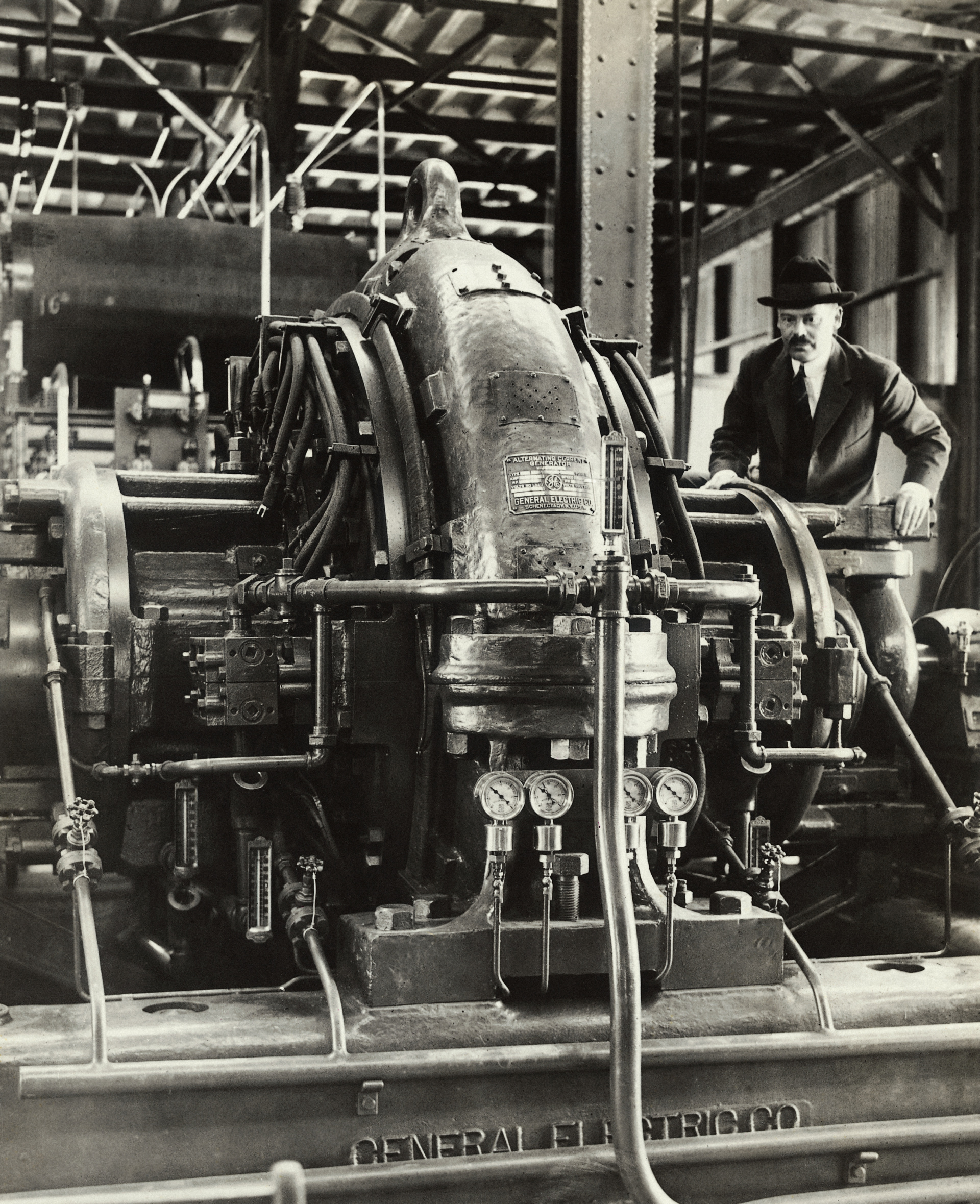
E.F.W. Alexanderson, consulting engineer of the General Electric Company, alongside one of the Alexanderson high frequency alternators he developed in Radio Central, Long island. (George Rinhart/Corbis via Getty Images)
To naval officers already alarmed that Britain dominated the world’s undersea cables, handing the British the best American radio technology threatened to extend that dominance into wireless. Apparently the fact that we had just fought on the British side in the Great War was not reassuring to the Navy wireless guys.
On April 8, 1919, Rear Admiral William H. G. Bullard, the Navy’s director of communications, and Commander Stanford Hooper went to GE and appealed to its executives to cut the legs out from under Marconi. Bullard advised GE to not sell the technology to Marconi but instead create an American-owned radio company capable of competing with Marconi. Owen D. Young, the GE executive who would become the first chairman of RCA, later told Hooper that their visit had been “the beginning of the Radio Corporation.”
But GE didn’t start from scratch. It actually bought American Marconi, a purchase that was easier to do because GE’s control of the Alexanderson technology allowed it to put a gun to the head of American Marconi’s executives and British parent company.
On October 17, 1919, GE incorporated RCA in Delaware. The new company was private, but it was private in a peculiar way. Its charter reserved at least 80 percent of its voting power to U.S. citizens and required its directors and officers to be American citizens. It also expressly allowed the United States government to participate in the administration of the company.
RCA’s founding arrangements went further. A government representative could attend meetings of shareholders and the board of directors to “present and discuss informally” the government’s views and interests. President Wilson selected Bullard—the same admiral who had helped set the entire operation in motion—to fill the role.
Congress had refused to let the Navy keep control of American radio. But the Navy got around this by convincing GE to build RCA instead and install a Navy officer in its upper echelons.
COMMENTS
Please let us know if you're having issues with commenting.