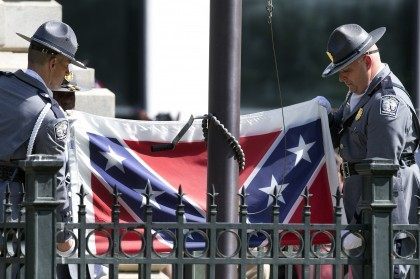
Mississippi Gov. Names April as Confederate Heritage Month
Governor Phil Bryant declared April to be Confederate Heritage Month, saying he hopes to encourage “reflection” on his state’s history.
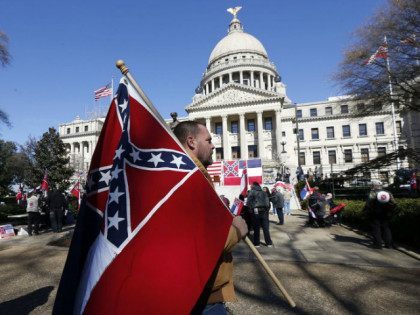
Governor Phil Bryant declared April to be Confederate Heritage Month, saying he hopes to encourage “reflection” on his state’s history.
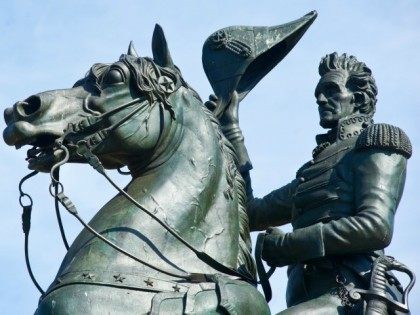
Is America witnessing the re-emergence of “Jacksonian” politics? With increasing regularity, pundits are harkening back to the cultural and political movement that brought frontier General Andrew Jackson to the White House in order to explain the changes taking place in the Republican Party. The hero of the Battle of New Orleans is more relevant than ever, it seems.
On the third Monday of February, Americans celebrate George Washington’s Birthday, often inappropriately called “Presidents Day.” Even more unfortunately, this holiday doesn’t even fall on Washington’s Birthday due to the Uniform Monday Holiday Bill, which pushed numerous holidays to Monday in order to create more three-day weekends. Washington’s real birthday does not occur until February 22.
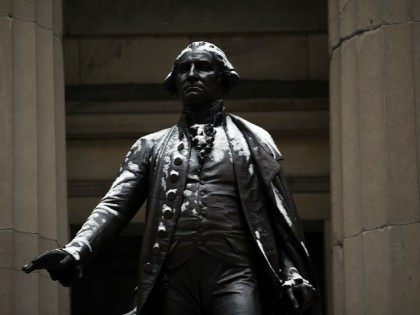
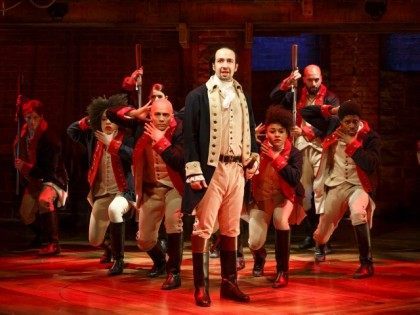
One of the most dramatic moments in “Hamilton: The Musical” is the entry of Gen. George Washington as the American rebels suddenly face 32,000 British troops in New York Harbor.
In the months leading up to the 2016 election cycle, I have often been asked by students, colleagues, and interviewers/journalists which of the potential candidates in either major party would be best suited to be president.

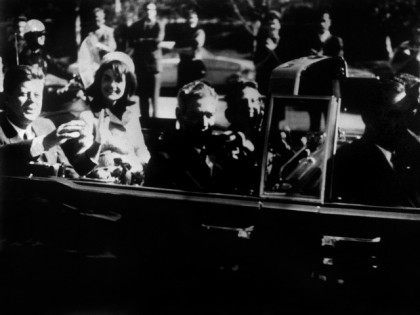
More than five decades after the assassination of President John F. Kennedy, thousands of government files detailing the activities and testimony of shadowy spies, long-deceased witnesses and others with possible knowledge of the events remain shielded from public view.
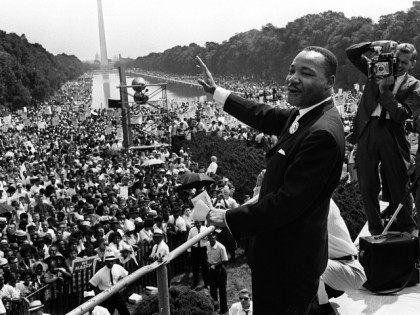
Martin Luther King Jr. Day is centered around the civil rights leader’s January 15 birthday and was signed into law by President Ronald Reagan in 1983. Though there are many reasons for celebrating and debating his life’s legacy, Martin King Jr. is primarily remembered in the 21st century for his famous “I Have a Dream” speech.
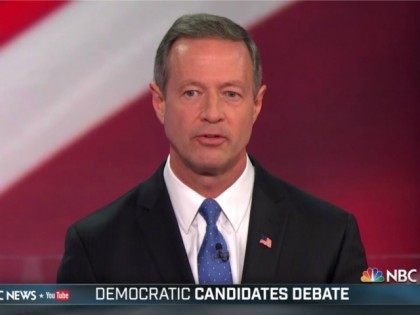
Democratic presidential candidate Martin O’Malley thanked Republican South Carolina governor Nikki Haley for removing the Confederate flag from the South Carolina state house.
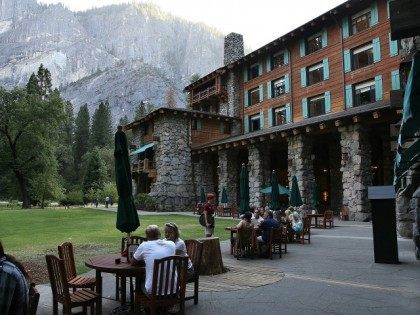
Yosemite National Park’s historic Ahwahnee Hotel, designed by famed architect Gilbert Stanley Underwood and erected in 1927, will lose its name on March 1 after a legal battle between the National Parks Service and the Delaware North company.
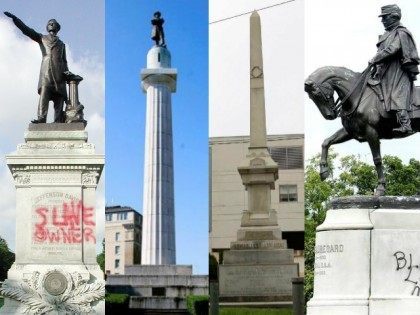
On December 17, the New Orleans City Council voted to remove four Confederate statues from the city, using obscure “nuisance” laws to strip these over 100-year-old historic monuments from their places of honor.

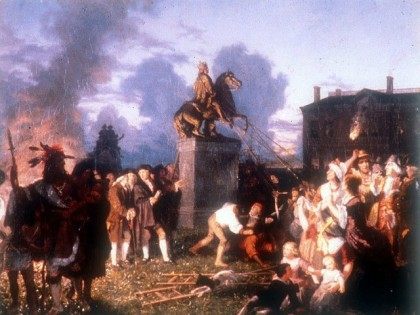
On July 9, 1776, patriots in Manhattan, having heard the Declaration of Independence read aloud for the first time, marched down Broadway and tore from its perch the two-ton lead statue of King George III.
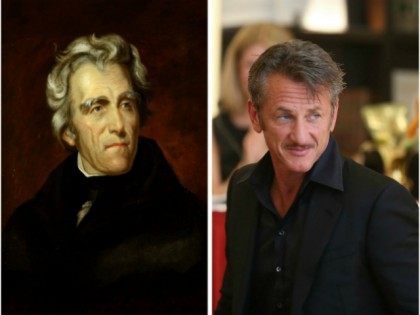
Few Americans are more worthy of the big and small screen than Andrew Jackson—a poor, orphaned child of immigrants who fought in the American Revolution, moved to the frontier, and rose to become president of the United States. HBO is producing a six-hour miniseries based on Jon Meacham’s Pulitzer Prize winning book, American Lion: Andrew Jackson in the White House, according to The Hollywood Reporter.
On December 17, the New Orleans city council voted 6 to 1 to remove “prominent Confederate statues” in the city.
The libertarian Cato Institute gets right down to it, in a New York Post op-ed titled, “Woodrow Wilson’s racism isn’t the only reason for Princeton to shun his name.” Yes, Cato went there. The libertarian outfit, which mostly seeks to identify with Republicans and conservatives on tax and spending issues, actually threw in with left-wing radical #BlackLivesMatter-type protesters on another important matter—defending the traditional understanding of US history. But as we shall see, the traditional understanding of US history means nothing to Cato.
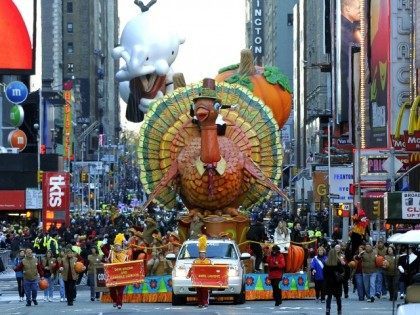
Although often seen as a day to kick off the Christmas shopping season, Thanksgiving is perhaps the most deeply American holiday and its tradition is connected to the idea of “American exceptionalism.”
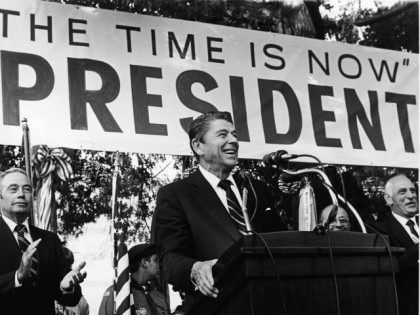
On Sunday, the Huffington Post ran an Op-Ed attacking presidential candidate Sen. Ted Cruz (R-TX) for claiming that Ronald Reagan won the 1980 presidential election mostly on his conservative principles.
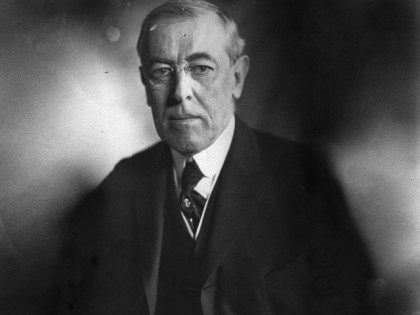
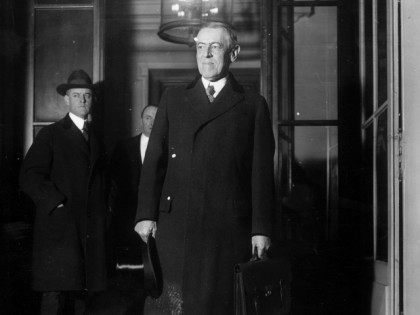
The American Left has finally caught on that one of the leading lights of the early Progressive movement was a racist, segregationist, and generally unseemly fellow. Princeton’s Black Justice League protestors have urged that early-twentieth century President Woodrow Wilson’s “racist legacy” be acknowledged, and any mention of his existence purged from campus.
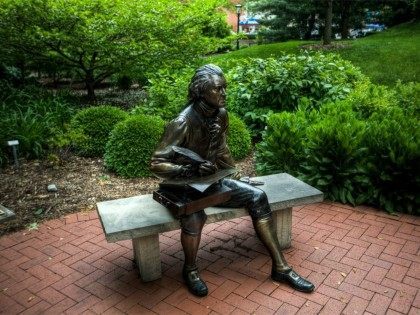
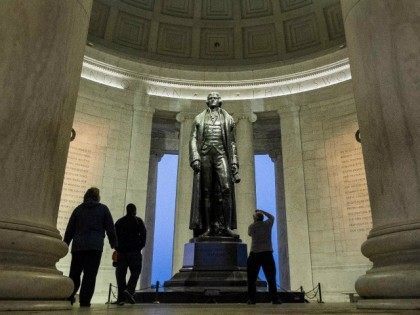
A statue of founding father and writer of the Declaration of Independence Thomas Jefferson is sparking debate at the University of Missouri, with some students demanding that the statue be removed over Jefferson’s “offensive” history as a slave owner.
Earlier this year, after racist terrorist Dylann Storm Roof was charged with shooting nine black people in a Charleston, South Carolina, church, the media and Democrats across the nation embarked on a crusade to wipe the Confederate flag from society.
Peter Schramm, the late Professor of Political Science at Ashland University, used to tell a moving story about his immigration to the United States. As a child fleeing communist-occupied Hungary, he asked his father where the family would go. “We are going to America,” his father replied. “Why America?” Peter asked. “Because, son,” his father answered, “we were born Americans, but in the wrong place.”
A lot has been written through the years about the assassinations of Abraham Lincoln, of John F. Kennedy, and of many others, and about the numerous conspiracy theories that lurk in the shadows of the official narratives.
Calling the city’s Confederate monuments “false history,” New Orleans’s Deputy Mayor Andy Kopplin revealed that a private citizen is footing the entire bill for the removal of four of the city’s decades-old statues erected to memorialize several Confederate leaders and one battle.
At least two Republican presidential candidates will stand with Founding Father Alexander Hamilton. During Wednesday’s CNN’s Republican presidential debate, candidates were asked about the proposed changes to the $10 bill and the woman with whom they would prefer to replace the country’s first treasury secretary.
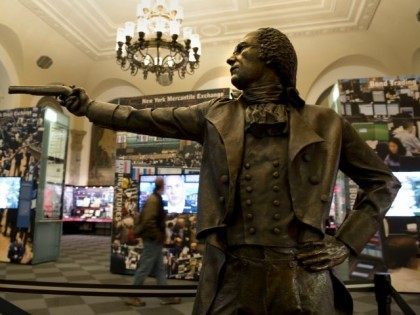
For anyone remotely connected to Pennsylvania the question seemed absurd: “Who is this William Penn?”
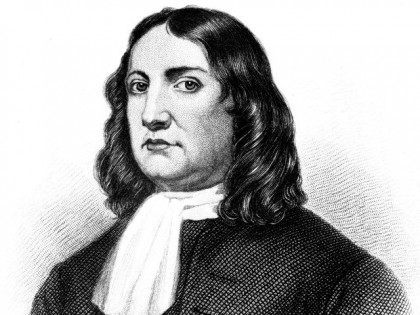
On August 30, President Barack Obama made an executive decision along with the Department of Interior to change the name of Alaska’s Mount McKinley to its Athabascan Indian name, “Denali.”
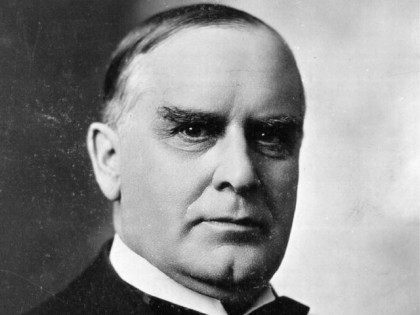
Julianne Moore’s life off-screen is quickly becoming a tale of everything the actress abhors. From Sarah Palin, to guns, to Civil War history relating to the Confederacy, Moore can’t keep from stating her opposition to certain people, places, and things.
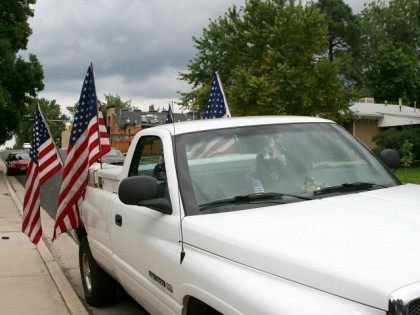
The Dickson County School District has decided to ban all flags from pickup trucks on school property. Initial reports had incorrectly stated that the officials had banned all flags at the school, but the district corrected that impression with an email to FOX13.
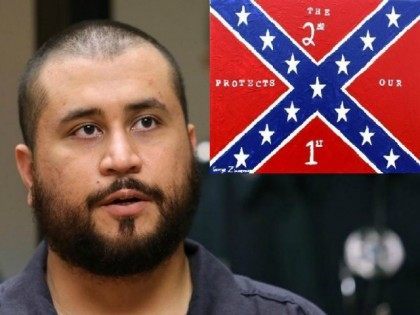
George Zimmerman has painted a Confederate flag, which he is selling to raise money for Florida Gun Supply—the store that declared itself a “Muslim-free zone” in the wake of the Chattanooga attack.
After Winston-Salem, NC, Councilman James Taylor informed FOX8 that some of his constituency claim the “Dixie” in the Dixie Classic Fair’s name offends them, the news station took to the streets to test Taylor’s assertion and found a quite different response.

WASHINGTON — She was denounced as a “degenerate” and a “pervert,” accused of lying for money and shamed for waging a “diabolical” campaign of falsehoods against the president’s family that tore away at his legacy.
WASHINGTON — For nearly a century, Democrats have honored two men as the founders of their party: Thomas Jefferson, for his visionary expression of the concept of equality, and Andrew Jackson, for his populist spirit and elevation of the common man.
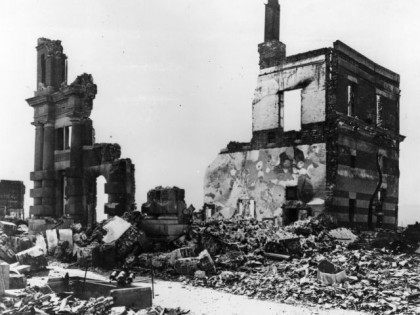
Seventy years ago, the B-29 Enola Gay, piloted by Paul Tibbets, Jr., dropped an atomic bomb, Little Boy, on the Japanese city of Hiroshima.
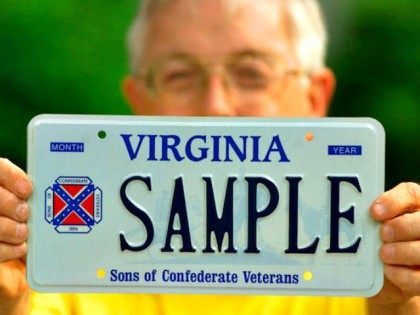
On July 31, US District Judge Jackson Kiser lifted a 14-year injunction barring the state of Virginia from banning Confederate flag license plates.
The company behind Advanced Placement courses for U.S. high school students will release a revision to the standards for AP U.S. history on Thursday morning, after significant pushback from conservatives who claimed the redesigned course framework, released last year, painted American history in too negative a light.
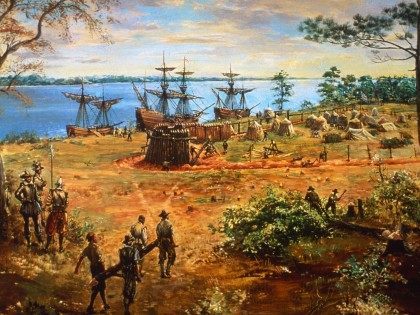
JAMESTOWN, Va. — When his friends buried Capt. Gabriel Archer here about 1609, they dug his grave inside a church, lowered his coffin into the ground and placed a sealed silver box on the lid.
On this day, in 1866, the 14th Amendment to the United States Constitution was finally certified by Secretary of State William H. Seward. The amendment guarantees that no state “shall make or enforce any law which shall abridge the privileges or immunities of citizens of the United States; nor shall any State deprive any person of life, liberty, or property, without due process of law.”
Texas Patriots PAC hosted a “Vacation Liberty School” this past week and Lieutenant Governor Dan Patrick gave the kids a Texas state government lesson.

Connecticut Democrats are dumping Andrew Jackson and Thomas Jefferson from their annual fundraising dinner in response to the ongoing Confederate flag controversy. State Democratic party leaders voted unanimously to scrub the two famous Americans’ names due to the fact that they owned slaves.
If Mohammad Youssef Abdulazeez’s alleged July 16 attack on the Chattanooga Navy Reserve Center brought anything to light, it is the elite’s hypocrisy in demonizing southern heritage while protecting radical Islam.

Leftist agitator and Muslim propagandist Musa al-Gharbi is calling progressives to strike while the iron is hot, re-appropriating, abolishing, or otherwise re-identifying Confederate monuments, street names, and public schools while the anti-Confederate flag momentum still holds sway.