Veteran Unemployment Rate Falls to Record Low 2.7 Percent in October
The unemployment rate among military veterans plunged to a record low 2.7 percent in October, according to data from the Bureau of Labor Statistics (BLS).

The unemployment rate among military veterans plunged to a record low 2.7 percent in October, according to data from the Bureau of Labor Statistics (BLS).

The opioid crisis is growing in America, and it may be the reason many men are dropping and staying out of the workforce, according to a new study.

Unemployment rises slightly as more workers enter the labor market.

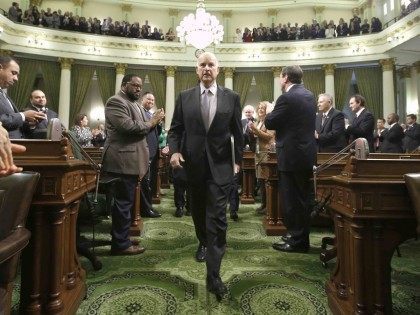
The Democrat-controlled California legislature is moving to memorialize into state law all of former President Barack Obama’s environmental rules and regulations.

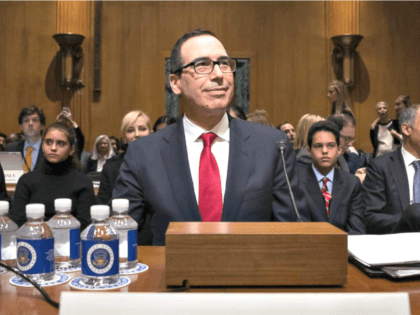
During his confirmation hearing on Thursday, Treasury Secretary nominee Steven Mnuchin said the unemployment rate reported by the Bureau of Labor Statistics does not capture the reality of the conditions facing American workers.

Data released from the Bureau of Labor Statistics (BLS) show the U.S. lost 9,000 manufacturing jobs while gaining 19,000 government jobs in October.

WASHINGTON—On Friday, the U.S. Department of Labor released employment numbers for July that look good from a distance, but under the surface, they show that millions of Americans are in dire economic straits, giving Donald Trump an opening to bring in voters who normally vote for Democrats.

The BLS reports that 94,517,000 Americans were neither employed nor made an effort to find employment — due to discouragement, retirement, schooling or otherwise — during the month of June.

The dismal May jobs numbers the Labor Department reported Friday “is unacceptable,” according to Republican National Committee Chairman Reince Priebus.

At a CNN town hall Thursday, businessman and Republican presidential candidate Donald Trump once again put the issue of manufacturing front and center in the 2016 race.

The number of native-born Americans with a job declined by more than half a million last month, according to not-seasonally adjusted government data released Friday.

While the unemployment rate dropped across the major demographic groups last month, African American unemployment jumped to more than double the white unemployment rate and nearly twice the national unemployment rate, according to new jobs data released Friday.

The number of people out of the workforce last month exceeded 94 million for the sixth month in a row, according to new Department of Labor data released Friday.

While the economy added 292,000 jobs last month, the number of Americans participating in the work force exceeded 94 million for the fifth month in a row, according to new government data released Friday.

According to the BLS, the African American unemployment rate remained more than twice as high as the unemployment rate among white workers, which declined from 4.4 percent in October to 4.3 percent in November. African American unemployment increased from 9.2 percent to 9.4 percent from October to November.

The Bureau of Labor Statistics reports that a record 94,610,000 people (ages 16 and over) were not in the labor force in September. In other words they were neither employed nor had made specific efforts to find work in the prior four weeks.

Since the start of the recession in December 2007, the foreign-born population has outpaced the native-born population in net job growth — with foreign-born workers gaining 2.6 jobs for every job gained by a native-born worker.

The number of women not in the labor force reached a record high in July, according to data released Friday by the Bureau of Labor Statistics.

The number of people not in the labor force reached another record high in July, according to new jobs data released Friday by the Bureau of Labor Statistics.

The BLS defines people outside the labor force as those ages 16 and older who are neither employed nor have “made specific efforts to find employment sometime during the 4-week period ending with the reference week.” The labor force participation rate also decreased 0.3 percent from last month to 62.6 percent.

Gallup explains its poll results in terms of an “improving U.S. job market,” at a time when a record 93,194,000 Americans were not in the labor force in April, according to the Bureau of Labor Statistics (BLS). In addition, though Gallup shows a 3.5 percent decrease in the percentage of blacks struggling to afford food, data released Friday by the BLS shows that the unemployment rate for African Americans was nearly twice the national average, and more than double the unemployment rate for whites last month.
The Bureau of Labor Statistics (BLS) just published the Job Openings and Labor Turnover Summary (JOLTS) report for February. The job openings percent for the workforce hit a 14 year high of 5.1 million, while the layoffs and discharges percentage stayed at a historic low. But despite the job availability rate more than doubling since 2009, the hiring rate only grew by 30 percent in the same period. Adjusted for population growth, the American economy is still down by 5.9 million jobs.

For the last few months, we’ve heard loud trumpeting about “strong” job reports and signs of economic growth, which the President and his defenders were naturally eager to claim credit for. Not in March.

The unemployment rate is up. But there are more jobs. Is that good or bad? It’s complicated, and that shows how misleading media coverage of the monthly unemployment rate number has become.

Union membership in America continues to dwindle, according to new data released on Friday by the Department of Labor’s Bureau of Labor Statistics.