Pakistan PM: U.S. Offered Pakistan $5 Billion to Stop Nuclear Tests
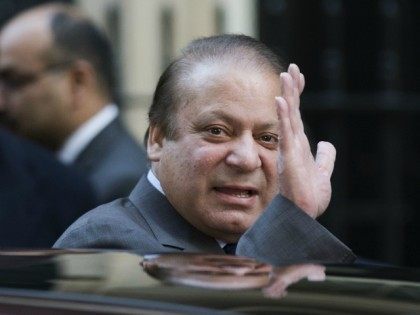
Pakistani Prime Minister Nawaz Sharif said that he rejected $5 billion offered by then-U.S. president Bill Clinton at the time to prevent Pakistan from conducting nuclear tests.

Pakistani Prime Minister Nawaz Sharif said that he rejected $5 billion offered by then-U.S. president Bill Clinton at the time to prevent Pakistan from conducting nuclear tests.

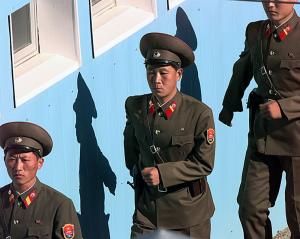
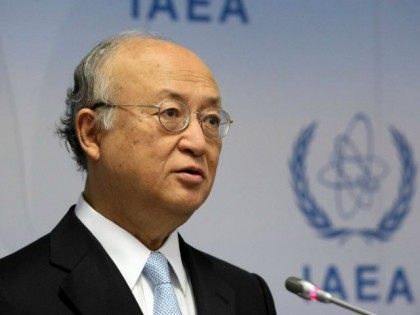
North Korea appears to be renovating and building facilities at its Yongbyon nuclear site, a central element of its atomic weapons program, the U.N. nuclear agency’s head said on Monday.

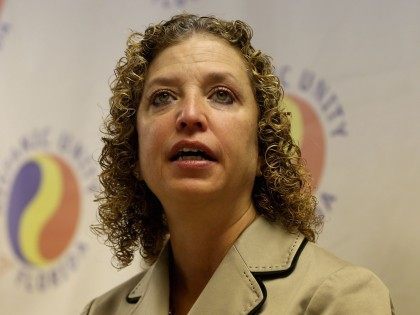
Democratic National Committee chair Debbie Wasserman Schultz cried over the Iran deal on CNN’s State of the Union this weekend when she was asked by host Jake Tapper what she would say to fellow Jews who would say to her that she had “sold out Israel” by casting a vote in favor of the agreement.

The world’s nuclear watch dog, the International Atomic Energy Agency (IAEA), says it is strapped for cash and needs at least $10 million to carry out the critical monitoring required of them in the Iranian nuclear deal.

Under a side deal reached with the IAEA, Iran will be able to use its own experts and equipment to inspect sites believed to have been used in the past for nuclear weapons research.

President Barack Obama insisted in a speech Aug. 5 that the Iran deal “doesn’t require trust,” because it “verifies” Iranian compliance. Now, that claim has been destroyed, thanks to an Associated Press report confirming that Iran will be testing a suspected nuclear site on its own.

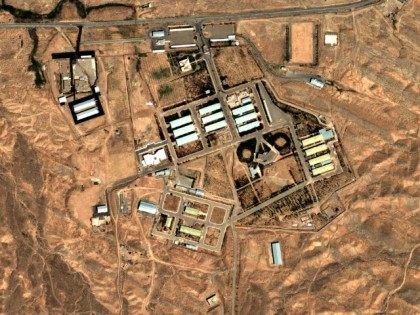
Iran is sanitizing a military site believed to have been used for nuclear weapons research in the past. Testing of the site by the IAEA is one of the final hurdles Iran has to clear to gain sanction relief, and the U.S. intelligence community has evidence Iran is trying to cheat on those tests.

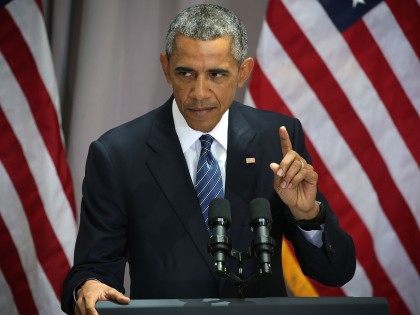
President Barack Obama defended the Iran deal in a speech Wednesday, accusing Republicans in Congress of “making common cause” with the hard-liners of the Iranian regime by opposing it. Obama addressed an audience of students and journalists at American University. Obama

The Iranian regime has filed a complaint with the International Atomic Energy Agency, alleging that the United States has already broken the nuclear deal.

If you want to be on the right side of history, you cannot repeat that mistake. “Never again” means voting no.

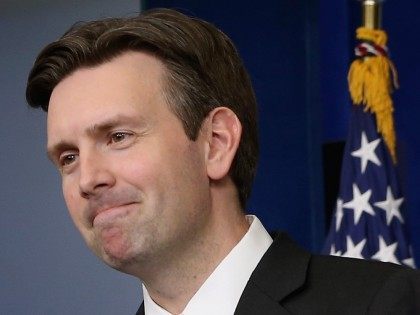
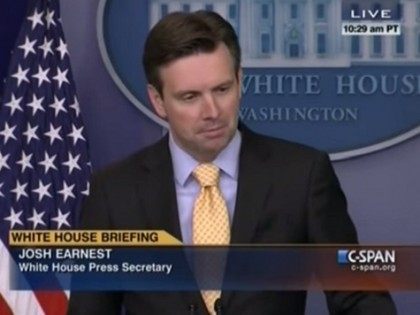
Thursday at the White House press briefing, White House press secretary Josh Earnest addressed concerns brought to light by Sen. Tom Cotton (R-AR) about the International Atomic Energy Agency’s (IAEA) nuclear agreement with Iran on how inspections will proceed and said there
If you understand the “Deflategate” football scandal, you understand what is wrong with the Iran nuclear deal.

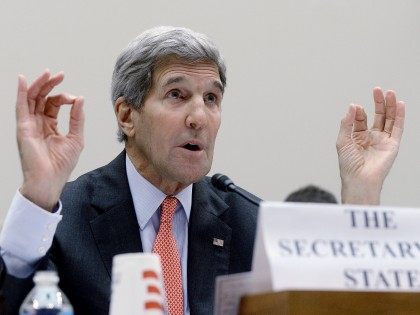
Secretary of State John Kerry misled the House Foreign Affairs Committee in his attempt to defend the Iran nuclear deal on Tuesday, claiming in his opening statement that Iran had complied with the interim agreement “completely and totally,” and that Iran was “required” by the deal to ratify a key agreement that would prevent it from developing dangerous nuclear technologies in the future. In fact, Iran violated parts of the interim agreement, and there is no guarantee that it will ratify the Additional Protocol to the Non-Proliferation Treaty.

International inspectors failed to stop Syria from stockpiling chemical weapons, in spite of an international agreement in 2013, according to a new report by the Wall Street Journal on Friday. International inspectors were skeptical of Syria’s claims to have disposed of its stockpiles, but were afraid that reporting violations would destroy the overall deal: “Members of the inspection team didn’t push for answers, worried that it would compromise their primary objective of getting the regime to surrender the 1,300 tons of chemicals it admitted to having.”

The government of Iran is presenting its deal with Obama to their people and legislature as a triumph, speaking openly about provisions that have been misrepresented to the American people and Congress by the Obama administration.

White House National Security Advisor Susan Rice admitted the existence of two secret “side deals” between Iran and the International Atomic Energy Agency (IAEA), to accompany the main Iran nuclear deal agreed last week between Iran and the P5+1 powers (U.S., Britain, France, Germany, Russia, and China).

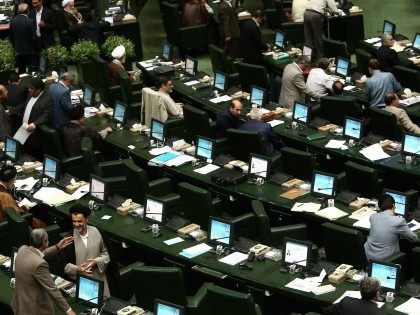
Iran’s parliament, the Islamic Constituent Assembly, or Majlis, holds the power to revise or delay key parts of the nuclear deal with Iran–even as President Barack Obama and world powers seek a UN Security Council resolution before the U.S. Congress can review the deal.

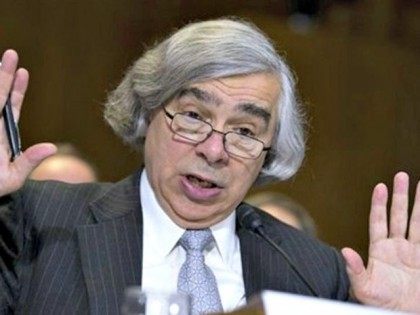
Secretary of Energy Ernest Moniz once promised “anywhere, anytime” access to Iran’s nuclear sites, known and unknown. In the end, he and the rest of the crack Obama administration negotiating team gave up on that pledge. Instead, they accepted a limited inspections system that will allow Iran to delay disputed inspections by at least 24 days. On Sunday, Moniz made the rounds of the talk shows, claiming that 24 days would be sufficient to detect whatever traces were left of nuclear activity. That is partially true, but does not actually solve the problem.
As it becomes increasingly clear that the nuclear deal with Iran will not live up to promises made just a few months ago, the Obama administration is getting some help moving the goalposts from the New York Times.

President Obama said once again on Tuesday that the U.S. would “walk away” from a bad deal with Iran. Apparently, the definition of a “bad deal” does not include one that tosses out a key commitment included in the U.S. fact sheet published in April.

President Obama’s contention that Iran’s nuclear program has been “frozen” over the last 18 months of negotiations is weakened by the IAEA finding that the Islamic Republic’s stockpile of nuclear fuel has increased.

A top adviser to Ayatollah Khamenei said Sunday that military sites will be off limits to inspections because the IAEA has been infiltrated by the CIA.

Contents: China’s military confronts US surveillance plane in South China Sea; Claims of ISIS activities in Pakistan doubted by officials; Iran’s Supreme Leader rules out any nuclear inspections

Iran will never allow Western powers or the United Nations International Atomic Energy Agency (IAEA) to inspect Tehran’s military sites as part of a final agreement with the P5+1 world powers, Iran’s Ayatollah Mohammad Ali Movahedi Kermani said Friday in an address to Tehran University students.

A spokesman for Iran’s nuclear agency has once again rejected calls to grant IAEA access to military sites, continuing a war of words on the issue that began Sunday.

Iran’s President Hassan Rouhani said Thursday he wants to press forward for a final nuclear deal with the P5+1 nations but added that the West needs the deal more than Iran does. “We do not want to speak about not

At a celebration of National Nuclear Technology Day, Iran’s president and the director of its nuclear program denied Iran has ever pursued nuclear weapons research. This is another area in which Iran’s understanding of the framework agreement seems to be at odds with explanations published by the U.S.

Iran’s Minister of Defense has rejected the claim that Iranian military would be open to inspections as part of the framework deal agreed to last week, a view seemingly at odds with the fact sheet published by the U.S. State Department.

A piece on the Iran nuclear deal published at the Huffington Post cites the IAEA inspection regime that is already in place as a sign of the forthcoming deal’s success, but what the IAEA really wants is the implementation of the so-called “additional protocol,” which amounts to snap inspections.

Iran was heavily involved in nuclear weapons research, according to documents given to the International Atomic Energy Agency (IAEA) in 2005. To date, Iran has refused to acknowledge this past work on nuclear weapons, but IAEA reports leave no doubt the documents are credible and described research only suitable for a nuclear arms.