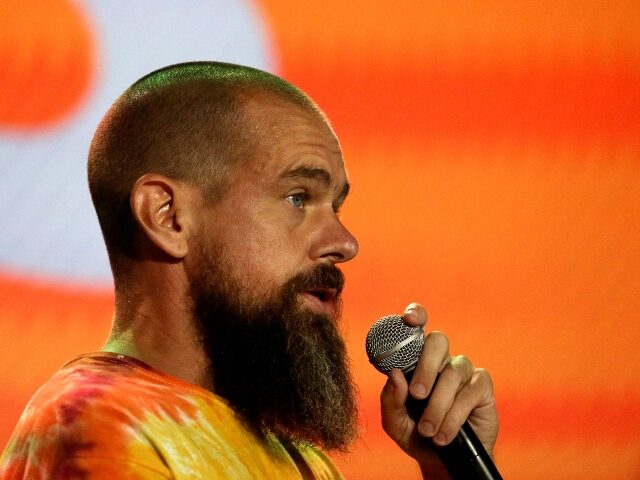

Block’s recent announcement of laying off more than 4,000 employees under the banner of AI-driven restructuring has sparked debate about whether AI is genuinely replacing human workers or simply providing cover for traditional corporate downsizing.
The technology industry was sent into shock last week when Jack Dorsey’s Block, formerly known as Square, announced it would eliminate more than 4,000 positions in what the company described as a radical AI-driven reorganization. However, a former senior executive at the company is raising questions about the true motivations behind these sweeping job cuts.
In a recent opinion piece in the New York Times, Aaron Zamost, who served as head of communications, policy and people at Square from 2015 to 2020, argues that while AI may provide new justification for the layoffs, the underlying reasons appear more closely aligned with traditional cost-cutting measures than with genuine technological transformation. Writing about his experience and observations, Zamost suggests that neither the public nor Block itself truly knows whether AI can effectively replace the eliminated positions.
Block CEO Jack Dorsey announced the restructuring on Thursday, declaring that AI is “enabling a new way of working which fundamentally changes what it means to build and run a company.” The announcement was met with visible dissatisfaction from employees, who sent thumbs-down emojis cascading across their screens during the company-wide video meeting that followed.
According to Zamost, Dorsey acknowledged in a note to staff that some decisions about which roles to eliminate might prove to be mistakes. This admission, Zamost notes, is particularly significant given that the company proceeded with cutting nearly half its workforce despite this uncertainty. However, he explains that such bold moves are characteristic of Silicon Valley leadership and Dorsey specifically, who has a history of making large bets based on early signals and patterns.
Dorsey, who also co-founded Twitter, has previously demonstrated a willingness to act decisively on emerging trends, including early adoption of Bitcoin and closing offices at the beginning of the COVID-19 pandemic before other companies followed suit. Zamost suggests that as an engineer-turned-leader, Dorsey may be extrapolating from recent improvements in AI coding tools to conclude that AI will similarly transform all types of work across the organization.
The former executive points out that Block has undergone multiple rounds of layoffs in recent years, including cuts in 2024, 2025, and February 2026. He attributes much of the company’s staffing issues to earlier executive conflicts that led to team duplication throughout the organization, resulting in the company tripling its headcount over four years. Examining specific cuts, such as reductions to the policy team and elimination of diversity and inclusion roles, Zamost argues the restructuring resembles standard prioritization and cost management rather than AI-driven innovation.
The broader context of the AI arms race cannot be ignored in understanding Block’s decision. The largest AI companies are projected to spend amounts roughly equivalent to Sweden’s gross domestic product this year to support their AI initiatives. Fear that AI advancement will devastate the traditional software industry has led investors to significantly reduce valuations of established companies like Salesforce and Adobe. Block, as a financial services technology business rather than an AI company, faces pressure to demonstrate it can adapt to avoid what Zamost calls “software dodo” extinction.
According to Zamost, demonstrating AI readiness to Wall Street matters more than actually knowing how to deploy the technology effectively. Once a company announces AI-related job cuts, remaining employees have little choice but to embrace that vision. He reports that several months ago, Block employees were informed the company was tracking their use of AI tools, with the implicit message that adoption was mandatory. The layoffs then became an enforcement mechanism, reducing teams dramatically and forcing remaining workers to attempt using AI tools to absorb the work of eliminated colleagues.
This approach increases AI usage metrics and creates self-reinforcing conditions that support the AI-first narrative. However, Zamost notes a significant gap between claims that AI can replace human work and the current reality of AI capabilities. He cites disappointing encounters with the technology, including unhelpful email summaries, problematic chatbot responses, and AI systems that provide incorrect information.
While generative AI may help produce initial drafts of content with proper prompting, Zamost argues that chatbots cannot perform many essential business functions such as meeting with government officials, casting commercial actors, or negotiating with regulatory agencies like the Securities and Exchange Commission. He suggests that executives are treating AI as equally useful across all disciplines today, despite evidence that not all eliminated roles can be adequately handled by current AI technology.
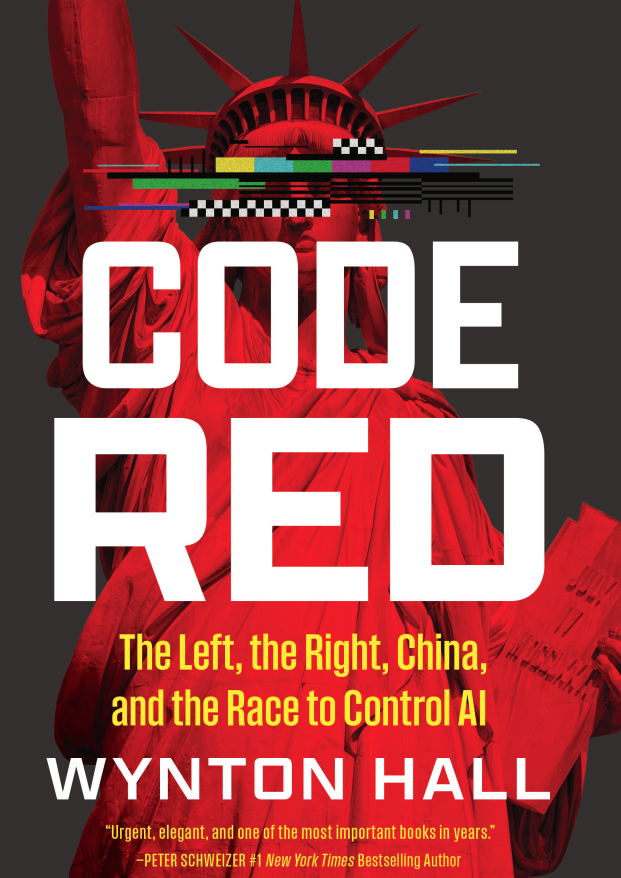
Breitbart News social media director Wynton Hall, author of the forthcoming book Code Red: The Left, the Right, China, and the Race to Control AI, recently explained four factors that will define AI’s impact on the midterm elections:
1) The Money Battle: Massive spending by pro-AI Super PACs like the $125 million Leading the Future, backed by Trump donor heavyweights like Open AI president Greg Brockman and Andreessen Horowitz, will support a pro-AI innovation, light-touch regulations agenda and square off against pro-AI regulation groups, such as the $50 million Public First 501(c)4, which received a $20 million donation from Anthropic. Both groups will support candidates across the political aisle.
2) AI-Washing: Another factor will be whether voter perceptions will be swayed between now and the November elections by so-called “AI-washing”—the business practice of blaming layoffs on artificial intelligence instead of traditional business factors that may embarrass executives or expose their mismanagement.
3) Bipartisan Opposition to Higher Electricity and Water Costs from Data Centers: Third, the Trump Administration’s handling of growing bipartisan affordability concerns over data center construction’s toll on electricity and water costs for local communities will have a major impact. President Trump is currently developing a compact to make sure power-hungry data centers don’t stick working class Americans with the tab. MAGA loyalist and White House Senior Counselor for Trade and Manufacturing Peter Navarro summed it up best: “All of these data center builders,” he said, “need to pay for all, all of the costs,” including electricity, water, and grid strain. “I just want to assure people that we’re on it, we also feel your pain.”
4. Advancements in Agentic AI and Recursive Self-Improvement (RSI): Finally, and perhaps most importantly, much will hinge on the warp-speed developments of the technology itself. Over the next nine months, much can and will accelerate with agentic AI (i.e. agents that can perform real work) and recursive self-improvement (RSI) (AI that autonomously enhances itself). Factors like these could have significant impacts. A single update this month to Anthropic’s Claude Cowork AI agent sparked a nearly $300 billion market sell-off, accelerating the ongoing debate over whether AI agents will eat into Software as a Service (SaaS). Similarly, gains in RSI could prove pivotal. “If the predictions for recursive self-improvement in 2026 is true,” says influential AI expert and Moonshots podcast host Peter Diamandis, “every prediction curve we have accelerates dramatically—and every governance framework, safety protocol, and regulatory approach is already obsolete. We’re building brakes for a car that’s about to become a rocket.”
Read more at the New York Times here.
Lucas Nolan is a reporter for Breitbart News covering issues of free speech and online censorship.
COMMENTS
Please let us know if you're having issues with commenting.