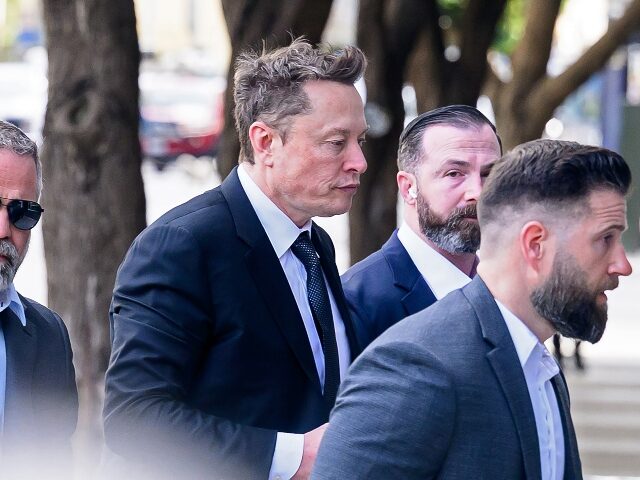

A California jury has determined that Elon Musk defrauded Twitter shareholders during the period leading up to his $44 billion purchase of the social media platform, according to a verdict delivered on Friday.
CNBC reports that a California jury has ruled that Elon Musk misled Twitter investors in the months before completing his acquisition of the company in 2022. The verdict, issued on Friday in the class action lawsuit Pampena v. Musk, could result in damages reaching up to $2.6 billion, according to attorneys representing the plaintiffs.
The lawsuit was originally filed in October 2022, shortly after Musk finalized his purchase of Twitter at $54.20 per share. Following the acquisition, Musk renamed the company X and later merged it with his artificial intelligence company xAI and subsequently with SpaceX.
Joseph Cotchett, an attorney representing the Twitter investors, addressed reporters at the San Francisco courthouse following the verdict. “This is a great example of what you cannot do to the average investor — people that have 401Ks, kids, pension funds, teachers, firemen, nurses,” Cotchett said. “That’s what this case was all about. This was not about Musk. It was about the whole operation.”
However, Musk’s legal team from Quinn Emanuel responded to the ruling with plans to appeal. In an emailed statement, his attorneys said, “We view today’s verdict, where the jury found both for and against the plaintiffs and found no fraud scheme, as a bump in the road. And we look forward to vindication on appeal.”
The case centers on events that occurred after Musk initially offered to purchase Twitter in April 2022. His enthusiasm for the deal quickly diminished as he began publicly questioning the company’s reported numbers regarding bots, spam accounts, and fake profiles on the platform. In May 2022, Musk announced via tweet that the acquisition was “temporarily on hold” pending verification from Twitter’s CEO that inauthentic accounts represented only about five percent of users, as stated in the company’s SEC filings.
These public statements had immediate market consequences. Musk’s tweets and subsequent comments caused Twitter shares to drop nearly 10 percent in a single trading session. After four days of deliberation, the jury unanimously concluded that Musk’s tweets on May 13 and May 17 were materially false or misleading to investors.
The plaintiffs in the case included former Twitter shareholders, retail investors, and options traders who argued that Musk’s public remarks constituted a deliberate scheme to pressure the company’s board into accepting a lower purchase price than his original offer. They contended that declining stock prices at Tesla provided additional motivation for this strategy, as falling Tesla shares would have required Musk to sell even more of his stake in the electric vehicle company to finance the Twitter acquisition.
According to the lawsuit, the plaintiffs sold their Twitter shares at prices below $54.20 following Musk’s posts and press interview comments. The potential damages figure of up to $2.6 billion is based on expert analysis of how Musk’s shifting positions affected Twitter’s share price during the relevant period.
Attorneys for the plaintiffs indicated that approximately 90 days will be needed to establish claims administration, followed by several additional months for the government to process claims before affected investors can begin receiving compensation for their losses.
Defense attorneys argued that Musk’s concerns about bots, spam, and fake accounts on Twitter were legitimate and well-founded, and did not constitute securities fraud or an intentional effort to manipulate the company’s stock price downward.
The jury’s verdict contained a notable distinction. While jurors determined that Musk made false and misleading statements that harmed certain Twitter shareholders, they concluded he did not engage in a specific, coordinated scheme to defraud investors.
Read more at CNBC here.
Lucas Nolan is a reporter for Breitbart News covering issues of free speech and online censorship.
COMMENTS
Please let us know if you're having issues with commenting.