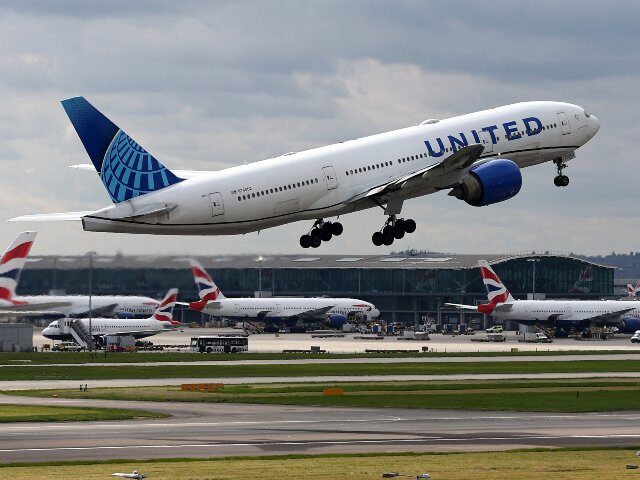

United Airlines said Wednesday it will stop personal AI assistants and agents from completing ticket bookings on its systems, citing data privacy risks and federal rules the airline says automated agents cannot satisfy.
The Wall Street Journal reports that United said the AI tools risk exposing sensitive customer information and could trigger purchases customers didn’t intend to make. The airline also pointed to a legal problem: Federal Aviation Administration and Transportation Department rules require airlines to present certain information to customers directly, something an automated agent can’t always do. United gave one example: an AI agent cannot attest during check-in that a passenger’s bags don’t contain explosives.
Under the new policy, AI agents including Meta’s Muse and OpenAI’s Dots will still be able to pull up United’s flight options and prices for a customer. What they won’t be able to do is finish the transaction on United’s website. United said its back-end technology can already tell whether a booking came from an individual, a traditional travel agency, or an AI agent, and that for now, it isn’t seeing many bookings coming through AI agents at all. The airline said it will keep evaluating the tools as personal AI assistants evolve.
United joins Amazon in keeping purchasing bots at arm’s length, a more cautious stance than other major U.S. carriers have taken. None have publicly moved against AI agents. Southwest Airlines launched a ChatGPT plug-in earlier this year that lets customers search its flight inventory through the chatbot. Delta said AI assistants can complete bookings once authenticated, with extra safeguards applied to “sensitive transactions” such as trips booked for unaccompanied minors. American Airlines said some AI agents, including Muse, can already buy tickets through certain partners, and that customers can direct an AI agent to complete a booking directly on American’s website.
United CEO Scott Kirby addressed the company’s approach Tuesday at an event in Chicago. “To be honest, I don’t want to create another middleman,” he said. Kirby said he came to appreciate AI’s potential after building his own sports betting app by vibe-coding it, a process that took three hourly sessions with a tutor.
United also issued a broader call to other companies: “consider measures that preserve the data and security of their customers and strengthen safety.”
The announcement comes as interest in AI-driven travel booking picks up elsewhere in the industry. OpenAI this week purchased Odessia, a startup building AI tools for booking travel. Last month, Meta CEO Mark Zuckerberg said travel planning ranks among the top use cases for the company’s Muse agent.
Companies are racing to build out AI booking capabilities, but actual usage so far looks thin. Uber Technologies said that during the busy Halloween week earlier this month, its drivers completed 320 million trips combined across Uber and Uber Eats. Of those, AI agents accounted for just 500 Uber Eats orders and four ride bookings.
AI presents potential beneficial uses for businesses of all sizes as well as individuals. But it also has serious landmines, like United’s concern that AI companies will serve as another middleman between it and passengers. Breitbart News social media director Wynton Hall has written his New York Times bestseller Code Red: The Left, the Right, China, and the Race to Control AI to serve as the definitive guide on how the MAGA movement can create positions on AI that benefit humanity without handing control of our nation to the leftists of Silicon Valley or allowing the Chinese to take over the world.
Read more at the Wall Street Journal here.
Lucas Nolan is a reporter for Breitbart News covering issues of AI, free speech, and online censorship.
COMMENTS
Please let us know if you're having issues with commenting.