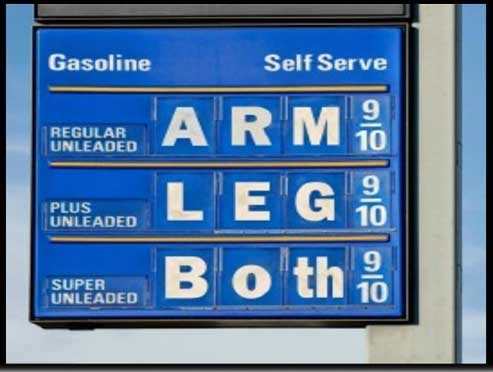


As a rule, Barack Obama likes other people to take the blame for his mistakes. And this year, as he seeks re-election, this is especially true. It explains why Obama is literally flailing about on the national stage, desperately seeking someone (or something) on which he can pin the blame for high gas prices.
To date, Obama has shamelessly blamed Americans who own SUVs, smugly telling one such American that if the gas prices bothered him, he should trade his SUV for a vehicle that gets better mileage. He’s also blamed oil companies for the higher prices, even trying to raise taxes on them as part of his ruse of labeling them as the cause of the escalating costs at the pump. He’s tried to blame the Republicans who voted against tax increases on oil companies (but this was undermined by the fact that a number of Democrats also voted against the tax increases).
Obama also tried to blame Israel for high gas prices in America, saying the unrest they’ve caused via their plans to attack Iran has driven up the cost of crude. And when all these attempts failed, he tried to blame investors and Wall Street speculators for driving up gas prices.
But the one thing he hasn’t done is admit that, thanks to himself and Secretary of the Interior Ken Salazar, domestic oil producers can rarely get a permit to drill, offshore producers still face a de facto moratorium, and opportunities like the Keystone Pipeline are rejected out of hand. Yet these continue to be Obama’s gas prices. The106% price increase we’ve witnessed in prices at the pump since Obama took office is due to his Carter-like approach to energy in this country, and little else.
The same Obama who spent the 2008 campaign promising again and again, “I’m not going to make any excuses,” is now doing his best to make an excuse that will appease the American people for one more election cycle. But no excuse is sufficient and no scapegoat can be found for the man who is literally denying Americans the fuel they need to power their lives.
COMMENTS
Please let us know if you're having issues with commenting.