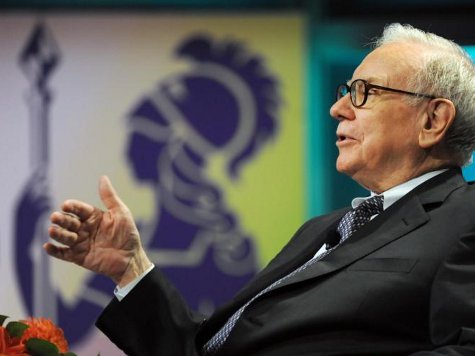


Bankers, hedge fund managers and greedy CEOs. That’s the Occupy image ofAmerica’s top 1%.
But it turns out that’s actually more of a caricature thana portrait. The real 1% are “hard-driving workaholics who tend to haveadvanced degrees and bring a level of talent and skill to their jobs thatattracts premium pay in the global economy.” That’s the description offeredby Nina Easton in a new piece for Fortune magazine.
There are a lot of reasons for the growing income gap in America, andquite a few of them turn out to be things worth emulating rather thandenigrating. For instance, one-percenters (incomes starting at about $350kin 2009) often have stable two-parent homes. Combining two professionalincomes turns out to be one of the keys to success. In 1979, the number ofmarried women in the 1% who worked was 25%; by 2005 it was 40%. Another bigdividing line is having a college education:
Harvard’s Lawrence Katz has calculated that even if all thegains of the top 1% were redistributed to the 99%, household incomes wouldgo up by less than half of what they would if everyone had a college degree.In other words, the financial rewards of higher education are a bigcontributor to the income gap.
By contrast, the wages of men without a college degree “have dropped by awhopping third over the past three decades.” Some of that may be caused byincreased technology and some by global competition. Neither is likely toreverse the trend any time soon. A good future often lies in a goodeducation.
As Easton points out, demonizing the wealthy is pretty easy to do thesedays, but there’s still a lot to admire about the people who make it intothe top 1%. Do we really want to punish hard work, good schooling, stablefamilies, and excellence (in sports, entertainment, small business and, yes,management)? Doesn’t it make more sense to encourage people to emulate thosegood qualities rather than denigrate the 1% achievements as some kind ofcheating of the system?
COMMENTS
Please let us know if you're having issues with commenting.