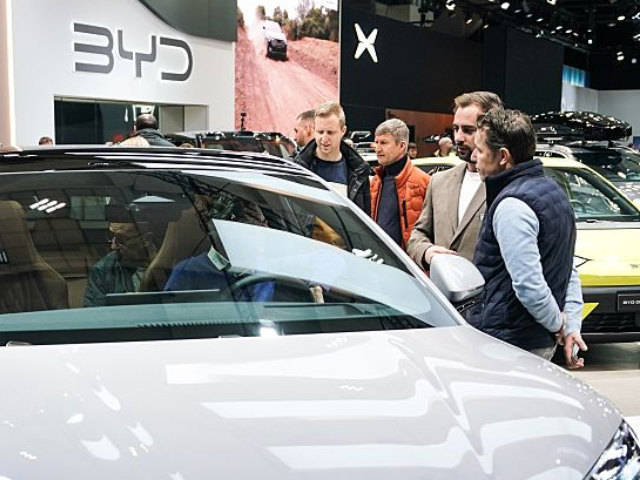
Chinese automaker BYD posted a 30.1 percent drop in sales for January, year-on-year, marking the fifth straight month of declining sales for the world’s largest electric vehicle (EV) manufacturer.
BYD’s chief worldwide rival for EV sales, Elon Musk’s Tesla, announced a nine-percent drop in sales when publishing its year-end figures in January. This allowed BYD to surpass it as the top EV company by sales volume, thanks to a massive surge in overseas sales during the first half of the year, even though the Chinese giant was having sales problems of its own in the last quarter of 2025.
BYD’s production of EVs was down by 29.1 percent in January, extending an even longer losing streak than its decline in sales. This may have been partly due to BYD shifting its manufacturing effort to hybrids instead of full EVs. Industry analysts also point to increasing competition from other Chinese auto companies such as Nio, Li Auto, Xpeng, and Xiaomi, although all of those companies experienced declining sales in the closing months of 2025.
Another compelling reason for BYD to ramp down EV production is that China plans to end certain subsidies for purchasing the vehicles in 2026.
Investor’s Business Daily (IBD) noted on Monday that production from Chinese factories normally ramps down, and consumer spending falls, in January to anticipate the Lunar New Year holiday. Lunar New Year falls on February 17 this year, so the holiday could dampen production and sales until March.
IBD seemed convinced BYD is “tumbling” from its lofty perch, losing money and market share by chasing budget-priced EV sales when that market is fading rapidly. Tesla’s more upscale niche looks hotter in China at the moment, and BYD rivals Xiaomi and Xpeng are more directly competing with Tesla for those upscale buyers.
BYD’s hopes of competing in the low-end EV market internationally have been stymied by restrictions on Chinese imports in Europe and the United States. The company revised its export prediction for 2026 down from 1.6 million units to 1.3 million in its latest reports, without explaining why, and it has yet to announce global sales targets for the new year.
Barron’s on Monday sensed the bloom coming off the EV rose worldwide, with the possible exception of Europe, where sales remain fairly strong. In most other major markets, the dream of EVs completely replacing gas-powered vehicles is dying, and electric cars are settling into a niche market.
Even trailblazing Tesla is making no secret of transitioning away from electric vehicles and into artificial intelligence (AI), with applications such as “robo-taxis” — an industry where rechargeable electric vehicles piloted by AI are more practical than for individual consumers seeking primary personal vehicles. Tesla stock skyrocketed on Friday on news of the shift to AI.
COMMENTS
Please let us know if you're having issues with commenting.