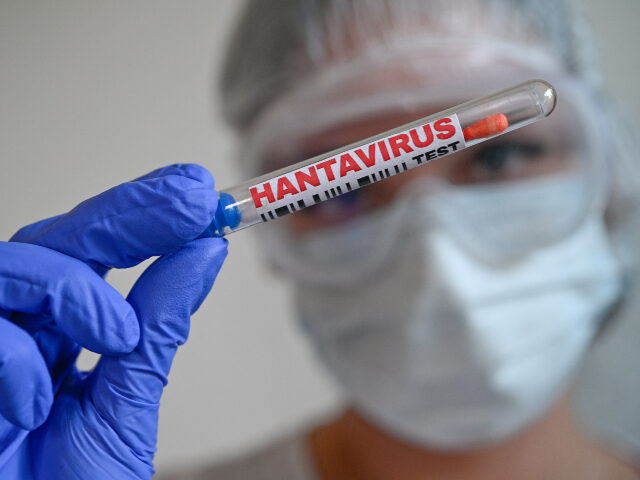

The World Health Organization (W.H.O.) on Tuesday reported two new hantavirus infections linked to the cruise ship MV Hondius, bringing the total up to 11, including 9 confirmed cases and 2 suspected.
W.H.O. considers the outbreak to be under control, with low risk to the general public – although a few more infections may yet be detected.
“We expect more cases given the dynamics of spread on a ship and the virus’ incubation period. At the moment, there is no sign that we are seeing the start of a larger outbreak,” W.H.O. said in its latest hantavirus update.
The Spanish Health Ministry confirmed that one of the new confirmed infections is a Spanish passenger from the Hondius who tested positive for the hantavirus on Monday. The ship’s Spanish passengers were the first to disembark in the Canary Islands and have been kept in isolation at a military hospital. Other than the infection announced on Tuesday, all of the Spanish passengers have tested negative for hantavirus.
The other new infection is a French woman who was evacuated to Paris and began to display symptoms on Sunday night. Her doctors said she has “life-threatening lung and heart problems,” and has been connected to a life-support machine that pumps blood through an artificial lung.
W.H.O. stressed that all of the confirmed cases to date have been passengers aboard the Hondius. Health officials are tracing everyone they came into contact with to ensure the disease does not spread, and while a few suspected cases are being monitored, no hantavirus infection has been confirmed for anyone beyond the ship’s passengers and crew.
Some health experts have expressed concerns that if any of the possible infections now under observation turn out to be positive, it could mean the Andes hantavirus strain loosed upon the ship is more infectious than previously believed.
“What we’re hearing now, including from the doctors who were on the ship, is that at least a few people contracted it without that long, prolonged exposure that we’ve always assumed,” Dr. Ashish Jha of Harvard University’s Kennedy School told NBC News on Monday.
Dr. Brendan Jackson of the Centers for Disease Control and Prevention (CDC) countered that no evidence currently exists that the Andes strain has spread to anyone beyond the uniquely disease-friendly confines of the cruise ship.
Jackson noted that the Andes strain has previously been understood to spread among “household members that are doing things like sharing beds, or sharing eating utensils, or having contact with body fluids,” and so far the known Hondius infections have all occurred under such conditions.
NBC noted that the worst documented “superspreader” outbreak of the Andes strain in Argentina involved 34 cases and 11 deaths, with most of the transmission occurring at crowded events like birth parties.
W.H.O. Department of Epidemic and Pandemic Threat Management director Maria van Kerkhove on Sunday advised local and national health officials to treat every repatriated Hondius passenger as a “high-risk contact” to minimize uncertainty. W.H.O. recommends either home or hospital quarantine for 42 days for high-risk contacts, which would keep them isolated until the incubation period for hantavirus has expired.
This recommendation has been disputed by U.S. health officials, who have said the Americans who returned from the Hondius and tested negative should be monitored for symptoms and stay in touch with local health officials for 42 days, but not quarantined.
French Health Minister Stephanie Rist said on Tuesday that it was too early to tell if the strain involved in the current outbreak matches previous versions of the Andes hantavirus.
“There are things we don’t know. We do not yet have the complete sequence of the virus,” she said. “We cannot be certain that this virus has not yet mutated.”
The Radboudumc hospital in the Dutch city of Nijmegen on Tuesday took the precaution of quarantining 12 staff members because blood and urine from a Hondius hantavirus patient were handled without proper protocols.
“Strict procedures were followed, but not the very strictest procedures that apply in cases involving this hantavirus,” Dutch Health Minister Sophie Hermans said in a report to parliament.
“The likelihood that staff have been infected as a result is small, but because we know we are dealing with a serious virus, Radboudumc has said: we will play it safe,” she said.
“It really is a different situation than with COVID. With the knowledge we have and the measures we are taking, we are confident we can keep this virus under control,” she added, reiterating a point constantly made by W.H.O. officials that the hantavirus is very different from the Wuhan coronavirus.
COMMENTS
Please let us know if you're having issues with commenting.