A report in a Kremlin-friendly publication claimed Thursday that the Russian government is “expected” to send oil to Cuba amid a catastrophic fuel shortage, but did not offer a time frame for that aid or any on-the-record confirmation that it would be arriving.
Both independent reports in Cuba and analysts reading into the Izvestia report suggested that while Russia, the Cuban Communist Party’s most oil-rich and stable political ally, may be seeking to help Havana by shipping oil, it may also be delaying the decision to send a shipment in the face of potential action by the United States to seize the ship.
Cuba has experienced a near-total state of abject poverty for most of the past 67 years, the result of a coup d’etat in 1959 that brought mass murderer Fidel Castro to power. It has survived largely through siphoning wealth off of its leftist allies: first, the Soviet Union, then the socialist regime in Venezuela, alongside China and Russia.
Venezuelan oil supplies, often gifted to the Castro regime, abruptly ran dry in January as a result of the arrest of deposed dictator Nicolás Maduro by United States forces. While the socialist regime remains in power, in the hands of Vice President Delcy Rodríguez, Rodríguez halted oil shipments to Cuba and has begun cooperating with the United States, enabling American companies to help rehabilitate the deteriorated Venezuelan oil industry. President Donald Trump has made not supplying the Castro regime with oil a necessary requirement to continue American-Venezuelan cooperation.
“THERE WILL BE NO MORE OIL OR MONEY GOING TO CUBA — ZERO! I strongly suggest they make a deal, BEFORE IT IS TOO LATE,” Trump wrote in a message on the website Truth Social on January 11. He followed up the comment with the signing of an executive order last week declaring the Castro regime a national security threat and allowing for the imposition of tariffs on third-party countries that ship oil to Cuba. The United States has also significantly increased its humanitarian aid shipments to Cuba, distributed through the Catholic Church to prevent the regime from stealing it.
The shortages in basic fuels – including diesel, gasoline, and jet fuel – have significantly hindered Cuba’s ability to function. This weekend, its international airports sent out a warning that they no longer had jet fuel for any visiting plane, prompting flight cancelations around the world and an exodus of tourists from Cuba’s most loyal tourism sources. A host of leftist celebrities have launched a campaign demanding the United States lift its sanctions on the brutal communist state.
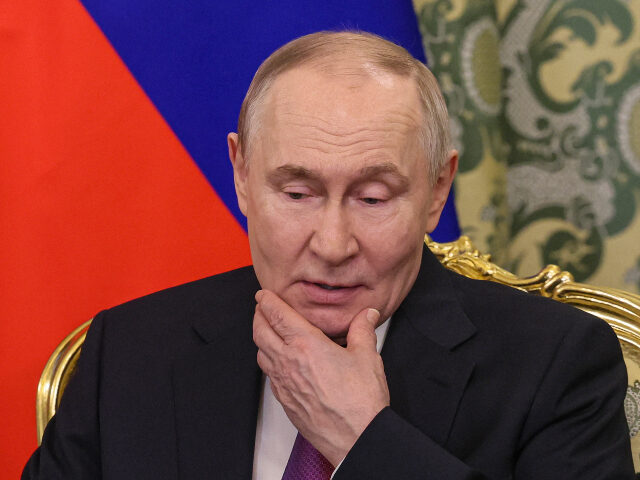
Izvestia, a regime-friendly Russian newspaper, reported on Thursday that the government of strongman Vladimir Putin was “expected” to send oil to Cuba.
“As far as we know, Russia is expected to supply oil and petroleum products to Cuba as humanitarian aid in the near future,” the Russian embassy in Havana reportedly told the newspaper. The report did not offer any information as to when such a shipment could leave Russia and aroused uncertainty given the use of the word “expected,” rather than a clear confirmation that a shipment would be on its way.
Translating the Izvestia report, the independent Cuban outlet 14 y Medio noted that one expert speaking to the publication suggested that it was highly unlikely Russia would give Cuba free oil, and it is unclear how Cuba would pay for it. The Cuban outlet added that Russian officials are reportedly concerned that any Russian oil tanker on its way to Cuba could be intercepted by American naval forces, causing a diplomatic crisis.
The Russian government has in the past openly rejected the idea of propping up the Castro regime without a return on its investments. In 2017, during the first Trump presidency, Russian Energy Minister Alexander Novak complained that Moscow could not trust Cuba to pay for any supplies Russia offered.
“Cuba really wants more supplies, but the question is in financial sources. If financial resources are found – the companies will deliver,” Novak said. “It’s not charity.”
Unlike in 2017, however, the Cuban regime is now offering Russia a very valuable service: swindling its citizens into being used as cannon fodder in the invasion of Ukraine. According to Ukrainian intelligence officials, Kyiv has discovered as many as 20,000 Cuban citizens fighting alongside Russia to destroy the fabric of the Ukrainian state. Some of those captured, allowed to speak to media through the Ukrainian government, have claimed to have answered advertisements for construction jobs and other civilian positions on Facebook, only to find themselves in the middle of the Ukrainian war theater with no training.
The issue of Russia having its oil tankers potentially seized is a real threat that could undermine Cuba’s argument for receiving support. Last month, Secretary of Homeland Security Kristi Noem published videos of a series of American operations to seize “ghost fleet” ships illicitly helping ship sanctioned Venezuelan oil around the world. One of them was the Russian-flagged tanker Bella I, later renamed the Marinera.
In his comments to reporters on Thursday, top Kremlin spokesman Dmitry Peskov said when asked about aiding Cuba that Russia was not looking for any “escalation” with the United States.
“We would not want any escalation, but, on the other hand, we currently don’t have much trade [with the US], that is the reality,” he said, referencing the possibility of America imposing sanctions on Russia via the Trump executive order.
COMMENTS
Please let us know if you're having issues with commenting.