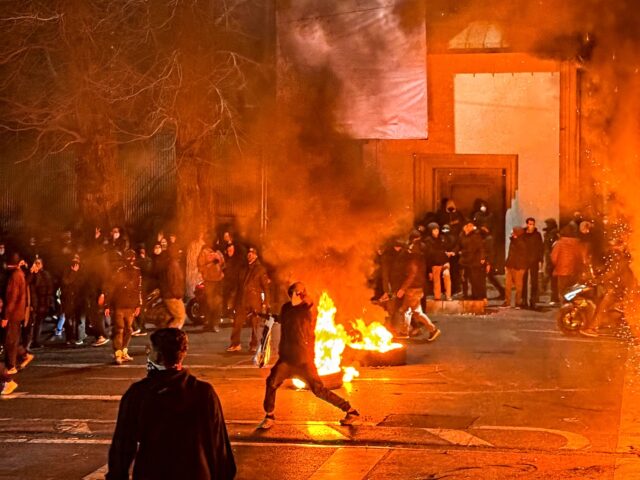
Iranian Foreign Minister Abbas Araghchi claimed on Monday the uprising against his brutal regime is “now under total control” after hundreds, or even thousands, of civilians were killed by security forces.
Estimates of the death toll vary widely. The Human Rights Activists News Agency (HRANA) said 496 protesters have been killed, plus 48 members of Iran’s security forces, and about 10,600 people have been arrested over the past two weeks.
Iran Human Rights (IHR), a group based in Norway, cited “unverified reports” that “suggest the possibility that over 2,000 people may have died” since the regime began shutting down Internet and mobile phone access on Thursday to cover its activities.
“The massacre of protesters occurring since the 3rd, especially after the nationwide internet shutdown, may be far more widespread than we can imagine,” said IHR director Mahmood Amiry-Moghaddam. “The international community must mobilize all possible means to stop this.”
The communications blackout made it difficult for international observers to monitor the violence, but a few videos have leaked out, some of them showing large numbers of corpses and body bags. Iranian doctors who are able to communicate with the outside world have said hospitals in several cities were overwhelmed with casualties.
Iranian state media reported a much higher casualty count for security officers than any outside estimate, claiming at least 121 officers have been killed, while refusing to report on the number of casualties among protesters.
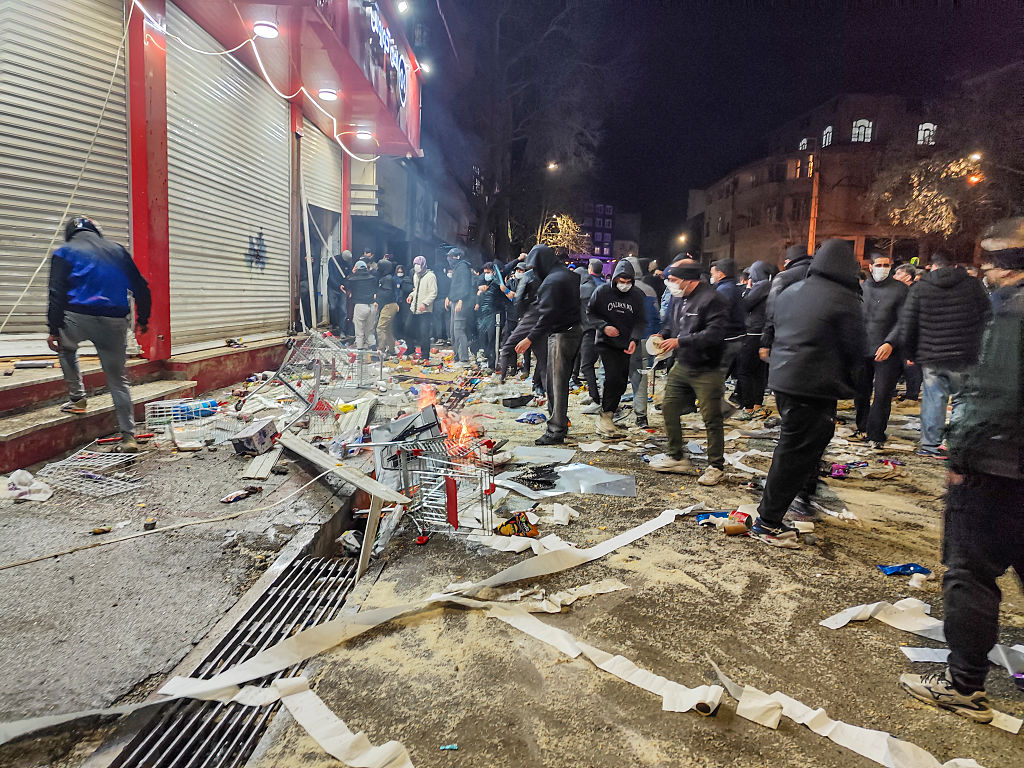
Iranians gather while blocking a street during a protest in Kermanshah, Iran on January 8, 2026. The nationwide protests started in Tehran’s Grand Bazaar against the failing economic policies in late December, which spread to universities and other cities, and included economic slogans, to political and anti-government ones. (Kamran / Middle East Images / AFP via Getty Images)
CBS News reported on a widely-circulated video showing dozens of bodies wrapped in black bags outside a morgue in the southern city of Kahrizak. In the video, grieving civilians are seen searching through the bodies, looking for their loved ones.
Disturbingly, the regime appears to want this particular video to be seen – possibly to “show sympathy with the protesters and to bolster their narrative that it is more radical actors, inspired by Mr. Trump’s messages of support, behind the violence, not the government,” as CBS put it.
“The situation is now under total control,” Araghchi told a group of foreign diplomats on Monday.
The ambassadors from Italy, Germany, France, and the United Kingdom were summoned to the foreign ministry in Tehran on Monday and told that their governments must withdraw all public support for the protests because Iran deems such support “an unacceptable intervention in the internal security of the country.”
Araghchi pushed the regime line that some of the protesters were innocent civilians with legitimate complaints, while others were violent agitators who were “stoked and fueled” by foreign powers. He vowed that regime security forces would “hunt down” these agitators.
The Iranian foreign minister claimed 53 mosques and 180 ambulances were set on fire during the protests, and insisted that “no true Iranian would attack a mosque.”
Iranian President Masoud Pezeshkian pushed a similar narrative in a speech on Sunday, blaming the United States and Israel for unleashing “rioters and terrorists” on the streets of Iranian cities.
“The U.S. and Israel are sitting there, giving instructions – saying, ‘Go ahead, we are with you.’ The same ones who attacked this country and killed our youth and our children are now instructing these people to carry out these acts, telling them to destroy and promising support afterward,” he said.
RELATED: Iranian Community in San Antonio holds Pro-Iran Freedom Rally
“Families are pleading that they not allow their young people to mix with rioters and terrorists who behead and kill people. Protest if you must, we must listen to your protest. Your concerns must be addressed. We must sit together, hand in hand, and resolve them,” he said.
Parliamentary speaker Mohammad Baaher Qalibaf, a hardline supporter of the theocracy, defended the government crackdown on protesters as a “war against terrorists,” which he portrayed as one element of a “four-front war” against Israel and the United States.
Qalibaf warned the United States not to make a “miscalculation” by intervening to defend the protesters.
“Let us be clear: in the case of an attack on Iran, the occupied territories, as well as all U.S. bases and ships, will be our legitimate target,” he said. “The occupied territories” means Israel.
U.N. Secretary Antonio Guterres said on Monday he was “shocked” by “reports of violence and excessive use of force by Iranian authorities against protesters.”
“All Iranians must be able to express their grievances peacefully and without fear,” he said through a spokesman. “The rights to freedom of expression, association and peaceful assembly, as enshrined in international law, must be fully respected and protected.”
Guterres called on Iranian officials to show more restraint when dealing with demonstrators, and to immediately lift their blackout on communications.
COMMENTS
Please let us know if you're having issues with commenting.