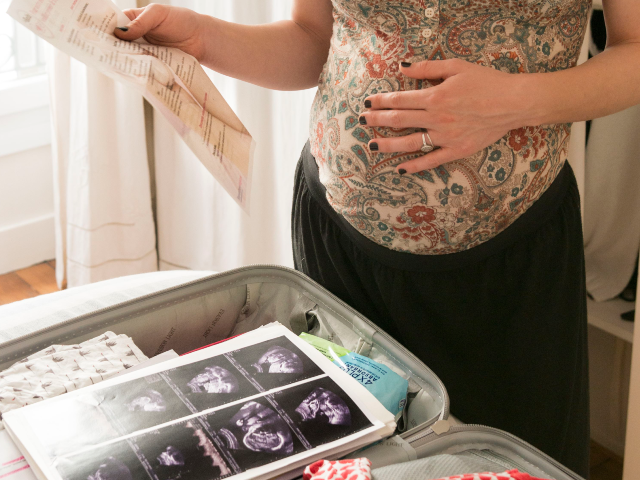

A judge temporarily halted the state’s new law restricting abortions once an unborn baby’s heartbeat can be detected, which is usually around six weeks of pregnancy.
Natrona County District Judge Dan Forgey granted temporary injunctive relief on Friday against the Human Heartbeat Act while litigation continues. Forgey wrote that the abortion organizations that filed the lawsuit “made a sufficient showing of irreparable injury” and that “the state defendants did not persuasively argue otherwise.”
Forgey also wrote that the abortion organizations made “a sufficient showing of probable success” under the Article 1, Section 38 of the Wyoming Constitution, which states that adults “have the right to make his or her own health care decisions.”
Forgey’s ruling comes months after the Wyoming Supreme Court struck down other abortion restrictions in the state, finding the laws violated the state constitution. Wyoming Republicans passed the heartbeat bill in the hopes of being successful with a narrower ban.
Republican Gov. Mark Gordon signed the heartbeat bill into law in March, which contains exceptions after that point in cases of serious medical emergencies or to protect the life of the mother. A person who performs an abortion in violation of the law could be charged with a felony and face up to five years behind bars and/or a $10,000 fine, according to the bill’s text.
Gordon said at the time that he signed the law because of his pro-life views but he expressed concern that the legislation “very likely” may ultimately be tied up in court. He also suggested a constitutional amendment on the issue would be a better solution for more permanently protecting unborn babies in the state.
He wrote:
Today I signed the Human Heartbeat Act (HEA 29) into law, reaffirming my view that life is sacred. I resoundingly share the determination to defend the lives of unborn children and support the intentions behind the Human Heartbeat Act. Yet, I share concerns with many others, regrettably, that this Act represents another well-intentioned but likely fragile legal effort with significant risk of ending in the courts rather than in lasting, durable policy. The solution I had hoped for is to put the issue before a vote of the people of Wyoming from whom, according to Article 1 of our Wyoming Constitution, all governmental power derives.
While I support the upright, moral intentions behind HEA 29, I believe this Act very likely puts us back in the all too familiar and unfortunate territory of pro-life litigation. Rather than finding a remedy that saves the unborn, I fear we have only added another chapter to the sad saga of repeatedly trying to force a specific solution that will not uphold the legal scrutiny of the courts.
Before Forgey blocked the law, Wyoming had joined several other states in restricting abortions after a fetal heartbeat is detected, including Florida, Georgia, Iowa, and South Carolina. Before Gordon signed the bill into law, abortion was allowed in Wyoming until fetal viability, which is usually around 24 weeks of pregnancy.
Katherine Hamilton is a political reporter for Breitbart News. You can follow her on X @thekat_hamilton.
COMMENTS
Please let us know if you're having issues with commenting.