Report: Coronavirus Rescue Bill Extends Unemployment Benefits to Gig Economy
Unemployment benefits will reportedly be extended to groups including gig economy workers like Uber drivers based on a bipartisan deal struck this week.
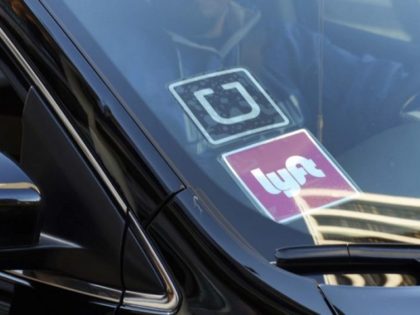
Unemployment benefits will reportedly be extended to groups including gig economy workers like Uber drivers based on a bipartisan deal struck this week.
According to Uber’s fourth-quarter earnings released on Thursday, the company lost $1.1 billion for the three-month period but expects to be profitable by the end of 2020. Overall, the ridesharing company lost $8.5 billion in 2019.
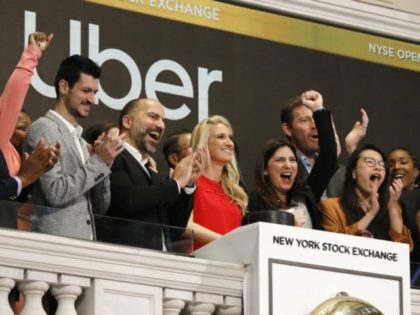
Ride-sharing giant Uber and courier service Postmates have filed a lawsuit aimed at putting the brakes on California’s new law that will reclassify gig workers as employees, potentially burdening tech companies with millions of dollars in new personnel costs.

The online grocery delivery app Instacart is facing an internal rebellion among its sprawling network of gig workers who are unhappy about changes in compensation, including the company’s tipping policy.
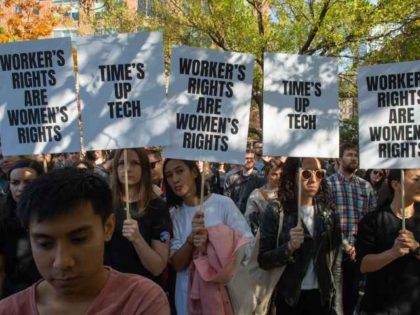
VICE News recently published an article outlining how progressive workers in Silicon Valley are fighting back against their employers.
Uber has been ordered to pay close to $650 million in employment taxes in New Jersey after the state’s department of labor said the ride-sharing company misclassified its drivers as independent contractors, according to a Bloomberg report.
Uber, Lyft, and DoorDash have unveiled a new ballot measure intended to fight the recently passed California law that will re-classify gig economy workers as employees, potentially devastating their business models which rely on armies of drivers who are treated as contract workers.
Food delivery company DoorDash has confirmed that it has suffered a data breach that affects 4.9 million customers, workers, and merchants.
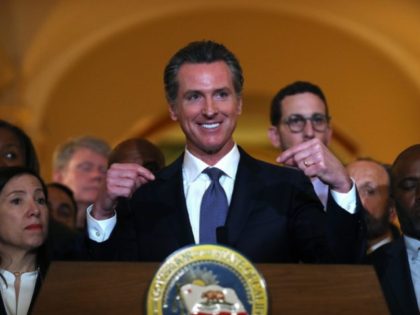
California Gov. Gavin Newsom (D) has signed a controversial bill into law that would reclassify gig workers as employees, potentially disrupting the way numerous Silicon Valley companies including Uber and Lyft do business.
Uber struck a defiant note Wednesday, saying that it won’t reclassify drivers as employees despite a California law expected to take effect in January that would dramatically change the status of gig workers in the state. According to the company, drivers fall “outside the usual course of Uber’s business.”
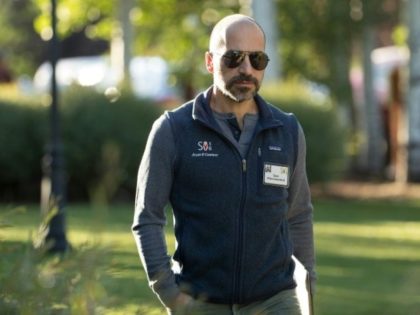
California lawmakers passed a watershed gig employment bill early Wednesday morning, paving the way to dramatically change the way companies like Uber and Lyft do business.
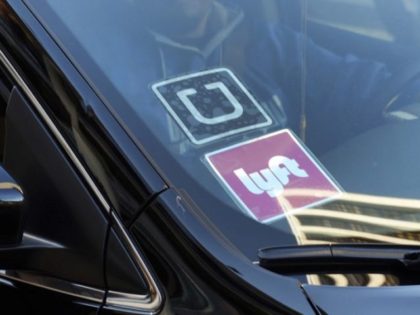
The newspaper industry lobbied for, and won, a one-year delay for newspaper delivery drivers in a new California bill on the “gig economy” that makes businesses classify workers as employees rather than independent contractors.

Grocery delivery company Instacart is keeping its $10 minimum per order policy for drivers after an intense wave of criticism following the revelation that the company was lowering pay for drivers based on tips received from customers. Competitors including DoorDash and Amazon Flex are not yet following suit.

A flock of 50 Bird dockless electric scooters that arrived at the Newport Beach Peninsula last weekend without a permit caused lots of complaints and were promptly banned by the city.
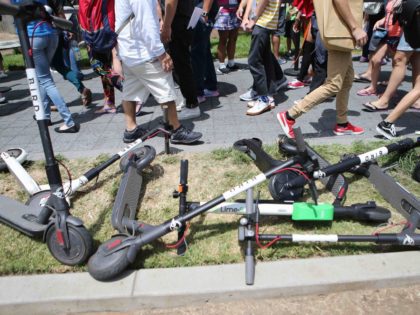
Blowback is rising against Bird and other companies providing all-electric scooter rentals that are taking over the streets and sidewalks of California’s major metro areas.
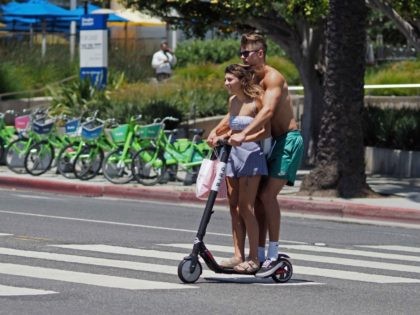
Spiking rents after the Wine Country fires could help Lieutenant Governor Gavin Newsom’s housing policies build support for his campaign for California governor.
The number of women in part-time jobs has doubled in the eight years of President Barack Obama’s tenure, because his management of the economy has produced very few new full-time jobs, according to a new report by left-wing academics.
Silicon Valley leaders are befuddled as both political parties — and venture capital giant Peter Thiel — are rejecting their agenda, which includes the Trans-Pacific Partnership, expanded H1-B immigration visas, new autonomous vehicles regulations, and “gig economy” worker reclassification.

President Barack Obama’s deputies announced that the median American family’s household income jumped by 5.2 percent in 2015 to $56,516 — but part of the increase is because women are working longer hours. Obama took credit after the Census Bureau
Sen. Elizabeth Warren (D-MA) is taking on the companies that make up the “gig economy” — though they provide the jobs, and services, that are increasingly popular among the young, “progressive” Americans who are the core of Warren’s support.
Uber CEO Travis Kalanick announced this week that the company had settled class-action lawsuits in California and Massachusetts for up to $100 million memorialize the company’s right to classify drivers as independent contractors, rather than employees.
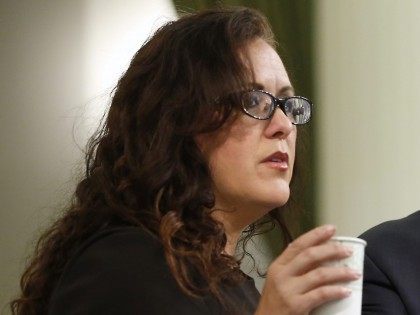
California State Assembly member Lorena Gonzalez (D-San Diego), a former political consultant and labor lawyer, wants the authority to push “gig workers” into collective bargaining and unionization.
With the rise of Uber, Airbnb, and TaskRabbit, there’s a sinking suspicion that the traditional 9-5 job is being replaced by flexible, independent contract work. But, despite the existence of multiple billion-dollar Silicon Valley startups hiring an army of independent contract workers, economists have had difficulty finding any evidence that Americans were more likely to be self-employed.
U.S. District Judge Edward Chen, a Barack Obama appointee, granted class action status to a lawsuit claiming Uber Technologies Inc. illegally classifies its on-call drivers as independent contractors, rather than employees with rights and benefits.
Uber is now valued at almost $51 billion, a valuation that puts the “on-demand mobile service” (ODMS) leader at the level of Facebook in 2011. The company’s fund-raising success has spurred a vast number of “Uber for X” start-ups that are building corporate empires with legions of outsourced contract workers. But the “gig economy” seems to be operating the same money-losing business model as the “Dot-com Bubble.”
California Public Utilities Commission (CPUC) Chief Administrative Law Judge Robert Mason recommended that ride-sharing service Uber be suspended from operating in California for 30 days and fined $7.3 million for wilfully violating its 2013 CPUC settlement by failing to provide data proving that Uber and its California drivers do not discriminate on the basis of ethnicity, neighborhood or medical disability in picking up passengers.
The “gig economy” is the term for corporations embracing the “on demand economy,” “collaborative consumption” and “sharing economy” bandwagons to restructure “work” into small projects of limited duration so that big business can justify legally dumping employees and hiring contractors. With employee benefit costs exceeding 46 percent of wages and workplace litigation spiking, “employees” don’t exist in the future of work.