Pinkerton: That Time When Democrats’ Vetting of a Female Vice Presidential Candidate Went Awry
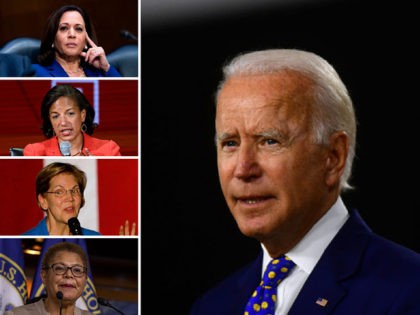
Male Democrat presidential nominees haven’t always done a good job of vetting their female vice presidential choices.

Male Democrat presidential nominees haven’t always done a good job of vetting their female vice presidential choices.

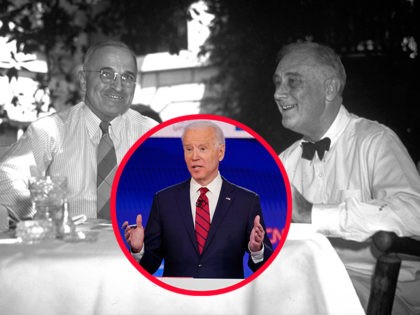
A look back in U.S. history tells us just how much can change when a president is suddenly replaced by a vice president.

In a new documentary on his life, work, and struggles, legendary political and media warrior Roger Ailes gets the chance to respond to his critics in his own voice.

Bill Barr’s July 17 speech to the Gerald R. Ford Presidential Museum in Grand Rapids, MI, will be seen as both prescient and influential about U.S.-China relations in the years to come—no matter who’s president.

As we know, the police are under constant attack. Just on July 13, a cop in Bothell, Washington, was shot and killed by a gunman during a traffic stop.

It was with wonder-weapons that we won World War II. And it’s with medical wonder-weapons that we’ll win World War Virus.

It shouldn’t have to get to this point, but here it goes: We need a written pledge to protect our statues and monuments. That is, a written document for politicians to sign, if they wish, pledging to protect public order and the dignity of our society.

Every Fourth of July commemorates a great moment in American history, and yet not every Fourth of July comes at a happy time for the country. And this Fourth is one of those unhappy ones.

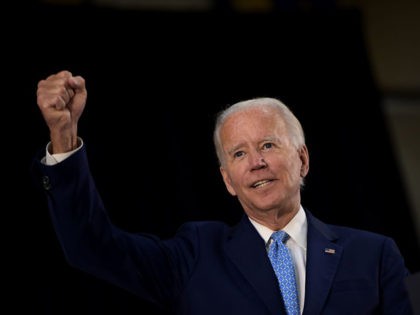
If Trump campaigners are truly in it to win it, they will have to start defining Joe Biden—and doing it in a most tangible way, so that Americans can truly get a sense of what an actual Biden presidency would be like.

The would-be statue-topplers know little or nothing about Andrew Jackson, the war hero who defended the nation with courage and resolve.

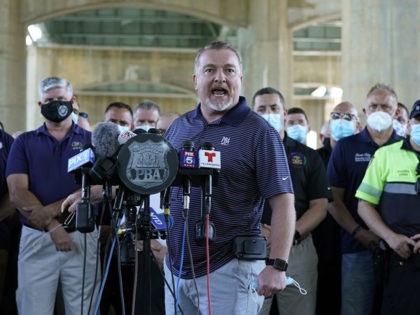
It seems that virtually all the groups on the political spectrum—conservatives, libertarians, liberals, and progressives—are converging together to crush police unions. And that’s a shame, because the rights of policemen and women, as workers, should be fully defended.

The people in the streets creating riotous unrest are in the news, they are making news, and as such, we know exactly who they are.

Big Tech in the 21st century is likely to face the same regulatory destiny as Big Railroads did in the 19th century.

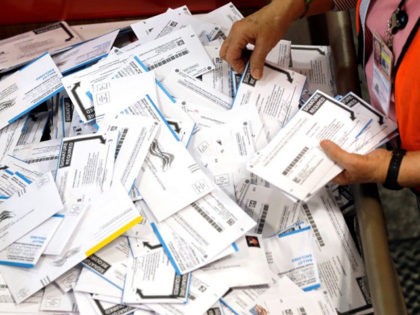
Republicans must not only combat fraud wherever it’s found—and new techniques, such as bar-coding ballots and tracking their movements through the mail, can help—but they must also better adapt to the use of these new voting mechanisms. And yes, that means fighting fire with fire.

If the CCP strategy is to conflate Chinese communism with China itself, then our strategy must be the opposite: We must seek to widen the divide between the CCP and the Chinese people, not only in China, but also among Chinese communities around the world.

The great events of the past are the lighthouses by which we navigate our present and our future.

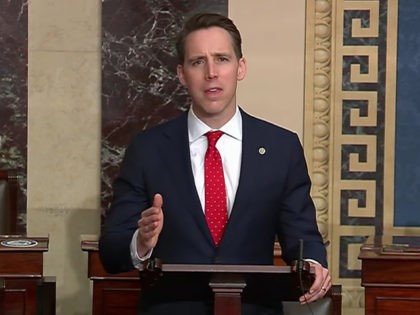
On May 20, speaking from the Senate floor, Josh Hawley, the youngest member of the chamber, laid out his plan for fixing international trade, taking on the People’s Republic of China—and thereby, too, perhaps saving America.

Weihua Chen seems happy to advertise his journalistic credentials without worrying about the credentialing outfits asking him to return his honorific certificates. And if that silence continues to be the case, well, that says something about Knight, WPI, and Freedom Forum. Moreover, there’s nothing stopping any journalist from criticizing Chen, an obvious propagandist in their midst. But will they do so?

California Gov. Gavin Newsom has ordered that ballots be mailed to the state’s 20.6 million voters for the November election.

The coronavirus has reminded all of us—even the tech titans of Silicon Valley—that the digital and the virtual ultimately matter less than the physical and the biological.

If an honest international commission could be formed and allowed to do its work, the findings would be enormously valuable, not only for the sake of finding out the truth, but also for the sake of making sure that this sort of debacle is never repeated.

The Republican Party should always abide by its core principles, and yet at the same time, it should return to its Lincolnian roots, becoming the avowed party of first responders, blue-collars, and other frontline workers—and joined by, of course, soldiers, homemakers, and believers.

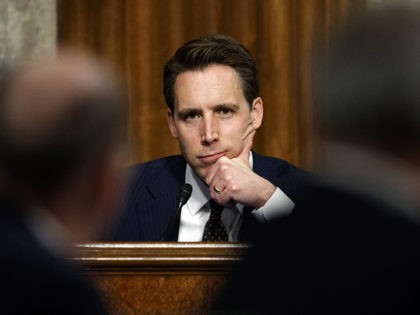
Americans who have grown weary of globalism might wish to spend more time considering an emerging new center-right alternative to failure: Hawleynomics.

Headlines tell us that something new is stirring in America’s workplaces, as we realize that the dreaded coronavirus, the power of giant corporations, and the fate of the labor force are all inextricably entwined.

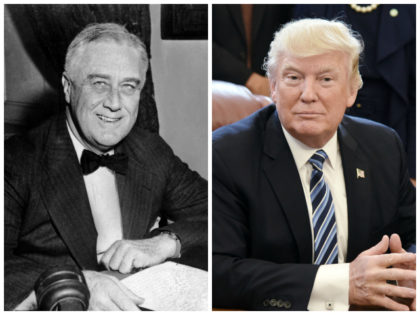
Democrats faced a grim problem with an unhealthy nominee in the 1944 election, and they developed an effective workaround.

The coronavirus is reminding us that old wisdom retains its value in new times.

Sen. Tom Cotton is summoning America’s ingenuity from World War II to address today’s war with coronavirus.

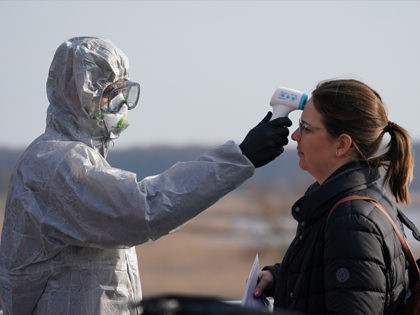
President Trump declared a “Whole of America approach” to fighting the coronavirus war. President Roosevelt used that same strategy to lead the U.S. to victory in World War Two.

Employers should verify the contagious health status of employees to protect their workforce and the country from pandemics like coronavirus.

As America confronts the coronavirus (COVID-19), we might ask: Who’s more valuable: first responders or private-equity managers? Which do we need more of right now: doctors and nurses or stock traders and their algorithms? Which is more essential: hospitals or hedge funds?

When one sees the words “Joe Biden” in media commentary, one often sees, too, the word “restoration.” As in, Biden promises—or threatens, depending on one’s point of view—to restore the days of Barack Obama.

Michael Lind’s new book, “The New Class War: Saving Democracy from the Managerial Elite” exposes the politicians, corporate executives, bureaucrats, journalists, propagandists, “public interest” lawyers, and professors who run interference for the rich.

The deal is far from done, but it appears that the U.S. is on the edge of reaching an honorable deal to get out of Afghanistan.

Aggressive budget cuts, even if put forth only in theory to please zealous scholars-in-cubicles, seem to be self-defeating because they antagonize Americans who don’t know that the cuts are only theoretical.

What will happen next in the U.K. on 5G is unclear. All we know for sure is that the sovereignty of the U.K. includes the sovereign right to make a mistake.

Socialist candidate Bernie Sanders might be getting an ironic kind of help from billionaire candidate Michael Bloomberg.

Would President Trump’s idea of expanding the NATO alliance to include the Middle East lead to peace and fewer U.S. troops in the region?

The Republican president, running for re-election, orders airstrikes against a foreign foe. Back home, street protests erupt, and TV pundits and newspaper editorialists rage; there are even new calls for impeachment.

We are seeing the right of each state to make its own decisions—for better or for worse, as the case might be—as enshrined in our founding document, the U.S. Constitution.

Sen. Marco Rubio’s idea of “common-good capitalism” makes obvious good sense, and yet, of course, not everyone agrees. Still, Rubio has started a valuable debate, and if he prevails, the Republican Party—and the United States—will be stronger.