Lawmaker Wants ESRB to Put Age-Restrictions on Games with Loot Boxes
In an interview with Rolling Stone, Hawaii State Representative Sean Quinlan advocated for self-regulation of loot boxes by the video game industry.


In an interview with Rolling Stone, Hawaii State Representative Sean Quinlan advocated for self-regulation of loot boxes by the video game industry.
Cosmonaut Anton Shkaplerov claims that the bacteria he swabbed from the exterior of the International Space Station did not come from Earth.

Amidst the ongoing debate as to the nature of loot boxes and gambling, “industry leaders and experts” as forming a non-partisan advocacy group called the National Committee on Games Policy.

Mirror Reporter Alan Selby spent five brutal weeks at UK Amazon’s ironically titled “fulfillment centre,” documenting the trials and working conditions of its exhausted workers.

In a working paper entitled “Death by Pokemon GO,” two Pursue University researchers claim the mobile game phenomenon is responsible for a massive spike in traffic accidents.

While recent controversies may have finally gotten the attention of legislators, consumers are still voting for the inclusion of predatory loot boxes with their wallets.

Dutch designer Frank Kolkman hopes that offering a simulation of death will help terminally ill patients to make their peace with the end.

In speaking to his Neuralink employees, Musk called artificial intelligence a “fundamental risk to the existence of human civilization.”

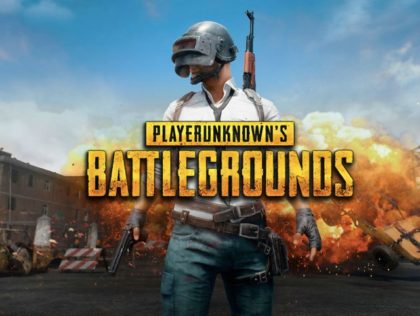
Chinese mega-corporation Tencent will import hit game PlayerUnknown’s Battlegrounds to China, but only once the game has been appropriately sanitized.
From the US to Belgium, the predatory pseudo-gambling video game “loot box” business model is coming under fire, and politicians are finally taking notice.

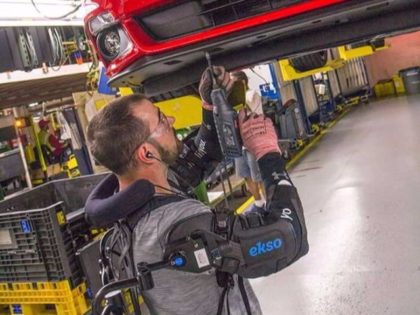
Commercial and educational organizations alike are pushing exoskeleton technology forward.
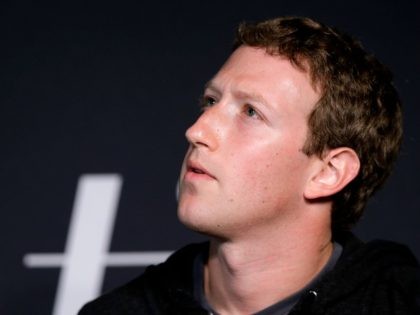
The first Asian company to rise above half a trillion dollars in value is now officially bigger than Mark Zuckerberg’s social media behemoth.
A rare genetic mutation responsible for longer lifespans has been identified within the historically insular Amish community in Indiana.

After numerous failed attempts, the Fukushima reactor’s melted uranium has been located by a remote-controlled drone the size of a shoebox.

Despite “a lot of confusion and a lot of fear,” experts have yet to see any of many myths of video game being harmful for children materialize.

Star Wars Battlefront II publisher Electronic Arts has responded to the ongoing controversy behind the game’s aggressive monetization by disabling the purchase of in-game currency — for now.
The outcry over Star Wars Battlefront II’s monetization has reached a fever pitch despite token efforts from Electronic Arts, and now investors are growing concerned.

The follow-up to developer MachineGames’ masterful 2014 Wolfenstein franchise reboot is as beautiful and brutal as the first but feels noticeably thinner.

Despite attempts to salve the community’s rage against Star Wars Battlefront II’s aggressive monetization strategy, the forthcoming game’s progression system is still abusively exploitive.

SoftBank’s Boston Dynamics robotics company published a video to YouTube demonstrating a far less creepy version of their four-legged SpotMini robot.

The Food and Drug Administration has approved a smart pill that digitally tracks whether it is being taken as scheduled.

Electronic Arts was hammered for their rebuttal to gamers’ complaints about the ludicrous advancement requirements and microtransactions in the upcoming Star Wars multiplayer shooter.

The over 9 million citizens of Hangzhou, China, have been under constant surveillance by artificial intelligence since October 2016.

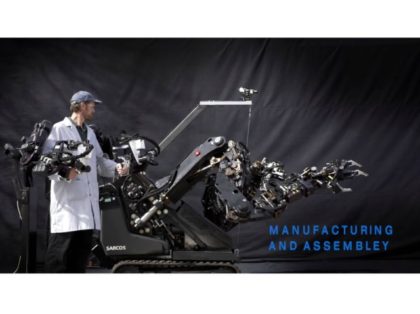
Utah-based robotics company Sarcos is focused on augmenting, rather than replacing, human workers with robots.
Steve Wozniak is not quite as enamored with Elon Musk’s company Tesla as the rest of the tech world.
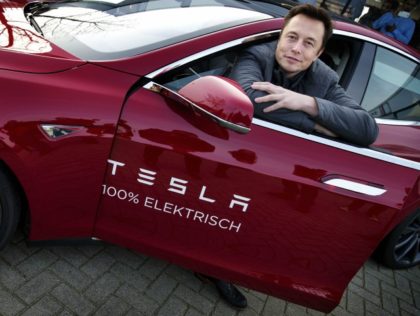
The device that began as an Xbox 360 curiosity is concluding the final chapter in the seven-year run of intelligent camera advancement for which it is largely responsible.

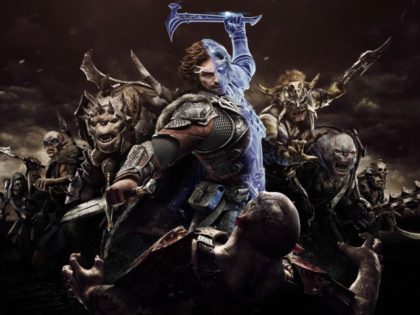
Carving up Orcs in Middle-earth: Shadow of War is as much fun as it was in 2014, but every decision made surrounding that central conceit seems to have been drawn up by a marketing department, rather than the creative minds that once hypnotized us with the innovative Nemesis System.
On October 16, 2017, scientists discovered the collision of two neutron stars of such magnitude that the resultant reaction would create hundreds of times the mass of our entire planet in gold and platinum.

Google, Facebook, IBM, Intel, and Uber are among the most well-known participants in the “Coalition for the American Dream” pushing to protect the Deferred Action for Childhood Arrivals (DACA) program.

Google’s latest iteration of their champion Go artificial intelligence is not just better than ever before — it no longer even requires someone to teach it how to play.

The Japan Aerospace Exploration Agency has discovered an underground labyrinth that could be our key to lunar colonization.

On October 17, American robotics company MegaBots chainsawed its way to a decisive victory over Japan’s Suidobashi Heavy Industries in the second of two giant robot duels.

Activision has patented a “system and method for driving microtransactions in multiplayer video games” but denied it is being used in any game.

Head of Air Force Space Command General John W. “Jay” Raymond believes that space is not the “benign domain” of popular belief.

Artificially intelligent machines may very well come to augment every aspect of our lives, and even extend them. But these advances raise a multitude of questions.
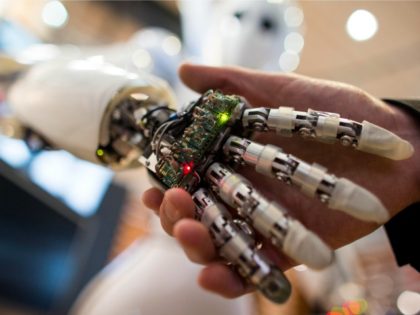
As his half-trillion dollar corporation prepares to dive headfirst into the age of artificial employees, Alibaba founder Jack Ma would appreciate it if the millions of potentially displaced workers around the world would set aside what he called “empty worries” about robots.
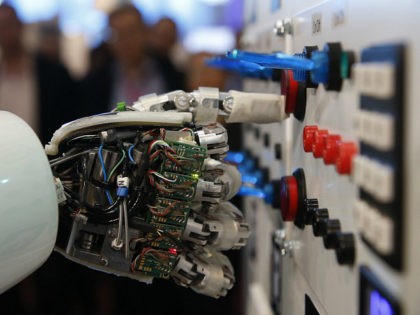
In what may very well be an industry first, Epic Games is suing alleged cheaters for the unauthorized alteration of their game Fortnite’s code.

Both American and European electronic entertainment rating boards are hesitant to classify video game loot box microtransactions as gambling.

Stetson University’s Dr. Chris Ferguson argues South Korea’s law regarding the Internet usage of minors has had negligible positive effects on their health in comparison to its heavy constraint on personal freedoms.
The birthplace of Skype is in the midst of addressing the unique legal ramifications of automated citizenry.