
It’s Time to Rethink Quarterly Reporting Requirements
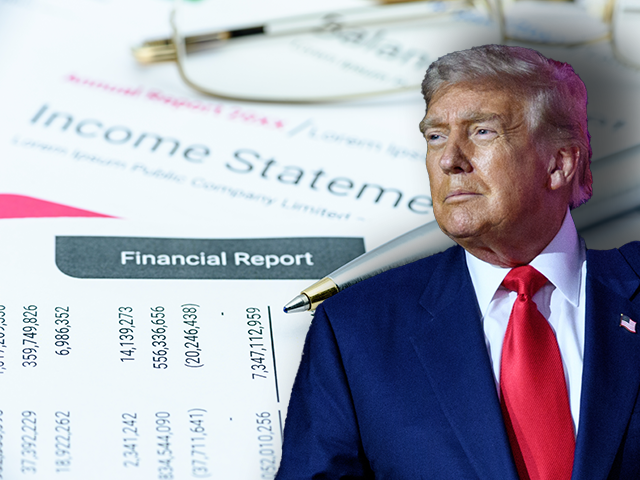
President Donald Trump stepped into the quarterly reporting debate Monday, calling for companies to “no longer be forced to report on a quarterly basis” and instead move to six-month cycles. The Securities and Exchange Commission responded within hours, saying it is “prioritizing” a proposal to “further eliminate unnecessary regulatory burdens on companies.”
Trump’s intervention has reignited a fundamental question about American capitalism: Should every public company march to the same regulatory drumbeat, regardless of size, industry, or business model?
As Judge Frank Easterbrook and other market-oriented scholars have long argued, this “one-size-fits-all” approach ignores the fundamental diversity of American corporations. Instead of searching for a single answer about what kind of reporting requirement is optimal, we should recognize that there likely is no universally optimal requirement. Different businesses in different sectors with different models and diverse sizes likely do not coincidentally share the best reporting schedules.
Trump’s Market-First Approach
“This will save money, and allow managers to focus on properly running their companies,” Trump posted on social media Monday. The president even pointed to China’s more flexible system as potentially “more efficient and cost-effective for businesses.“
While critics like ValueEdge Advisors’ Nell Minow called the shift “a gigantic step backward,” the evidence suggests Trump is onto something. Our corporate governance rules have pushed too far toward regulatory uniformity and are badly in need of reform to allow market-driven diversity.
The Hidden Tax on Growth
Current quarterly reporting requirements hit companies very differently. Recent analysis shows audit costs alone consume 0.33 percent of revenue for small firms compared to just 0.05 percent for large corporations. Add in executive time spent on quarterly reports and earnings calls, and you’re looking at a massive drain on companies with limited management bandwidth.
When Anglo-Dutch giant Unilever CEO Paul Polman scrapped quarterly reporting on his first day as CEO in January 2009, the company’s stock dropped eight percent as investors reacted negatively to reduced transparency. But Polman’s bold move exemplified the argument that freeing companies from the quarterly treadmill allows management to focus on long-term strategy. As National Grid, another UK firm that abandoned quarterly reporting, put it: dropping the practice gave management “an extra month a year to think about subjects other than presenting figures to the City.” For cash-strapped startups, that management bandwidth could mean the difference between breakthrough innovation and regulatory compliance theater.
The UK Experiment Proves Trump’s Point
The United Kingdom provides perfect evidence for Trump’s market-based approach. After briefly mandating quarterly reports from 2007 to 2014, British regulators made quarterly reporting optional in 2014. The result? Over 90 percent of major UK companies continued quarterly reporting while smaller firms largely abandoned it.
Studies of the UK transition found no meaningful changes in long-term investment or R&D spending when reporting frequency shifted—undermining claims that quarterly reports either help or hurt strategic thinking. What the natural experiment revealed instead was that different companies have different optimal disclosure patterns, and markets can sort this out efficiently when given the freedom to do so.
The IPO Connection
Trump’s push comes as America’s public markets face a crisis. The number of public companies has declined dramatically since the late 1990s, as rising compliance costs make staying private more attractive. Quarterly reporting is just one factor, but it disproportionately hits the growing companies public markets need most.
Consider the typical trajectory: A promising startup raises private money, grows rapidly, and eventually chooses between going public or being acquired. If quarterly reporting adds meaningless compliance costs and short-term pressure that could derail long-term strategy, rational entrepreneurs choose acquisition or stay private longer. Main Street investors lose access to these growth opportunities while wealth concentrates among institutional investors with access to private markets.
Rather than mandating change, Trump’s SEC should simply allow it. Give companies and their shareholders choice between quarterly and semiannual reporting, and let market forces determine optimal frequency for each business.
The debate has been framed as transparency versus short-termism, but that misses the point. The real choice is between bureaucratic uniformity versus entrepreneurial diversity. Large, actively-traded companies with institutional investor bases will likely maintain quarterly reporting to ensure analyst coverage and signal transparency. Smaller companies, those in asset-heavy industries with longer investment cycles, or firms with concentrated ownership may rationally choose semiannual reporting to reduce costs and management distraction.
A utility building power plants over decade-long timelines doesn’t need the same reporting cadence as a software company launching products every quarter. A biotech startup burning cash on drug development faces different investor information needs than JPMorgan Chase. Investors in Palantir or Tesla probably do not need the same frequency of reporting as investors in Kohls or Goldman Sachs.
This approach aligns with Trump’s broader deregulatory agenda while avoiding the trap of substituting one bureaucratic mandate for another. Companies that choose poorly—whether by over-disclosing or under-disclosing—will face market consequences through higher capital costs or reduced investor interest, with the opportunity to correct course as needed.
Nasdaq CEO Adena Friedman endorsed exactly this approach Monday, supporting “giving firms the option to report either quarterly or semi-annually.” Even Warren Buffett and Jamie Dimon, hardly Trump allies, urged companies in 2018 to stop quarterly earnings guidance—not to reduce transparency, but to escape artificial constraints that prevent effective communication with investors.
Diversity is Our Strength
Trump’s instincts are right: American businesses shouldn’t be locked into 1970s-era regulatory uniformity. Even if this rule made sense at the surcease of the conglomeration era, it is well past its expiration date.
The solution isn’t to mandate semiannual reporting any more than it was to mandate quarterly reporting. Instead, let companies choose their optimal disclosure pattern and face market consequences for their decisions.
COMMENTS
Please let us know if you're having issues with commenting.