
The U.S. Department of Education announced Friday that it is launching a national K-12 initiative to combat sexual abuse and harassment by adults in schools while opening investigations into 20 districts over concerns about their handling and reporting of staff-on-student misconduct.
The department’s Office for Civil Rights (OCR) said the initiative follows what the Trump administration described as a “recurring pattern” in which credible reports of sexual abuse or harassment by adults in positions of authority go uninvestigated while suspected offenders are transferred to new schools or other roles within a district.
Protecting adults accused of assaulting or harassing children from meaningful consequences and transferring them into another school or role, potentially enabling them to continue harming children, is commonly known as “passing the trash.”
The administration issued guidance reminding federally funded educational institutions of their obligations under the Elementary and Secondary Education Act and Title IX of the Education Amendments of 1972.
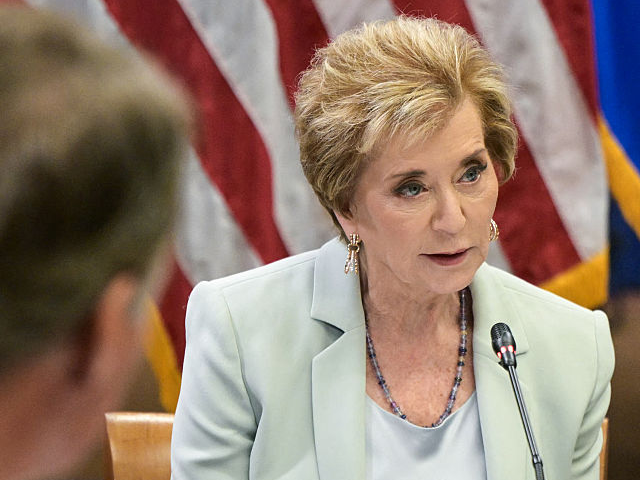
“Our schools must protect America’s children. Parents should never have to wonder whether their kids’ school employs and protects sexual predators,” Education Secretary Linda McMahon said.
“Schools that receive federal funding have a duty to protect students, report sexual misconduct honestly, and follow the law,” she continued. “Through this initiative, we are holding school districts accountable because every child deserves to learn in a safe environment free from sexual abuse and harassment.”
OCR is opening 20 directed investigations into districts whose 2023-24 Civil Rights Data Collection submissions contained responses suggesting they might not be appropriately addressing staff-on-student sexual misconduct.
The investigations will examine whether the districts have appropriate policies and procedures to ensure accurate data collection and reporting and whether their handling of sexual harassment allegations, including sexual assault by district employees, complies with federal law.
The guidance directs schools to respond promptly and appropriately to allegations involving teachers, administrators, staff members, or other students and to conduct meaningful investigations of sexual misconduct allegations.
Schools cannot rely solely on referrals to law enforcement or suspend or terminate their investigations once law enforcement becomes involved unless required by other pertinent federal law. Their grievance procedures must be “timely, thorough, and genuinely responsive,” the department said.
The Elementary and Secondary Education Act also requires states, school districts, and educational agencies to maintain laws, regulations, and policies prohibiting assistance to employees, contractors, or agents seeking new employment with another educational institution when there is knowledge or probable cause to believe that they engaged in sexual misconduct involving a student.
“States and school districts that fail to maintain adequate safeguards risk violating federal law,” the department said.
Schools must also submit complete and accurate information through the Civil Rights Data Collection.
During the first Trump administration, the collection was expanded to include school-level reporting on instances of sexual assault against students, making it the first universal data collection to systematically capture that information, according to the department.
The department said the Biden administration attempted to remove those reporting requirements, but districts remain responsible for accurately reporting incidents.
Districts that submit inaccurate data or report no incidents of rape or sexual assault despite evidence suggesting otherwise may face OCR enforcement.
Title IX prohibits sex discrimination in federally funded education programs and activities and requires schools with knowledge of sexual harassment or sexual assault to respond promptly and in a manner that is not deliberately indifferent.
The Education Department said it will “vigorously enforce ESEA and Title IX.” Institutions that fail to comply could face enforcement action, including the possible termination of federal financial assistance.
Anyone who believes that a school, school district, or state educational agency has failed to comply with either law may file a complaint with OCR.
COMMENTS
Please let us know if you're having issues with commenting.