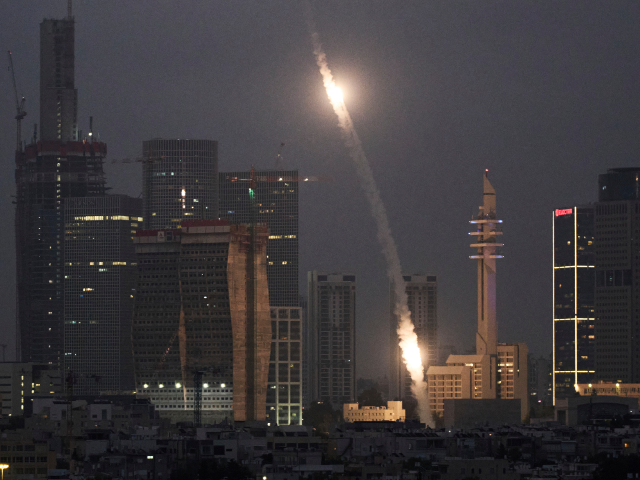

Israel quietly deployed its Iron Dome air defense system along with dozens of IDF troops to the United Arab Emirates in the early days of the Iran conflict, according to reporting, marking the first operational use of the system outside Israel and the United States as Tehran unleashed a sustained and intense missile and drone barrage against the Gulf state.
According to reports published Sunday by Axios and The Jerusalem Post, Israeli Prime Minister Benjamin Netanyahu ordered the deployment early in the conflict following a call with UAE President Mohammed bin Zayed Al Nahyan, directing the Israel Defense Forces to send an Iron Dome battery, interceptors, and several dozen operators to help defend the country as Iran escalated its attacks across the region.
The move represents an unprecedented step in Israeli defense policy, with officials confirming it was the first time an Iron Dome system had been transferred abroad for active use. A senior Israeli official said the UAE became the first country outside Israel and the United States to deploy the system operationally, with another official noting it intercepted dozens of incoming threats.
Iran’s barrage on the UAE was among the most intense of the conflict, with more than 550 ballistic and cruise missiles and over 2,200 drones launched at the country — more than at any other nation, including Israel — with numerous strikes hitting civilian infrastructure, residential areas, and economic hubs in what analysts say reflects Tehran’s effort to pressure U.S.-aligned regional partners.
The UAE was not alone in coming under attack. In the opening phase and throughout the active phase of the conflict, Iran launched missiles and drones at multiple neighboring countries, including Saudi Arabia, Qatar, Bahrain, and Jordan, in a broad escalation targeting U.S.-aligned states across the region.
Gulf states condemned the attacks as violations of sovereignty and international law, particularly as strikes repeatedly targeted civilian areas and critical infrastructure.
The scale of the attacks prompted Abu Dhabi to seek assistance from allies, with the deployment approved following direct coordination between Netanyahu and bin Zayed. Israeli and Emirati officials said the two countries worked in close military and political coordination throughout the conflict.
At the same time, the Israeli Air Force carried out strikes targeting short-range missile launchers in southern Iran aimed at reducing the volume of fire directed at the UAE and other Gulf states.
The deployment — including Israeli personnel operating on Emirati soil — marked a significant shift given that the Abraham Accords are not a formal defense pact, underscoring how the Iran conflict pushed the relationship into unprecedented military coordination under the framework brokered by Donald Trump in 2020.
While the presence of Israeli troops in the Gulf could traditionally carry political sensitivity, Emirati officials said the scale of Iran’s attacks shifted public perception, with one official noting that any country helping defend the UAE is now viewed positively.
Tareq al-Otaiba, a former official at the UAE’s National Security Council, wrote that Israel was among the countries that “stepped up to provide real assistance to the UAE,” adding that “the United States and Israel have proved to be true allies by offering support through extensive military aid, intelligence sharing, and diplomatic backing.”
“We are not going to forget it,” a senior Emirati official said of the assistance.
Another Emirati official described the moment as “a real eye-opening moment” to see “who our real friends are.”
Joshua Klein is a reporter for Breitbart News. Email him at jklein@breitbart.com. Follow him on Twitter @JoshuaKlein.
COMMENTS
Please let us know if you're having issues with commenting.