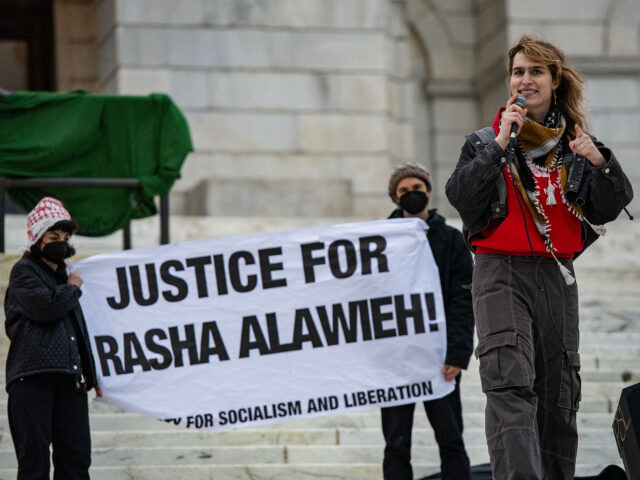

A court on Tuesday rejected a Lebanese doctor’s appeal challenging her deportation after border officers found Hezbollah images and videos on her cellphone.
The First Circuit’s October 13 ruling leaves Dr. Rasha Alawieh’s removal order intact, along with a five-year restriction on her readmission. The panel said federal immigration law barred it from reviewing her challenge. It did not decide whether officers properly denied her entry.
Alawieh, a Lebanese citizen who practiced transplant nephrology and taught at Brown University’s Warren Alpert Medical School, arrived at Boston Logan International Airport on March 13, 2025, after visiting family in Lebanon.
CBP officers searched her phone and questioned her overnight. They found images of Hezbollah’s late leader Hassan Nasrallah, Hezbollah fighters, and Ayatollah Ali Khamenei, Iran’s leader at the time, according to the court’s account.
Alawieh acknowledged knowing that the United States designated Hezbollah a terrorist organization but denied supporting the group. She said she admired Nasrallah’s religious teachings and had attended a commemoration of his death with her family.
Officers also recovered images deleted shortly before her arrival. Alawieh said she was concerned about how the material would be perceived and denied political or military involvement.
An officer found her inadmissible, saying information uncovered during the inspection prevented officials from determining her true intentions. CBP revoked her H-1B visa and issued an expedited removal order.
Her cousin filed an emergency habeas petition about an hour before her March 14 flight. U.S. District Judge Leo T. Sorokin ordered that she not be moved outside Massachusetts without 48 hours’ notice. Her attorney could not notify officers of that order before they escorted Alawieh to her departure gate. Sorokin later found that officers did not know about the order and therefore had not violated it.
Alawieh’s lawyers continued the case after her removal, seeking to restore her visa and obtain proceedings before an immigration judge. They argued that the officers lacked authority under the Constitution’s Appointments Clause to order her removal.
The appellate panel said that argument challenged the order’s validity, which fell outside the narrow questions courts may review in expedited removal cases. It affirmed Sorokin’s dismissal without deciding the constitutional claim. Alawieh did not pursue her separate Suspension Clause argument on appeal.
Immigration advocacy groups supported her appeal, citing her years of lawful medical work and the consequences of limiting judicial review. The five-year readmission restriction generally runs from her March 2025 removal, rather than Tuesday’s ruling. Federal law allows an exception if the government grants advance permission to reapply for admission.
Social media users weighed in on the court’s decision.
COMMENTS
Please let us know if you're having issues with commenting.