China Sacks Three Lawmakers with Defense Ties After Purging Top General
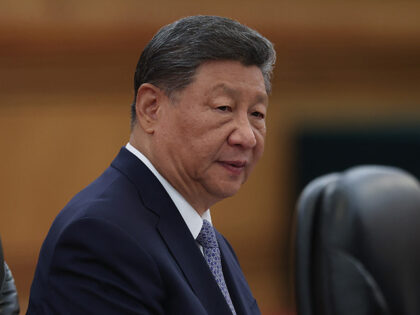
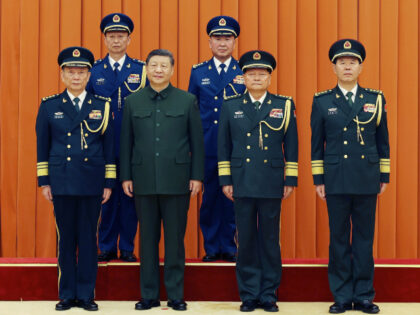
Three Chinese lawmakers linked to the defense sector have been removed from their seats, the country’s state media reported Wednesday.

Three Chinese lawmakers linked to the defense sector have been removed from their seats, the country’s state media reported Wednesday.

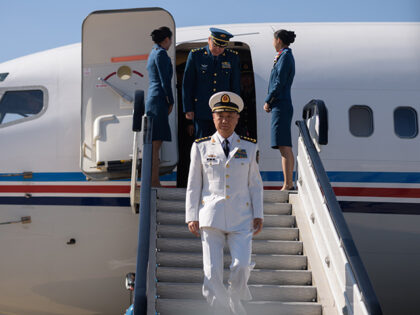
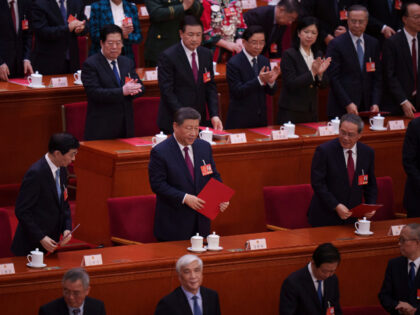
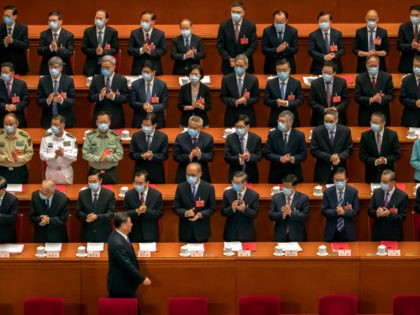
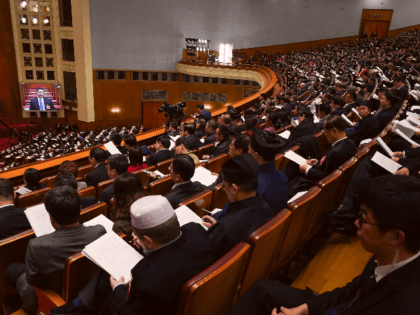
The National People’s Congress (NPC), the highest legislative body in China, announced on Friday that Vice Admiral Li Hanjun and nuclear engineer Liu Shipeng were expelled for unspecified reasons.

China’s NPC hopes to revive its moribund economy and win a trade war against the United States with artificial intelligence.

Chinese dictator Xi Jinping demanded innovative solutions to China’s growing economic woes in remarks on Tuesday and Wednesday, warning against “a headlong rush into projects and the formation of industry bubbles” that could result in “abandoning traditional industries.”

China set an official 2024 target for GDP growth of around five percent in a report from Premier Li Qiang to the National People’s Congress.

China launched its “two sessions” — the annual meetings of its top lawmaking body, the National People’s Congress (NPC), and the Chinese People’s Political Consultative Conference (CPPCC), an “advisory” body with over 2,000 members — on Monday, seeking to devise ways to reverse its increasingly concerning economic decline.

Almost 3,000 people who claim to have suffered illnesses from China’s dodgy coronavirus vaccine signed a petition asking Chinese Communist Party officials to take responsibility for their illnesses and plan to appear at this week’s “Two Sessions” policy meeting in Beijing.

hina is preparing to impose yet another in a long series of increasingly draconian “national security” laws, this time criminalizing anything that “undermines” China’s “national spirit” or “harms the feelings” of the country as a whole. Legal scholars quickly pointed out that such a vague and open-ended law would give every official in China’s vast bureaucratic army the power to punish anything that offends their personal sensibilities.

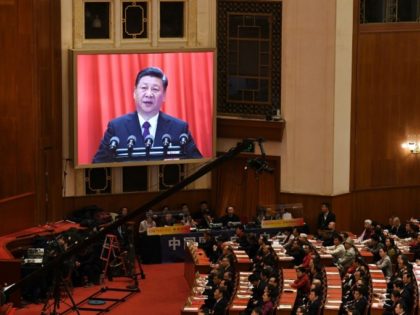
Genocidal Chinese dictator Xi Jinping vowed in a speech at the conclusion of China’s annual legislative sessions on Monday that the Communist Party would seek a more prominent role on the world stage pursuing the “reform and construction of the global governance system.”

The Chinese National People’s Congress (NPC) unanimously “elected” communist dictator Xi Jinping to a third term as president, as well as head of the nation’s military, on Friday, an entirely expected result as Xi had no competition for the title.

Chinese dictator Xi Jinping told a panel of Communist Party officials on Monday that America and its Western allies were executing a conspiracy to ensure “all-round containment” of his country, which has resulted in “severe challenges.”

The China National People’s Congress (NPC) announced on Monday that China’s military spending will be increased by 7.2 percent this year, the largest increase since 2019.

China’s weekend session of the National People’s Congress (NPC) is scheduled to consider various emergency measures to address declining birth rates and a looming demographic crisis.

The Chinese government’s annual “two sessions” – simultaneous meetings of the National People’s Congress (NPC) and the Chinese People’s Political Consultative Conference (CPPCC) – are scheduled to begin on Saturday, March 4.

China’s rubber-stamp legislature, the National People’s Congress (NPC), passed a much-ballyhooed law on Thursday that will supposedly “block” all human-rights sanctions leveled against the brutal Communist regime by threatening foreign governments with automatic retaliation.

China’s rubber-stamp legislature, the National People’s Congress (NPC), is considering a draft law that would formalize retaliation against other nations that impose sanctions against China for its human rights abuses.

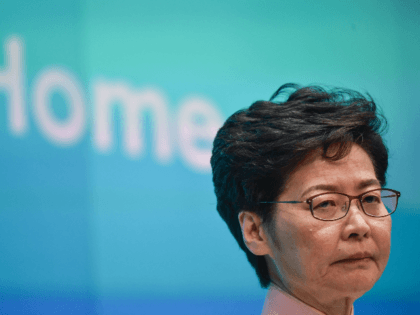
Hong Kong chief executive Carrie Lam said on Monday that legislative elections, already postponed for a year by the coronavirus pandemic, could be delayed again while the Chinese Communist Party (CCP) “reforms” the island’s electoral system to ensure only Communist loyalists can hold public office in the future.

China began its largest annual political meeting Thursday, an event known as the “Two Sessions” that assembles some 5,000 members of the Chinese Communist Party (CCP) elite to work out an agenda for the coming year.

A Chinese lawmaker is preparing to introduce a bill at the opening of this week’s “Two Sessions,” where the Communist Party meets to draft and pass laws, requiring couples to take government-run marriage “training” classes before their weddings.

The Chinese government still refuses to publish the full text of the “national security law” it will soon impose on Hong Kong.

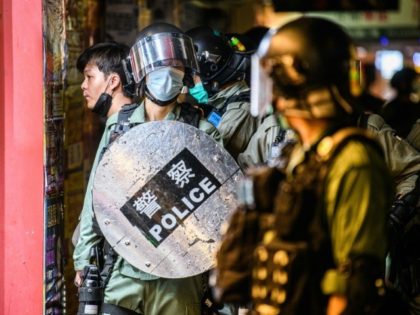
Hong Kong police confirmed on Friday the arrest of nearly 100 minors during law enforcement attacks on peaceful protesters this week, actions that resulted in nearly 400 arrests.

China’s National People’s Congress (NPC), its rubber-stamp legislature, passed a draft law on Thursday eliminating Hong Kong’s autonomy, allowing the Communist Party to punish anyone in the nominally autonomous city for crimes such as “secession” and “acts against national security.”

China’s National People’s Congress (NPC), one of its two communist legislative chambers, proposed drafting a sovereign immunity law on Wednesday to allow Chinese people to sue the American state in courts, an act of revenge for mounting litigation against China.

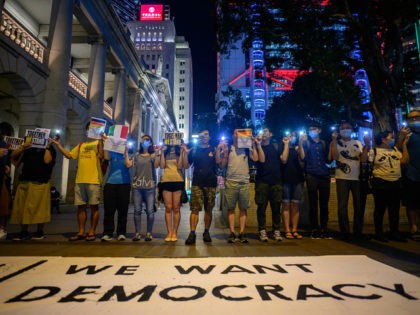
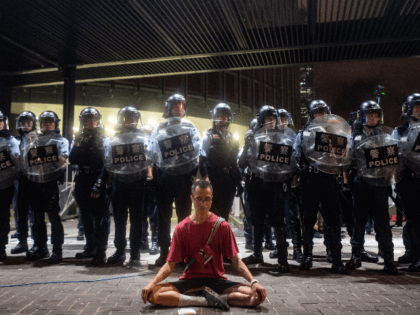
Thousands of fully armed riot police took the streets of Hong Kong on Wednesday to crack down on multiple peaceful protests organized against legislation that pro-democracy activists say would criminalize dissent against the Chinese Communist Party, arresting around 300 people, including many minors.

Hong Kong Chief Executive Carrie Lam told reporters at a press briefing Tuesday that alarm over a proposed “national security” bill in Beijing, intended to silence the Hong Kong pro-democracy movement, was overblown, and that the city continues to be a free society, “for the time being.”

Chinese dictator Xi Jinping once again made public remarks admitting major shortcomings in Communist Party public health management, telling a delegation from Hubei province on Sunday to make “prompt efforts” to fix “weak links” in the system.

The National People’s Congress (NPC), the rubber-stamp legislature of the Chinese Communist Party, received a draft copy on Friday of the security law Beijing is planning to impose on Hong Kong.

The Chinese Communist Party’s sham legislature, the National People’s Congress (NPC), is reportedly preparing to bypass the Hong Kong legislature (which is looking more than a little shamtastic these days itself) and impose a set of national security laws that could crush the Hong Kong protest movement and hollow out what remains of the island’s limited autonomy.

China’s year-round legislature will meet next week to discuss postponing the annual session convening every lawmaker in the “National People’s Congress” (NPC), a body that typically approves laws already decided by senior Communist Party officials.

The Chinese Communist Party – through its foreign ministry, its rubber-stamp legislature, its puppet government in Hong Kong, and its state propaganda outlets – published a barrage of hysterical statements Wednesday condemning the U.S. Senate for passing the Hong Kong Human Rights and Democracy Act.

Contents: Xi Jinping invokes the 1840s Opium Wars to justify military action for China’s ‘rejuvenation’; Xi Jinping stokes China’s nationalism with harsh threats to Taiwan and Hong Kong

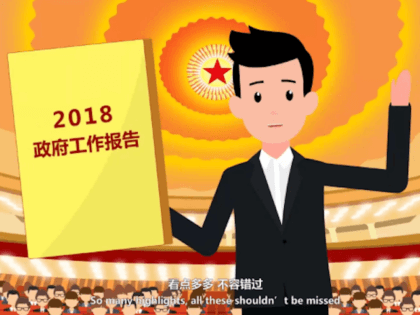
The Chinese Communist Party publication People’s Daily debuted an animated rap music video on Thursday celebrating the reforms of the National People’s Congress, warning viewers in cartoon form that “we must fully and strictly implement the party discipline.”

China’s state media downplayed a $175 billion increase in defense spending proposed for 2018 on Tuesday, claiming the spending spike is “not much” and not intended to launch an “arms race” with the United States.
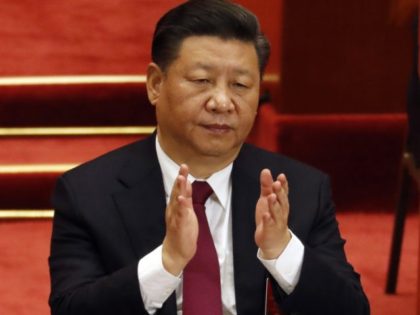
China’s communist leader Xi Jinping looked back fondly upon his last five years of rule and urged the few politicians in China not a part of the Communist Party to “enhance confidence in the path, theory, system, and culture of socialism with Chinese characteristics” at an event Sunday.

China revealed on Monday that it will raise its military budget by $175 billion for the 2018 fiscal year, an 8.1 increase that is the largest military spending hike in three years. According to Premier Li Keqiang, the additional funding will “advance all aspects of military training and war preparedness, and firmly and resolvedly safeguard national sovereignty, security, and development interests.”

A member of China’s legislature, the National People’s Congress, has proposed banning individuals from holding their hearts with their hands during the playing of the national anthem, suggesting the gesture is too “American” for Chinese patriots.