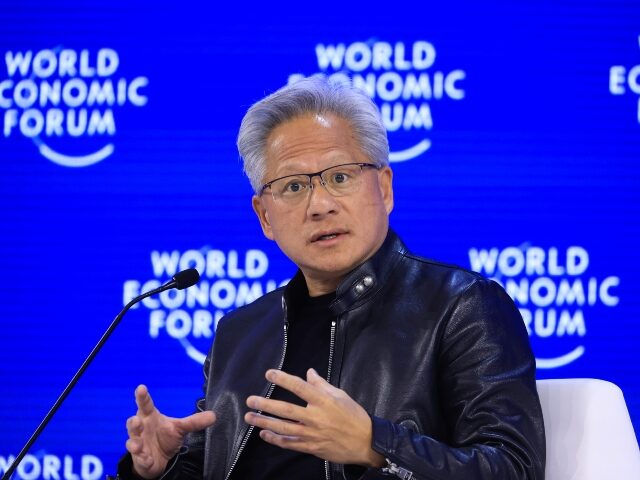

Nvidia CEO Jensen Huang is preparing to travel to China in advance of the Lunar New Year holiday as the company works to expand access for its AI processors in the communist country.
Bloomberg reports that Nvidia CEO Jensen Huang is preparing to travel to China later this month as the company works to regain access to one of its most important markets for AI processors. The visit comes at a critical juncture for the world’s most valuable technology company as it navigates complex geopolitical tensions between the United States and China. The Trump administration has approved sales of certain AI chips to China with restrictions.
Huang will be in China to attend company celebrations ahead of the Lunar New Year holidays according to company sources. The executive is also expected to visit Beijing, though it remains uncertain whether he will meet with senior Chinese government officials. The source indicated that Huang’s schedule could still be modified depending on whether potential meetings are confirmed.
This China visit represents a regular occurrence for Huang, who typically travels to the country during this time of year. However, the timing carries particular significance given recent developments in US-China trade relations concerning advanced semiconductor technology. The United States government is easing export restrictions on AI processors, which will allow Nvidia to sell its H200 model in China. Simultaneously, Chinese government officials are determining how many of these chips will be permitted into the country.
China represents the largest market globally for semiconductors and is actively working to develop its domestic chip industry to reduce dependence on American products. Despite these efforts, local Chinese manufacturers currently cannot match the capabilities of Nvidia’s processors, which are essential for developing and operating artificial intelligence models. Although the H200 is one generation behind the Nvidia chips available in the United States market, it is still considered more powerful than competing Chinese offerings.
Due to security considerations, the Chinese government claims it will prohibit the H200 chip from being used by the military, sensitive government agencies, critical infrastructure operations, and state-owned enterprises, according to people familiar with the situation. This approach mirrors similar restrictions that the Chinese government has previously implemented for foreign technology products, including devices manufactured by Apple and chips produced by Micron Technology.
During a previous visit to China in July, Huang successfully secured meetings with Vice Premier He Lifeng and Commerce Minister Wang Wentao. In January 2025, he also celebrated the Lunar New Year holidays with his employees in China, choosing to skip the inauguration ceremony of United States President Donald Trump. On Wednesday of this week, Huang is scheduled to appear at the World Economic Forum in Davos, Switzerland, where he will be interviewed by BlackRock Incorporated CEO Larry Fink.
Breitbart News reported this week that Anthropic CEO Dario Amodei has come out forcefully against Nvidia selling chips to China, comparing it to selling nuclear weapons to North Korea:
Dario Amodei, Chief Executive Officer of Anthropic, delivered sharp criticism of recent United States policy changes that would allow the sale of sophisticated AI chips to China. Speaking at the World Economic Forum in Davos, Switzerland, Amodei characterized the decision as having significant national security ramifications and warned against proceeding with such sales.
In an interview with Bloomberg Editor-in-Chief John Micklethwait, Amodei stated that permitting these chip sales would constitute a major error in judgment. “It would be a big mistake to ship these chips. I think this is crazy. It’s a bit like selling nuclear weapons to North Korea.”
Read more at Bloomberg here.
Lucas Nolan is a reporter for Breitbart News covering issues of free speech and online censorship.
COMMENTS
Please let us know if you're having issues with commenting.