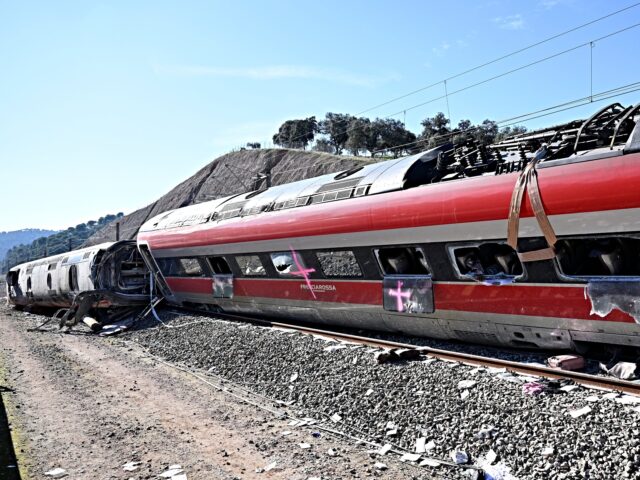

The Spanish Union of Railway Engineers (Semaf) is calling for a three-day strike in February to demand better railway safety measures from the Spanish government after two deadly train accidents this week killed dozens of individuals.
The Spanish news agency Europa Press reports that the upcoming strike is being called for February 9-11 and comes after a deadly train derailment on Sunday left 43 dead and over 150 injured in southern Spain — followed by a second accident hours later in Gelida, near Barcelona, after a wall collapsed as the train was passing, killing the train’s driver and leaving at least 37 injured.
The Spanish newspaper El País identified the dead train driver as a 28 year-old male from Seville.
In a Wednesday statement, Semaf said it considers the “constant deterioration” of Spain’s railway to be an unacceptable situation and detailed that, much like the accident in Gelida, another detailment recently took place near the municipality of Maçanet after a rock fell onto the track and was hit by the train. No injuries or deaths occurred as a result of the Maçanet accident.
“Various measures must be implemented urgently on our network to guarantee the safety of professionals and users,” the statement read.
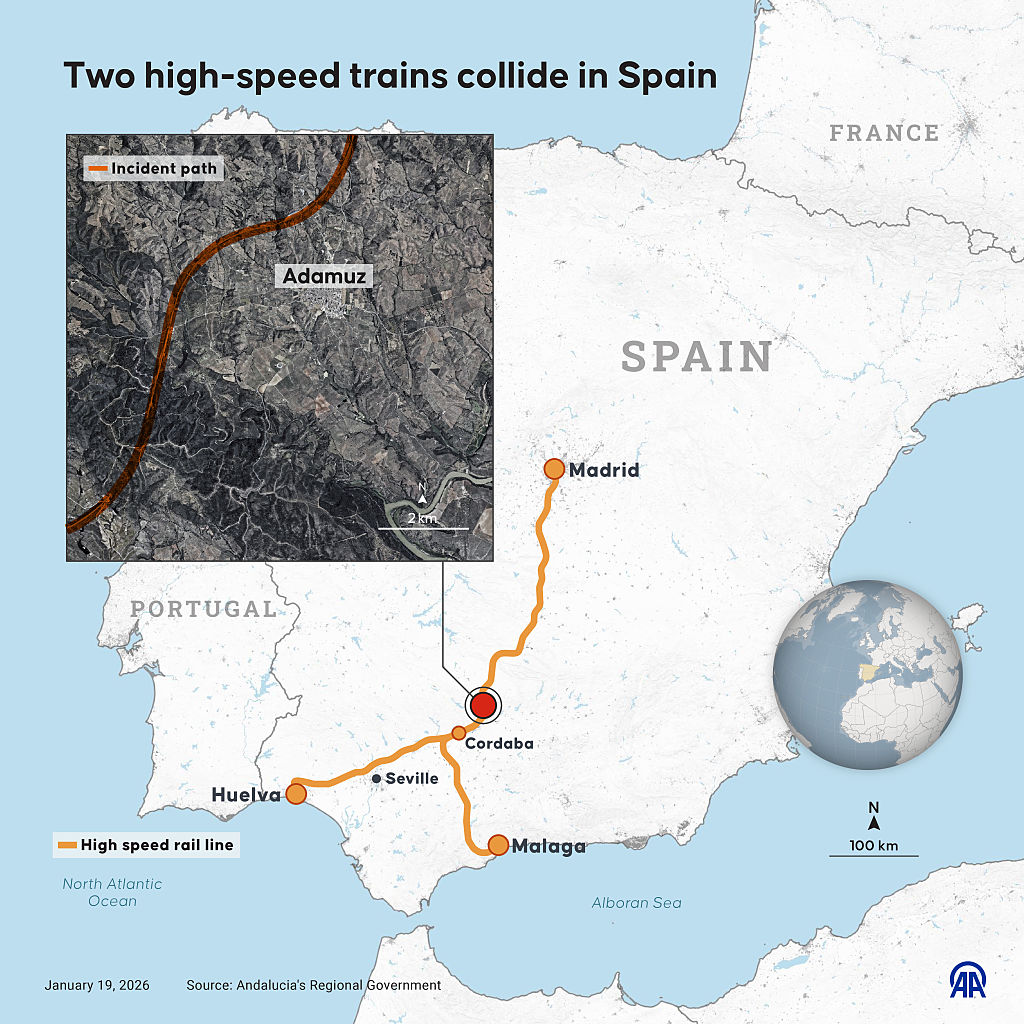
An infographic titled “Two high-speed trains collide in Spain” created in Ankara, Turkiye on January 19, 2026. (Elif Acar/Anadolu via Getty Images)
As an “initial” response to the two deadly accidents, the railway union is calling for a general strike across the railway transportation sector to demand railway infrastructure safety guarantees and “criminal responsibility from those in charge of ensuring safety in the railway infrastructure.”
“The serious accidents in Adamuz and Gelida, both of which resulted in several fatalities, mark a turning point in demanding that all necessary measures be taken to ensure the safety of railway operations,” Semaf told Europa Press.
Spanish Transport Minister Óscar Puente reportedly responded to the calls for the upcoming strike by saying that, “We understand the drivers’ state of mind and we respect it (…), but we do not agree that a general strike is the best way to convey their message.” Puente expressed his absolute “confidence in the Spanish railway system.”
Deutsche Welle reported that CCOO, another Spanish Union, expressed moments before the strike dates were announced that the safety of railway workers and users “cannot continue in the current situation” and that, in the absence of sufficient measures and action, they would call for strike action or other forms of pressure.
Puente reportedly assured that his office would sit down to talk with the train drivers to reach an agreement that would avoid a strike in the railway sector, stressing that a stoppage, in his opinion, “would not contribute anything.”
COMMENTS
Please let us know if you're having issues with commenting.