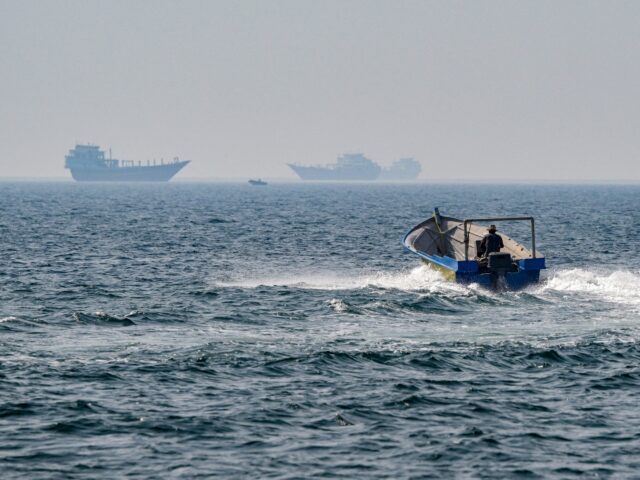

The Iranian military claimed on Saturday morning that it had closed the Strait of Hormuz after the United States refused to lift its naval blockade preventing Iran’s ships from passing through the waterway.
Briefing the state-tied Tasnim News Agency, a spokesman of the Hazrat Khatam al-Anbiya central headquarters of the remnants of the Iranian military said that it would once again seek to block traffic in the Strait of Hormuz, just hours after coming to a deal with the United States to open the passage.
“Following the previous agreements in the negotiations held in good faith, the Islamic Republic of Iran agreed to the passage of a limited number of oil tankers and commercial ships through the Strait of Hormuz in a managed manner, but unfortunately, the Americans continue to commit banditry and piracy under the so-called blockade,” the spokesman said.
“For this reason, the control of the Strait of Hormuz has returned to its previous state, and this strategic strait is under the strict management and control of the armed forces.”
Tehran said it will allow free movement in the Strait only once the United States lifts its restrictions on vessels travelling to and from Iranian ports.
The comments come after President Donald Trump announced on Friday that Tehran had agreed to open the Strait and was in the process of removing its sea mines from the waterway. President Trump also said that Iran had agreed to suspend its nuclear programme and hand over its enriched uranium from its nuclear sites at Esfahan, Fordow, and Natanz.
The president said that he believed a deal with Iran could be completed “in the next day or two,” saying that: “The Iranians want to meet. They want to make a deal… I think we will get a deal in the next day or two.”
He further suggested that he might personally attend continued talks in Pakistan, where negotiations led by Vice President JD Vance broke down earlier this month.
The American naval blockade imposed on Iranian-linked ships has placed considerable pressure on the Islamist regime, with reports emerging that Iran would only have around two weeks before having to start permanently shutting down crude oil production because it was running out of space to store the raw fuel.
“Once the tanks are filled, Iran would have to shut down its oil fields, which risks long-term damage to the fields,” Annika Ganzeveld of the American Enterprise Institute told the New York Post this week.
In addition to refusing to lift the blockade, the U.S. administration has also rejected the notion of unfreezing billions in seized Iranian funds in exchange for its uranium and said that there would be no timeframe in which Tehran could restart its nuclear programme under any deal with Washington.
COMMENTS
Please let us know if you're having issues with commenting.