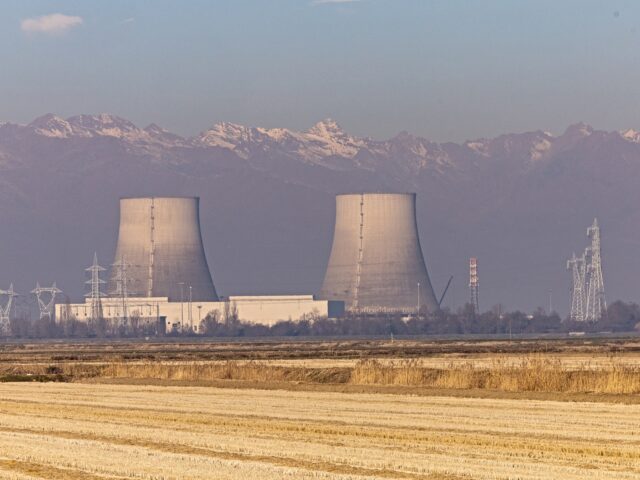

A majority of Italians are in favor of using nuclear power plants to offset growing utility bills, a study published by the Italian market research firm Only Numbers found.
Nuclear power has long since been described as a “taboo” subject in Italy, a country that phased away its nuclear power plants decade ago. International conflicts and unstable markets have resulted in rising energy costs for Italy.
The ongoing international situation has left Italy at a complex crossroads, leading to renewed debates on the merits of nuclear power as a way to counter the energy cost crisis and dependence of other countries. The debates also come amid renewed calls from the government of Prime Minister Giorgia Meloni for Italy to re-embrace nuclear power.
La Stampa reports that Only Numbers‘ study found that 54.9 percent of respondents expressed to be in favor of using smaller and safer next-generation nuclear power plants as an energy source for their country — believing, above all, that it is a means to lower energy bills for their households.
The study unsurprisingly found that support for nuclear power among Italians varies depending on the respondent’s ideological alignment. An overwhelming 78.5 percent majority of those who identify as center-right expressed support for nuclear power — whereas those who identify with any of the nation’s left-wing parties majorly oppose it.
Opposition to nuclear power among Italian leftists is not uniform, however, and it ranges from 58 percent among sympathizers of the Green and Left alliance to all the way down to 48.3 percent by supporters of the leftist Democratic Party (PD) — a result that, La Stampa noted, “reflects the internal tensions within a party torn between traditional environmentalism and industrial realism.”
Despite the ideological divide, La Stampa highlighted that nearly one in two Italians are convinced that the use of latest-generation nuclear power can translate into significant savings for their energy bills.
“This is precisely the key point: Italians today seem less interested in ideological battles and much more focused on their families’ financial well-being. The cost of living and inflation remain firmly at the forefront of national concerns,” La Stampa wrote, and added that nearly 41 percent of respondents said they were in favor of returning to Russian gas imports despite the war in Ukraine.
Italy operated four nuclear power plants between the 1960s and 1980s — however the country phased away from nuclear power following the April 26, 1986 Chernobyl nuclear disaster, cementing the decision through a referendum in 1987. The subject of nuclear power was once again brought to vote as part of a broader referendum in June 2011, in which 94 percent of voters rejected a return to nuclear power. The broader 2011 referendum occurred three months after the 2011 Fukushima nuclear accident.
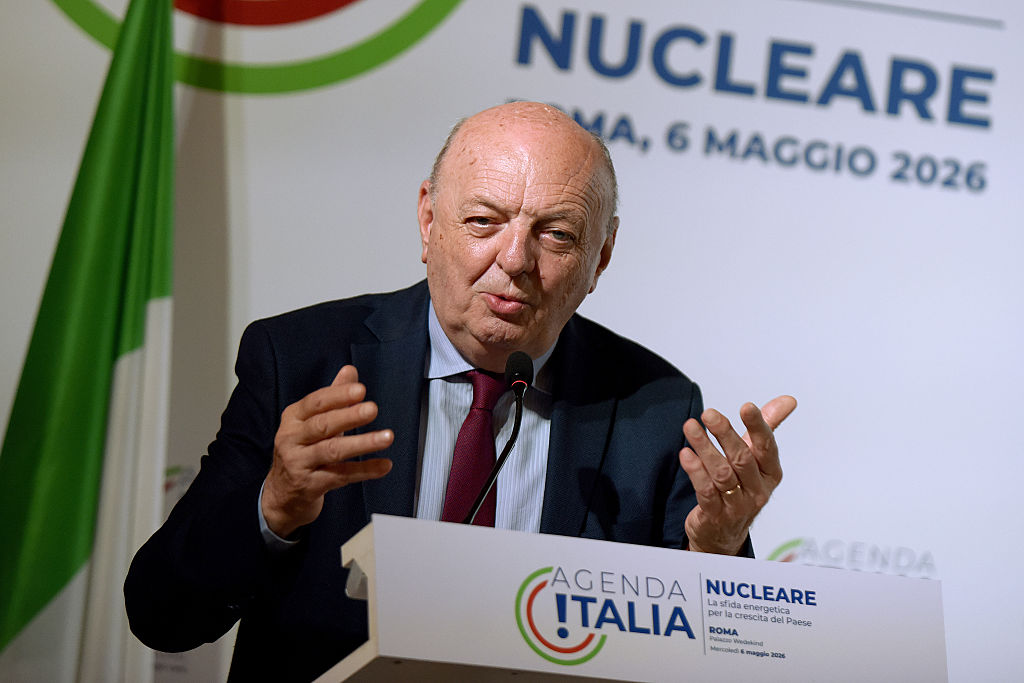
Gilberto Pichetto Fratin, Minister of the Environment and Energy Security, speaks at the Agenda Italia Observatory’s conference on nuclear energy at Palazzo Wedekind, on May 06, 2026 in Rome, Italy. (Simona Granati – Corbis/Corbis via Getty Images)
A return of nuclear power in Italy has been one of the longer-term goals for Prime Minister Meloni’s administration — a goal that she has reiterated in recent days while calling for more flexible E.U. defense spending so that Italy can better face its rising energy costs crisis.
“When you ask someone else to defend you, you pay them. But we can’t tell citizens there’s money only for that; we must also address issues like high energy costs, otherwise there will be nothing left to defend,” Meloni reportedly said during a local infotainment television program last week.
“That is why we have once again placed the issue of nuclear energy at the center; let us remember that a few decades ago this nation decided to abandon nuclear energy, a fast, safe, clean, and effective way to lower prices,” she continued.
Speaking at the Italian parliament in mid-May, Meloni announced that her administration aims to implement a series of decrees by summer that contain the necessary legal framework for the resumption of nuclear power production in Italy.
According to Italian outlets, the government nuclear plans are focused on the use of small modular reactors (SMRs), which can produce up to 7.2 million kWh per day and are deemed safer and more flexible that traditional nuclear power plants.
COMMENTS
Please let us know if you're having issues with commenting.