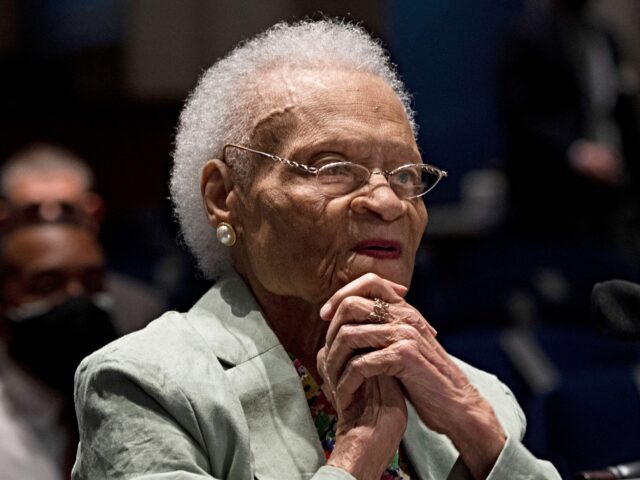
Viola Fletcher, the oldest survivor of the infamous 1921 Tulsa Race Massacre in which affluent black neighborhoods were burned to the ground by white racists, has died at the age of 111.
Mayor Monroe Nichols of Tulsa, Oklahoma, announced Fletcher’s passing in a statement on Monday, though he did not say when or where she died.
“Today, our city mourns the loss of Mother Viola Fletcher – a survivor of one of the darkest chapters in our city’s history. Mother Fletcher endured more than anyone should, yet she spent her life lighting a path forward with purpose,” Nichols said.
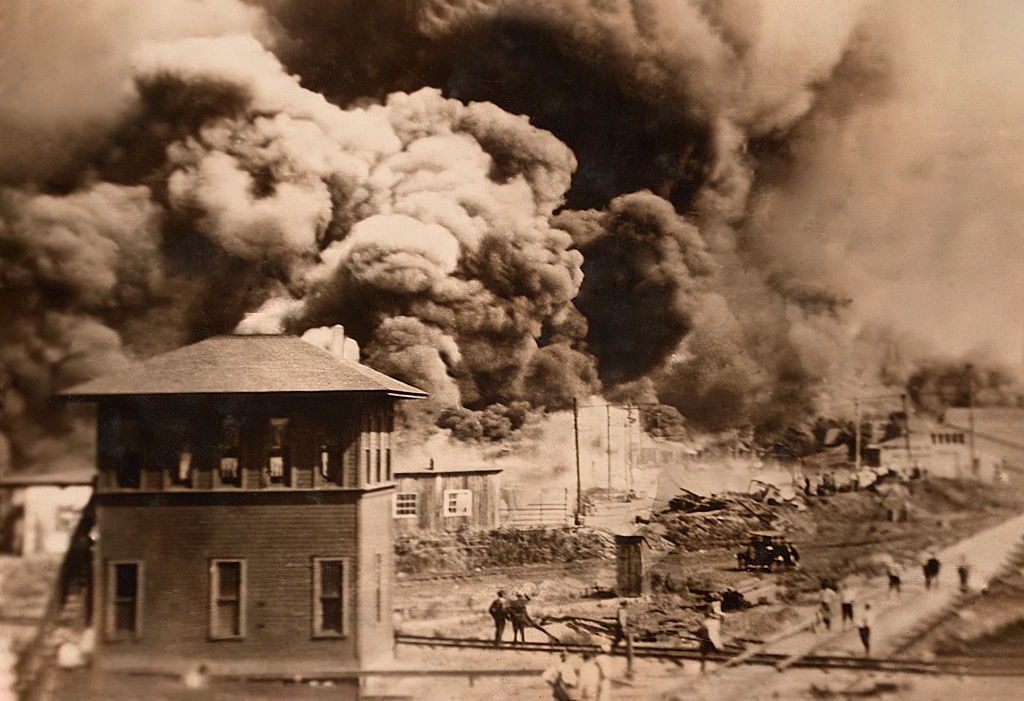
File/Buildings burning during race riots, Greenwood District, Tulsa, Oklahoma, USA, Unidentified Artist, June 1921. (Photo by: Circa Images/GHI/Universal History Archive/Universal Images Group via Getty Images)
“Mother Fletcher carried 111 years of truth, resilience, and grace and was a reminder of how far we’ve come and how far we must still go. She never stopped advocating for justice for the survivors and descendants of the 1921 Tulsa Race Massacre,” his statement said, “and I hope we all can carry forward her legacy with the courage and conviction she modeled every day of her life.”
Nichols continued, “On behalf of the city of Tulsa, I offer my heartfelt condolences to her family, loved ones, the Greenwood descendant community, and to every Tulsan who saw hope in her journey. Rest in peace, Mother Fletcher.”
Though Fletcher is the last survivor of the massacre, at least one witness to it – Lessie Evelyn Benningfield – is still surviving at the age of 111, per the New York Times:
The Greenwood neighborhood of Tulsa, Okla., home to about 10,000 people in the early 20th century, became known colloquially as “Black Wall Street” for the successful entrepreneurship of its residents and the prosperity of many families who lived there. The neighborhood was destroyed in the massacre, which led to as many as 300 deaths and mass homelessness.
[On June 1, 1921], word had spread in Tulsa that a 19-year-old Black shoe shiner, Dick Rowland, had attempted to rape a 17-year-old white elevator operator, Sarah Page, in the building where she worked.
Ms. Page later denied that Mr. Rowland had done anything wrong, and the case was dropped. But by then, inflamed by the rumors, many of Tulsa’s white citizens were already set on imposing their own idea of justice. Hundreds of heavily armed white men gathered outside the courthouse where Mr. Rowland was being held. Soon, armed Black veterans of World War I arrived as well, seeking to prevent a lynching. A scuffle ensued, and a shot was fired. The next morning, the assault began.
The massacre lasted over 16 hours, during which three dozen blocks were looted and set on fire, with more than 1,000 homes destroyed. The American Red Cross estimates the death toll somewhere between 55 to 300 people, with no set consensus.
Viola testified before Congress in 2021 seeking reparations alongside other survivors that she and her family fled the violence via horse and buggy. Among other horrific acts, she recalled seeing an airplane drop what appeared to be firebombs from the sky, a pile of corpses, and a white man blowing off a black man’s head with a shotgun.
Nobody was brought to justice for the massacre.
“The neighborhood I fell asleep in that night was rich — not just in terms of wealth, but in culture, community, heritage — and my family had a beautiful home,” Ms. Fletcher told a House Judiciary subcommittee in May 2021. “Within a few hours, all that was gone.”
Fletcher is survived by her two sons and a daughter.
COMMENTS
Please let us know if you're having issues with commenting.