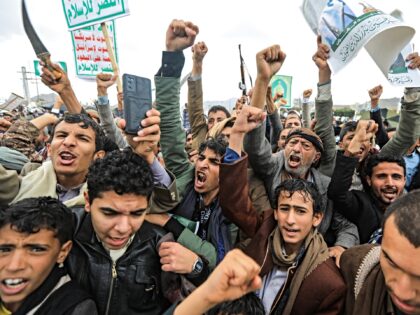
Iran-Backed Houthi Terrorists Threaten to ‘Ban’ Israel from Red Sea
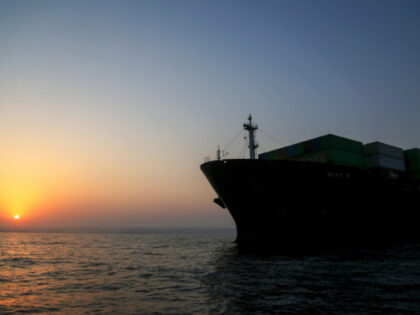
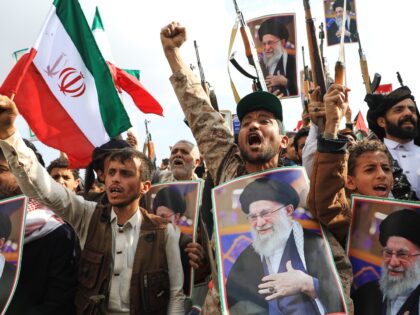
The Iran-backed Houthi insurgents of Yemen declared “a complete and total ban on Israeli maritime navigation” through the Red Sea on Monday.

The Iran-backed Houthi insurgents of Yemen declared “a complete and total ban on Israeli maritime navigation” through the Red Sea on Monday.

Israel struck military and petrochemical targets inside Iran for the first time since an early-April ceasefire on Monday after Tehran launched ballistic missile barrages at the Jewish state.

CENTCOM chief Adm. Brad Cooper said Thursday that Iran’s military capabilities have been “severely degraded” across “every domain” following the U.S. air campaign against the Islamic Republic.

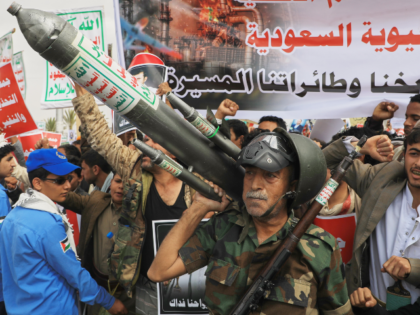
A report released this week by researchers at Conflict Armament Research (CAR) revealed that the Houthis, an Iran-backed Yemeni terrorist organization, has been rapidly rebuilding its weapons arsenal through shipments of components, including for missiles and underwater weapons.
The government of Somalia on Thursday announced Israeli ships are no longer allowed to pass through the Bab al-Mandab Strait, a vital passage that links the Red Sea with the Gulf of Aden and the Indian Ocean.
Spain’s prime minister is facing a complaint at the International Criminal Court alleging his government enabled Iran’s “terror machine” through dual-use exports, with the legal group behind the filing arguing that responsibility for war crimes extends to those who provide the means.

Rep. Rashida Tlaib and 23 House Democrats urged the Trump administration to restore Yemen TPS, which is set to expire May 4.

President Donald Trump on Saturday warned Iran that “time is running out” and gave the regime 48 hours to either “MAKE A DEAL or OPEN UP THE HORMUZ STRAIT” before “all Hell” would rain down, escalating his pressure campaign on the 36th day of Operation Epic Fury as the White House signaled that Tehran is rapidly running out of time to avoid even harsher consequences.

The Iran-backed Houthi insurgents of Yemen claimed on Thursday to have struck Tel Aviv, Israel, with a “barrage of ballistic missiles.”

The Iran-backed Houthi insurgency in Yemen announced on Wednesday it has launched an operation called “Holy Jihad Battle” against Israel.

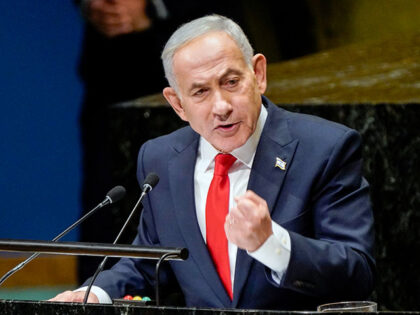
Israeli Prime Minister Benjamin Netanyahu declared on Tuesday that Iran no longer poses an existential threat to Israel after what he described as a month of joint U.S.-Israeli operations that crippled Tehran’s nuclear and missile capabilities, while President Donald Trump said the war is nearing its end and “won’t last much longer.”

The Houthi insurgents of Yemen appear to have joined the Iran conflict on behalf of their arms dealers and paymasters in Tehran by launching missiles and drones at Israel on Saturday.

Israeli Prime Minister Benjamin Netanyahu said Monday that a long-term solution to the escalating Strait of Hormuz crisis would require rerouting oil and gas pipelines westward across Saudi Arabia to the Red Sea and Mediterranean, bypassing what he described as Iran’s “geographic choke point,” as Tehran moves to impose tolls on ships transiting the vital waterway and restrict passage through the corridor.

Yemen’s Houthi rebels announced their entry into the Middle East war on Saturday by launching a ballistic missile towards Israel, as the world struggled to contain the economic damage of a conflict now entering its second month.

A significant number of House Democrats voted “no” on declaring the Islamic Republic of Iran a “state sponsor of terrorism.”

The shipping industry is concerned that the war in Iran could disrupt worldwide supply chains, far beyond the loss of oil and liquid natural gas (LNG) shipments moving through the Strait of Hormuz.

Retired British Army Colonel Richard Kemp, a former operational commander in Afghanistan, said Iran “seriously miscalculated” President Donald Trump’s resolve — a misjudgment he argued led to the most significant strike against the Islamic Republic since 1979 and one that could now fundamentally reshape the regional order.

On Thursday’s “CNN News Central,” Rep. Jake Auchincloss (D-MA) argued that if there is a deal with Iran, it has to include their funding of terrorist proxies in it, “because if they are funneling their oil revenues to Hezbollah, to

Somaliland President Abdirahman Mohamed Abdullahi said his nation is ready to enter into a full security and economic partnership with the United States, arguing that it occupies what he called “perhaps the most strategically positioned territory in the region” — positioned along a maritime corridor that carries 30 percent of global container traffic, with abundant critical minerals and a stable, pro-Western foothold in a volatile corner of the world.

Pink Floyd co-founder Rogers Waters defended the murderous regime in Iran, one week after defending former Venezuelan dictator Nicolás Maduro, calling claims that Iran has been a leading sponsor of terrorism around the world “nonsense.”

Saudi warplanes on Friday bombed positions held by the Southern Transitional Council (STC), the Yemeni separatist group backed by Saudi Arabia’s nominal allies in the United Arab Emirates (UAE).

On the day after Christmas, Israel became the first nation in the world to recognize the independence of Somaliland, a breakaway region of Somalia.

The Yemeni separatist group STC accuses Saudi Arabia of launching airstrikes against their forces in the province of Hadramout.

Shipping giant Maersk announced on Friday that one of its ships successfully navigated the Red Sea and Bab el-Mandeb Strait for the first time in almost two years, potentially signaling a return to using the cost-effective trade route after the Iran-backed Houthi terrorists of Yemen shut it down with missile and drone attacks.

The Southern Transitional Council (STC), the Yemeni separatist movement that abruptly abandoned its alliance with the deposed national government last month and began snapping up oil-rich territory in southern Yemen, is urging the United States to support them against the Iran-backed Houthi extremists who control the northern half of the country.

The Southern Transitional Council (STC) of Yemen, a group of separatists who have largely been aligned with the internationally-recognized government of Yemen ever since it was deposed by Houthi insurgents in 2014, has marched its fighters into another province — taking more territory away from its erstwhile allies and stoking fears of a renewed civil war.

The Southern Transitional Council (STC), a secessionist group in Yemen, has seized control of the oil-rich provinces of Hadramout and Mahra, threatening to re-ignite the stalemated Yemeni civil war and potentially destabilize the region.

Shipping giant Maersk said on Tuesday that it was close to resuming shipping through the Suez Canal almost two years after terrorist attacks from the Iran-backed Houthi insurgents of Yemen forced many transport companies to avoid the route through the Red Sea that leads to the canal.

Israeli Foreign Minister Gideon Sa’ar on Monday denounced before the Paraguayan parliament that Venezuela’s socialist regime is the main “nexus” that facilitates the presence of Hezbollah, Hamas, and the Houthis in the region.

The Iran-backed Houthi insurgents of Yemen raided a United Nations compound in the occupied capital of Sanaa on Saturday and took 20 employees hostage, the latest of several mass kidnappings the Houthis have conducted against U.N. personnel.

A ship caught fire Saturday in the Gulf of Aden off Yemen after being struck by a projectile, the British military said.

The Iran-backed Houthi insurgents of Yemen took another nine employees of the United Nations prisoner on Tuesday, bringing the total number U.N. workers detained over the past four years to 53.

Yemen Houthi rebels claimed responsibility early on Wednesday, underlining the range of their weaponry and their campaign targeting shipping.

The Iran-backed Houthi terrorists of Yemen on Tuesday threatened to impose “sanctions” against 13 American oil companies, including ExxonMobil, Chevron, ConocoPhillips, and Marathon Petroleum.

The head of Yemen’s legitimate but powerless government, Presidential Leadership Council leader Rashad Mohammed Al-Alimi, urged the United Nations to help his country fight Iranian imperialism and eliminate the jihadist Houthi threat during his address to the General Assembly on Wednesday.

A Houthi drone hit a hotel and shopping area in the southern city of Eilat during the Jewish holiday of Rosh Hashanah, the New Year, on Wednesday evening, wounding 22 people, two of them seriously.

Internet monitors said over the weekend that widespread service disruptions in Asia and the Middle East appear to have been caused by damage to undersea cables in the Red Sea, off the coast of Saudi Arabia. It was not immediately clear if the cable damage was caused by deliberate sabotage.

The foreign ministry of the Iran-backed Houthi insurgency said on Wednesday that it has no intention of releasing at least 19 United Nations staffers who were detained in raids on Sunday. The Houthis claimed the U.N. personnel were spying for hostile powers, including the United States and Israel.

Republican chairmen of two key House committees dedicated to confronting the Chinese Communist Party are urging the State Department to issue a separate travel advisory for Somaliland, arguing that distinguishing it from Somalia would recognize Somaliland’s stability and democracy, encourage U.S. investment, and strengthen Washington’s ability to counter Beijing’s growing influence in the Horn of Africa — with the lawmakers stressing, “Strengthening cooperation with Somaliland is a productive step in advancing America’s security and diplomatic objectives in the region.”

Iran-backed Houthi insurgents in Yemen raided U.N. offices on Sunday, taking at least 11 U.N. employees prisoner, then launched a missile at an Israeli-owned oil tanker in the Red Sea on Monday. Israel Defense Forces (IDF) had killed much of the Houthis’ senior leadership, including their “prime minister” Ahmed al-Rahawi, in an airstrike on Thursday.