Nolte: A Million Fewer Migrants in Workforce May Point to Increased Self-Deportations
There is no question that a million fewer migrants in the workforce benefits American workers and American wages.
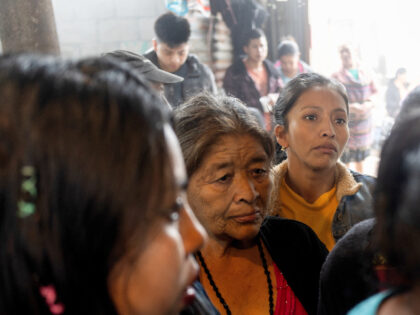
There is no question that a million fewer migrants in the workforce benefits American workers and American wages.
Kamala Harris and her running mate are dangling weed in front of young Americans in exchange for their votes, and their allies in the porn industry are urging young men to vote against President Donald Trump.

Liberals are siding with corporate America over the nation’s workers in their promotion of mass immigration, a key tool in keeping wages down, Center for Immigration Studies Director of Research Steven Camarota told lawmakers this week.
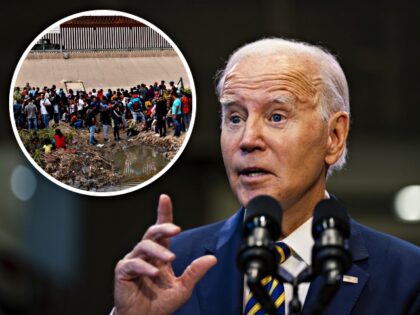
Rep. Andrew Clyde (R-GA) is proposing an amendment to a Department of Homeland Security (DHS) funding bill that would protect working class Americans from Big Agriculture’s desire to flood the industry’s workforce with more foreign workers.
While the notion that the labor market has been softening underneath the strong headline figures is increasingly popular, the evidence marshaled to support it is not very strong.

Americans should celebrate the inflow of migrants into new jobs throughout the economy, even as many American men remain on the economic sidelines, says a Washington Post columnist.
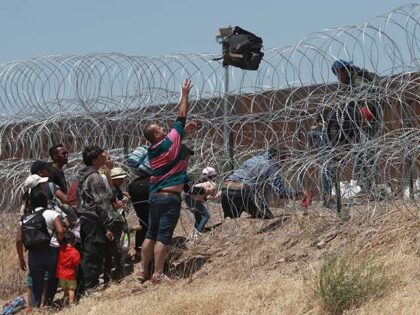
The sudden implosion of Silicon Valley Bank (SVB) is sending shock waves through the financial system and the technology sector.

A new paper says older homeowners dropped out of the labor force when home prices boomed.

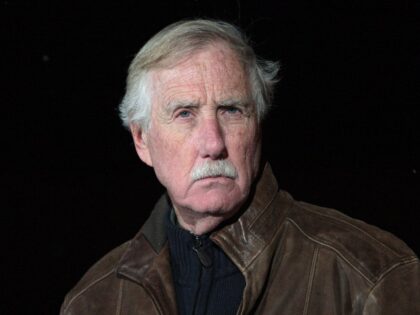
Sen. Angus King (I-ME) says Congress ought to pass a legislative package that expands legal immigration levels to fill unfilled United States jobs with foreign workers rather than pulling jobless Americans off the labor market sidelines.
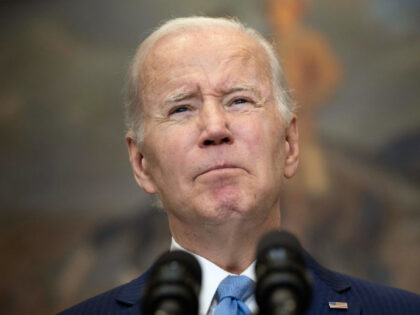
President Joe Biden has pulled at least 1.9 million additional wage-cutting workers from poor countries, more than reversing the temporary gain under President Donald Trump, according to government data reported by the Center for Immigration Studies.
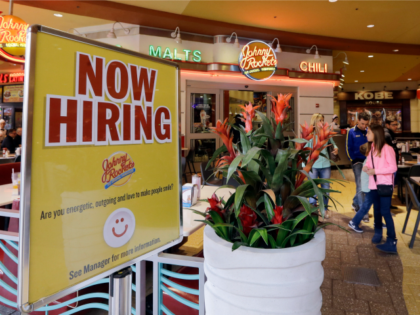
On Friday’s broadcast of the Fox Business Network’s “Kudlow,” Breitbart Economics Editor John Carney said that the decline in the labor force participation rate in the November jobs report shows “the government has gummed up the works of the labor
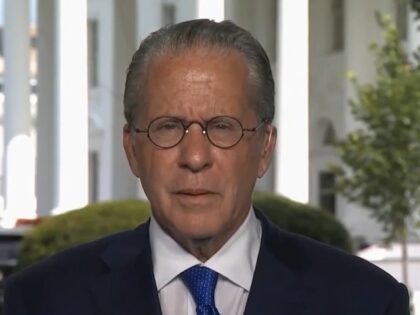
On Friday’s broadcast of Bloomberg’s “Balance of Power,” Biden Senior Adviser Gene Sperling reacted to the November jobs report by stating that he would have liked better labor force participation numbers and saying that there are “a lot of questions
On Friday’s “ABC News Live,” ABC News Business Reporter Alexis Christoforous stated that the decline in the labor force participation in the November jobs report is not what you see “in a healthy economy, in a healthy job market,” where
On Monday’s broadcast of MSNBC’s “Morning Joe,” Steve Rattner, who served as counselor to the Treasury Secretary in the Obama administration, said that the decline in labor force participation in the September jobs report is “bad news because it means Americans
On Friday’s broadcast of CNN’s “At This Hour,” New York Times Federal Reserve and Economy Reporter Jeanna Smialek said that “the supply of workers just isn’t going to be the thing” that returns the labor market to balance and so, “what you’re going

On Friday’s broadcast of MSNBC’s “Jose Diaz-Balart Reports,” Labor Secretary Marty Walsh said that while there was a decline in the labor force participation rate, “it was high last month. So, I’m not too concerned about that” and that he
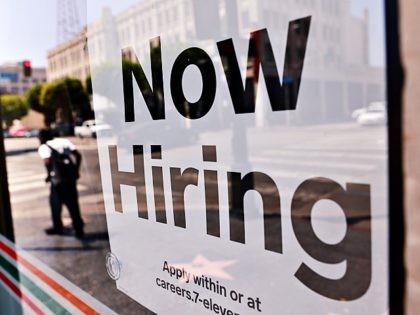
A majority of Americans say they are being forced to search for extra work as inflation increases the costs of living.
Claim: The decline in the labor force participation rate fell in July because fewer teenagers were working. On Friday, after the Department of Labor’s jobs numbers showed that the labor force participation rate declined from 62.2 percent to 62.1 percent
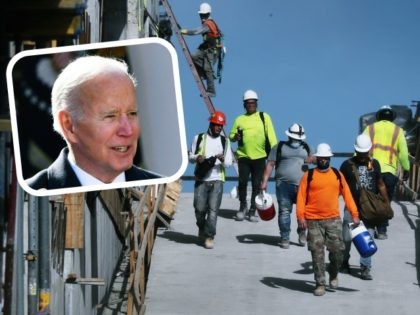
U.S. employers added a jaw-dropping 528,000 jobs in July, far more than expected, and wages jumped higher than expected—and yet the number of people working or looking for work declined. Where is everyone?
President Donald Trump’s tight labor market from 2017 to 2019 pulled many left-behind Americans into work and jobs, setting the stage for higher economic growth, says a report by JPMorgan.
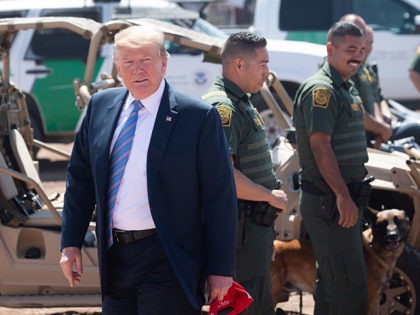
The better than expected jobs growth in July was driven by a rise in jobs held by whites. Black employment and black labor force participation declined.
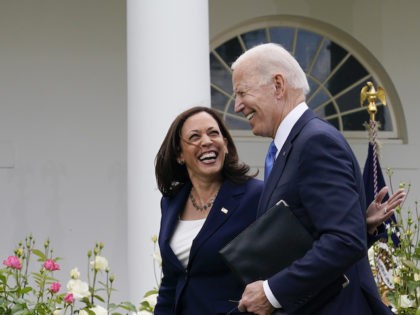
Combating drug addiction is a personal matter for several members of the Trump administration, said Drug Czar Jim Carroll.
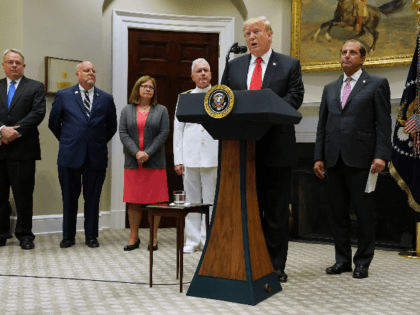
Arthur Laffer, economist and author of Trumponomics: Inside the America First Plan to Revive Our Economy, told Breitbart News that “the poor, the minorities, the disenfranchised are disproportionately benefiting from tight labor markets” during President Donald Trump’s tenure.
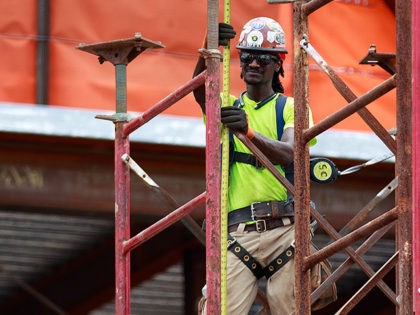
Alfredo Ortiz of Job Creators Network writes in The Hill, calling upon President Trump to use the State of the Union Address as an opportunity to tout the current robust economy and urge more of the same policies be pursued.
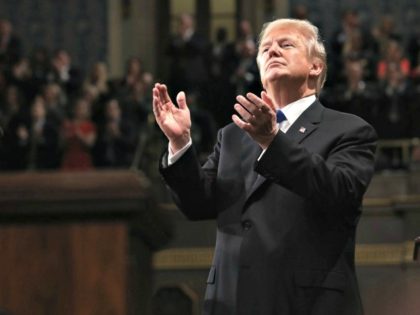
While President Barack Obama celebrated Labor Day with his G-20 colleagues in China, black Americans were left to ponder why they are economically worse off than when he first took office.
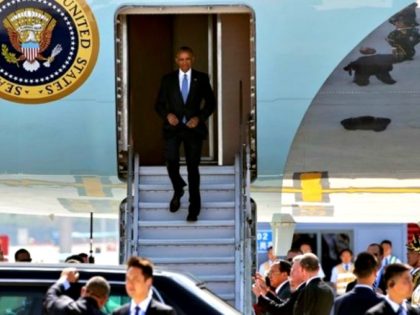
The Bureau of Labor Statistics reports that 94,333,000 Americans were neither employed nor had made an effort to find work in July — down 184,000 compared to the month prior.
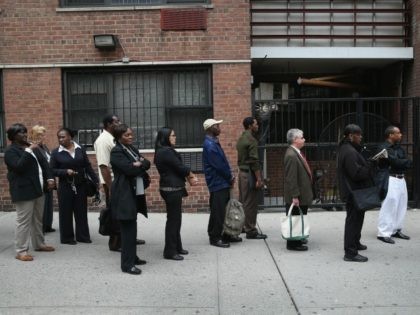
The BLS reports that last month 94,708,000 Americans were neither employed nor made an effort to find employment — due to discouragement, retirement, education, or otherwise — last month.
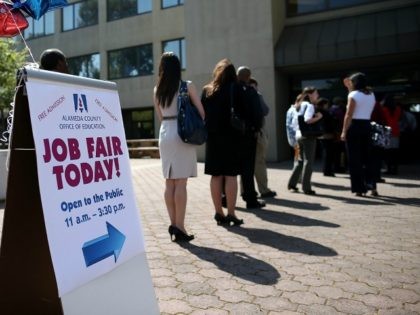
The number of Americans not participating in the workforce in March dipped again compared to the previous month but was still higher than it was a year ago, according to Labor Department data released Friday.
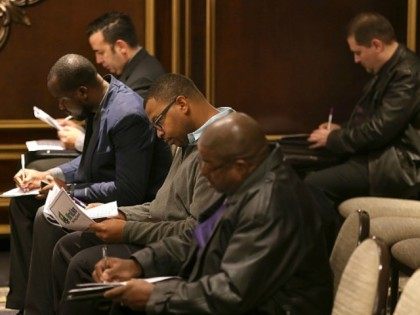
The number of Americans not participating in the workforce dipped below 94 million for the first time in six months, according to new jobs data released Friday.
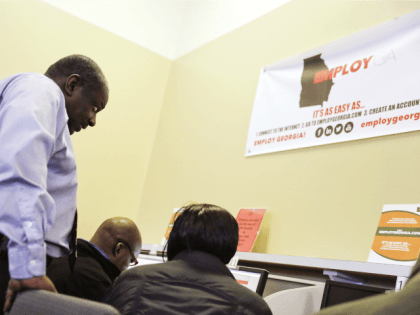
The number of people out of the workforce last month exceeded 94 million for the sixth month in a row, according to new Department of Labor data released Friday.
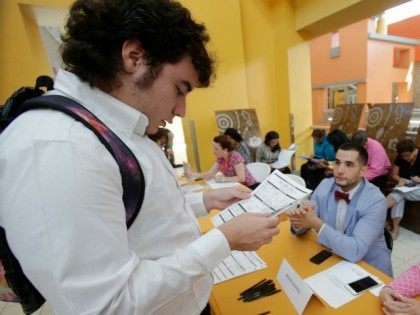
While the economy added 211,000 jobs in November, the number of Americans not participating in the work force exceeded 94 million for a fourth month in a row, according to Labor Department data released Friday.
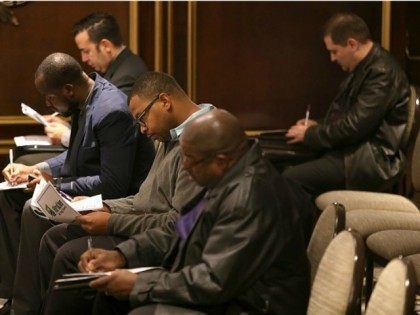
More than 56 million women were not of the U.S. labor force last month, according to new government data released Friday. The Bureau of Labor Statistics reports that 56,647,000 women, ages 16 and older during the month of September were neither employed nor had made specific efforts to find work in the past four weeks.
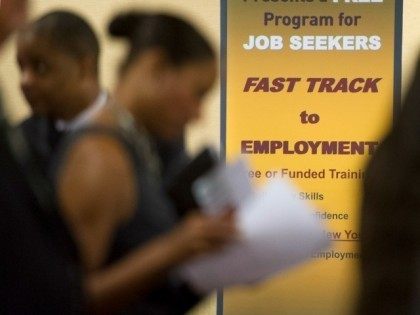
The number of people not in the labor force exceeded 94 million for the first time, hitting another record high in August, according to new jobs data released Friday by the Bureau of Labor Statistics.
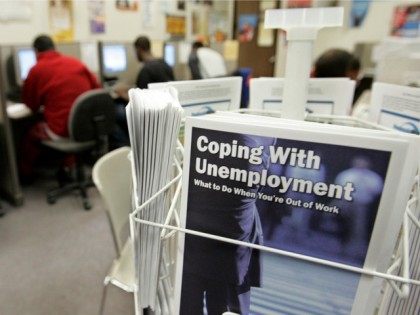
The number of women not in the labor force reached a record high in July, according to data released Friday by the Bureau of Labor Statistics.
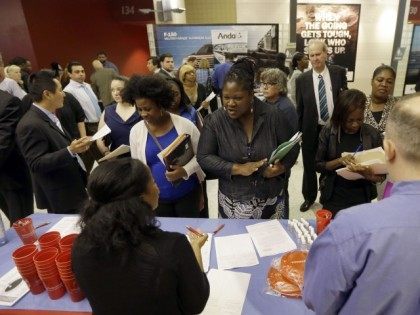
The month of June saw 56,085,000 women not participating in the workforce, an increase over May’s 55,951,000.
Gallup explains its poll results in terms of an “improving U.S. job market,” at a time when a record 93,194,000 Americans were not in the labor force in April, according to the Bureau of Labor Statistics (BLS). In addition, though Gallup shows a 3.5 percent decrease in the percentage of blacks struggling to afford food, data released Friday by the BLS shows that the unemployment rate for African Americans was nearly twice the national average, and more than double the unemployment rate for whites last month.
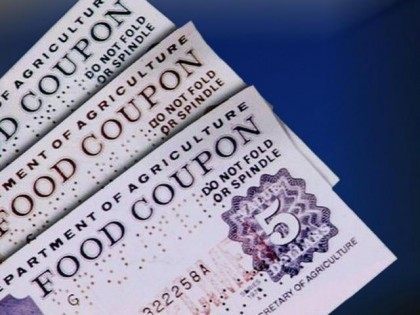
Mirroring the national numbers, the number of women outside the workforce experienced a slight decline in May, according to data released Friday by the Bureau of Labor Statistics.
The month of May saw 92,986,000 people not participating in the workforce, according to new data released Friday by the Bureau of Labor Statistics reveals.
In 2014, the unemployment rate for foreign-born people was 5.6 percent, compared to 6.3 percent for native-born Americans. Both groups experienced declines in unemployment from the year prior when foreign-born unemployment was 6.9 percent and native-born was 7.5 percent.
Along with the national increase in Americans not in the workforce the number of women, African Americans, and Asians not in the workforce also experienced an increase in March.