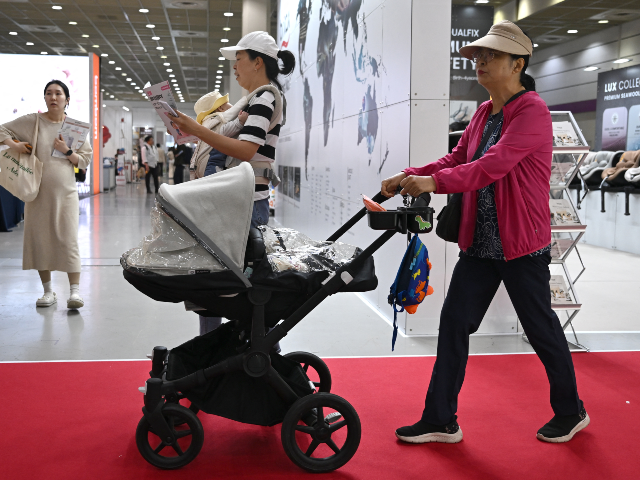

- South Korea has documented the largest increase in its national birth rate in the history of its data collection.
- The country previously had the world’s lowest birth rate at 0.78 births per woman of childbearing age, compared to the 2.1 “replacement rate” necessary to maintain population.
- Government calls for families to grow have been so successful that some local governments do not have the money to pay promised subsidies for all eligible babies.
The Statistics Ministry of South Korea revealed this week that it has documented the largest increase in the nation’s fertility rate in history throughout 2026, a meaningful boost in a nation that has long endured the world’s lowest birth rate.
South Korea has long struggled with low birth rates as a result of a variety of factors, from a decrease in population of child-bearing women to fewer citizens getting married to cultural factors, such as public sites like cafes and libraries simply banning the presence of children. Children have become uncommon enough in South Korea that the pediatric medical industry has struggled economically and large numbers of schools have closed down in the past decade.
The government has made conscious efforts throughout an ideologically diverse series of presidential administrations to increase the birth rate. According to government statistics published on Wednesday, those policies have succeeded. The birth rate rose a record 14.3 percent in the first nine months of this year, representing the birth of 220,000 new people. The year-to-year increase in September was documented at 12.2 percent, equivalent to slightly over 25,000 babies being born in 2026. The South Korean government began documenting the national birth rate in 1981 and noted that it has not documented a higher increase than the one revealed this week.
“The total fertility rate stood at 0.90 in the third quarter, up 0.09 from a year earlier,” the Korea JoongAng Daily reported on Wednesday. “It marked the first time in eight years that the third-quarter fertility rate reached the 0.90 range, after recording 0.96 in 2018. The annual fertility rate is consequently expected to reach the 0.9 range for the first time in seven years, after standing at 0.92 in 2019.”
The fertility rate reportedly rose among women of all ages. The left-leaning South Korean newspaper Hankyoreh noted that the country in particular observed an increase in the number of babies born to women age 40 or older. The increase in fertility across demographics, JoongAng noted, indicates that South Korea could see the remarkably low, but relatively much higher, fertility rate of one child per woman of childbearing age in the near future.
South Korea has seen steady increases in its birth rate for 27 months, since July 2024. In June 2024, the administration of conservative then-President Yoon Suk-yeol declared a “demographic national emergency,” revealing a wide-ranging federal government plan to encourage couples to have children that treated the low birth rate as an existential threat. The Yoon plan featured three main categories of programs to address the problem: “balancing work and life, improving child care and providing better housing to address the complex issues.”
At the time, South Korea’s fertility rate was estimated to be at 0.78 children per woman of childbearing age and predictors indicated that number could drop to 0.59 by 2026. Instead, it has risen today to about 0.90.
“The number of births has steadily increased because of a rise in marriages over the past two years, growth in the population of people in their 30s and a positive shift in attitudes toward having children,” a official with the Statistics Ministry was quoted as saying on Wednesday, according to JoongAng.
Yoon was arrested in December 2024 after attempting to impose military rule on the country, leaving it in the hands of his leftist former presidential rival, current President Lee Jae-myung. Lee has continued Yoon’s policies on encouraging larger families, though reports this week suggest that his government may not have been prepared for the success of the programs. According to the Korea Herald, many families across the country are complaining this week that they have not received promised government benefits; the situation is especially affecting families with children under two years of age, who were promised extra help.
“Dozens of municipalities nationwide failed to distribute monthly parental benefits that were due Wednesday,” the Herald reported. “Some families may have to wait until next year to receive their benefits.”
The stipends in question are for 1 million won, or about $746, per month for each child under one year of age and half of that for those with children aged one.
The Herald reported that the shortages appear to be the result of the government not expecting or preparing for how large the positive response would be to programs encouraging couples to have children.
“The budget shortfalls come as authorities failed to adequately account for the country’s sustained recovery in births, with the number of babies born increasing on-year for 27 consecutive months,” the newspaper reported. “Despite signs that allocated funds were being rapidly depleted in the first half of the year, authorities failed to secure additional funding in advance.”
Follow Frances Martel on Facebook and Twitter.
COMMENTS
Please let us know if you're having issues with commenting.