The Trump administration will sell Venezuelan oil “indefinitely” and control the proceeds, Energy Secretary Chris Wright announced Wednesday, as part of the administration’s broader strategy to manage Venezuela’s oil exports and rebuild its energy sector.
Speaking at a Goldman Sachs conference in Miami, Wright said the U.S. will initially market backed-up crude currently stored in Venezuelan facilities and tankers, then continue selling all Venezuelan oil production going forward.
“We’re going to market the crude coming out of Venezuela—first this backed up, stored oil, and then indefinitely, going forward, we will sell the production that comes out of Venezuela into the marketplace,” Wright said.
President Trump said Tuesday that Venezuela will provide between 30 million and 50 million barrels of oil—worth approximately $1.5 billion to $2.5 billion at current market prices—to be transported by ship to U.S. docks. In a Truth Social post Wednesday, Trump said he had directed Wright to execute the plan and that he would personally control how the money is used.
“This Oil will be sold at its Market Price, and that money will be controlled by me, as President of the United States of America, to ensure it is used to benefit the people of Venezuela and the United States!,” Trump wrote.
The proceeds will be held in U.S. Treasury-controlled accounts at globally recognized banks, protecting the funds from Venezuela’s creditors while the administration maintains leverage over the country’s transition. White House Press Secretary Karoline Leavitt said the funds would be “dispersed for the benefit of the American people and the Venezuelan people at the discretion of the United States.”
The plan comes after U.S. forces captured Venezuelan socialist dictator Nicolás Maduro and Trump announced American oil companies would rebuild the country’s decaying infrastructure. On Friday, the president is scheduled to meet with executives from Chevron, ConocoPhillips, and Exxon Mobil at the White House to discuss investments in Venezuela.
The influx of Venezuelan crude is particularly valuable for Gulf Coast refineries, which are specifically configured to process heavy crude and have been seeking new sources since losing access to Venezuelan barrels in recent years. The complex refining infrastructure along the Gulf Coast can handle the heavier, sulfur-rich Venezuelan oil that simpler refineries around the world cannot process, making these barrels especially suited for U.S. consumption.
The immediate availability of heavy crude could benefit U.S. consumers through lower prices for jet fuel, diesel, gasoline, and other refined products.
The administration has selectively rolled back sanctions on Venezuela’s oil sector to enable the transport and sale of crude that had been blocked by U.S. enforcement actions. Wright said the U.S. would also import parts, equipment, and services to increase Venezuelan oil flow, with the goal of attracting major American oil companies that previously operated in the country before nationalization under Hugo Chávez.
Venezuela’s oil production has fallen to less than 1 million barrels per day due to years of corruption, underinvestment, and neglect. Wright estimated that output could increase by several hundred thousand barrels daily in the short to medium term, though fully restoring the industry would require an estimated $10 billion per year over the next decade, according to Francisco Monaldi, director of Latin American energy policy at Rice University’s Baker Institute for Public Policy.
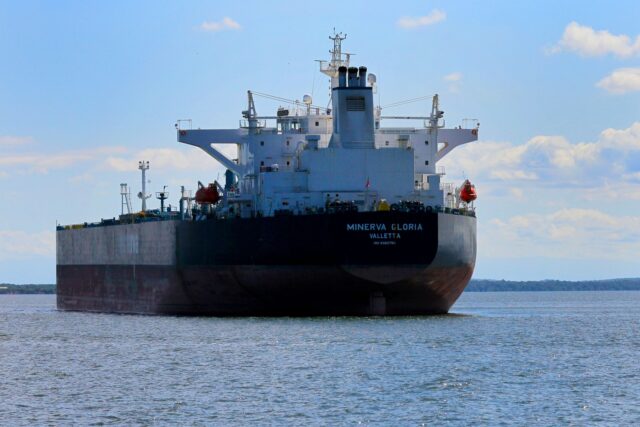
The quantity Trump announced—up to 50 million barrels—represents approximately 15 percent of Venezuela’s annual oil production and would require as many as 25 of the world’s largest oil tankers to transport.
U.S. forces have seized multiple sanctioned oil tankers in recent days, including two more vessels Wednesday—one flying a Russian flag seized in the Atlantic Ocean south of Iceland, and another apprehended in the Caribbean—as the Trump administration moves to control all exports of Venezuelan crude.
Global oil futures slipped 1.3 percent Wednesday, trading around $60 per barrel. Brent and WTI crude—the international and U.S. oil-price benchmarks—both dropped roughly 1 percent following Wright’s announcement. This suggests that oil traders are confident the Trump administration will succeed at increasing the amount of Venezuelan oil brought to global markets.
Trump has threatened Venezuela’s acting president, Delcy Rodríguez, to cooperate with U.S. demands. “If she doesn’t do what’s right, she is going to pay a very big price, probably bigger than Maduro,” Trump said Sunday.
Chevron is currently the only U.S. major operating in Venezuela under a special license from Washington. Exxon and ConocoPhillips previously operated in the country but left after Chávez nationalized their assets in the mid-2000s. Oil companies will likely want assurances of a stable Venezuelan government and confidence that Washington will support their presence beyond Trump’s term before committing to the massive long-term investments required to rebuild the country’s oil infrastructure.
COMMENTS
Please let us know if you're having issues with commenting.