
In an apparent bid to appease growing public anger over the migrant crisis, the left-wing Labour Party government announced a series of restrictions on Monday to make Britain a less attractive destination for illegals. However, Brexit boss Nigel Farage noted that key questions remain and warned that the policies may even result in more migrants simply being allowed in through new legal routes created by the plan.
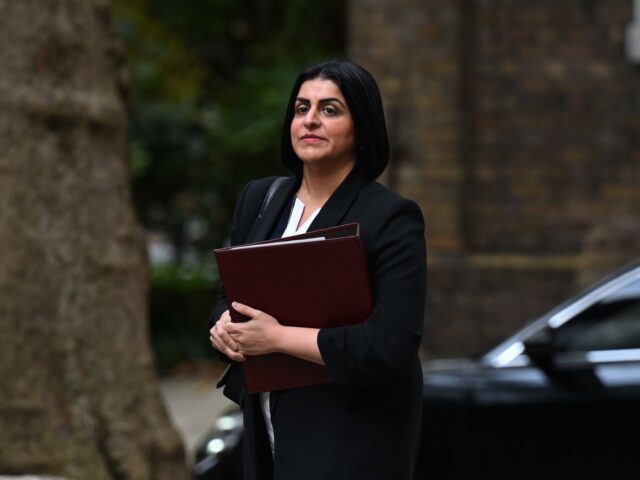
Home Secretary Shabana Mahmood admitted over the weekend that the current immigration system is “broken” and that it is “tearing Britain apart”. She further admitted that it is not “right-wing talking points or fake news or misinformation” to note that the system is failing the country.
Mahmood, whose parents immigrated to Britain from Pakistan, laid out the migration plan on Monday to deal with the crisis, sparking indignation from leftist Labour MPs, who accused the government of being “cruel” towards prospective illegals, while winning the qualified backing of the opposition Tory party, which was kicked out of power last year in large part over its own failures to manage Britain’s borders.
At the heart of the plan will be alterations to the asylum procedures, including increasing the time needed to obtain permanent residency for supposed asylum seekers from five years to 20 years, and along with it access to welfare benefits, while reducing initial protection status from five years to 30 months, which will only be renewable if protection is determined to be still necessary.
While in the country, alleged asylum seekers will no longer be guaranteed free room and board on the taxpayer’s dime; however, this will not extend to those already in Britain. This, the government hopes, will reduce the incentive for illegals to cross the English Channel in small boats from France.
The plan also calls for family reunification, also known as chain migration, to be rolled back, and conversely, entire family units will be allowed to be deported.
Meanwhile the government said it will seek to punish countries that refuse to accept the return of their nationals, and will seek international cooperation to reform the European Convention on Human Rights (ECHR), which activist attorneys have long used to stymie the deportation of illegals, foreign criminals, and even terrorists.
Commenting on the proposed measures, Home Secretary Mahmood said that “there is nothing compassionate about allowing the vile trade in people-smuggling that perpetuates illegal migration to persist.”
“This then leads to a conclusion that must be confronted. That the UK’s current asylum regime is a significant pull factor to that trade, more permissive than the European mainstream. Which then also creates a strong and perverse incentive for migrants who have arrived legally to switch into the asylum system once here,” she said.
The proposals were strongly rebuked by progressive open borders advocates within the Labour Party, with upwards of 17 MPs immediately coming out against the plans.
Socialist MP for Nottingham East, Nadia Whittome, said on the floor of the House of Commons on Monday that it is ” shameful that a Labour government is ripping up the rights and protections of people who have endured unimaginable trauma.”
“How can we be adopting such obviously cruel policies? Is the home secretary proud that the government has sunk such that it is now being praised by Tommy Robinson?”
The planned legislation garnered praise from the online political right in Britain, and the Conservative Party — infamous for overseeing record levels of both legal and illegal immigration during the previous government — announced its support for the bill.
However, Reform UK leader Nigel Farage, whose party has surged to the top of the polls in large part due to its hardline stance on immigration, expressed scepticism that Labour’s plans would solve the issue. “Whilst the strong language from Shabana Mahmood is encouraging, even an audition to join Reform, I have serious doubts,” Farage said Monday evening.
The Brexit leader raised questioned if any of the measures laid out by the government would actually be able to be implemented in the first place, given the devotion to open borders by the backbenches of the Labour Party, and if passed, whether they could practically be carried out, with the European Convention on Human Rights remaining in place. Mr Farage and his Reform party have been leading the call for Britain to leave the ECHR to regain sovereignty over its borders fully and to remove the influence of foreign judges over UK immigration policy.
Perhaps even more concerningly, the Reform chief also warned that Mahmood’s commitment to open up new “safe and legal routes for genuine refugees” to come into the country. “Will the new legal routes lead to even higher numbers?” Farage questioned.
Indeed, while much of the focus of the debate has been on illegal immigration and the Channel crisis, the far more transformative and impactful influx of foreigners has been through years of legal migration, particularly in the wake of post-Brexit liberal reforms by former Prime Minister Boris Johnson, who recently admitted to opening the floodgates to mass migration as a form of human quantitative easing and to bring down inflation. This has led to gross migration hitting over a million people per year, compared to the tens of thousands who cross the English Channel. It has also been the case that the British public has been promised for well over a decade by various governments that immigration would be cut, only to see numbers continue to rise.
In contrast to both Westminster establishment parties, Farage’s Reform party has called for net zero migration into the country and scrapping permanent residency for migrants in a bid to reduce the fiscal and economic strains immigration has put on the British public by draining state resources, lowering wages, and increasing the cost of housing.
Scepticism about Labour’s plans was also shared by former director-general of Britain’s Border Force, Tony Smith, who told Times Radio: “The Tories tried quite hard with the Illegal Migration Act, the Safety of Rwanda Act, but we saw what happened. It took two or three years of challenges in the courts and the Lords, and they never got it off the ground. And, you know, the same may well apply to this.
“I think there will be political opposition to this. There’ll certainly be opposition from community groups who think this is too harsh. Some on the left of the Labour Party won’t like it. And then ultimately, I think it’s inevitable there will be challenges in the courts, which may slow this one up as well. So I’m afraid I can’t be particularly optimistic it’s going to solve the problem.”
COMMENTS
Please let us know if you're having issues with commenting.