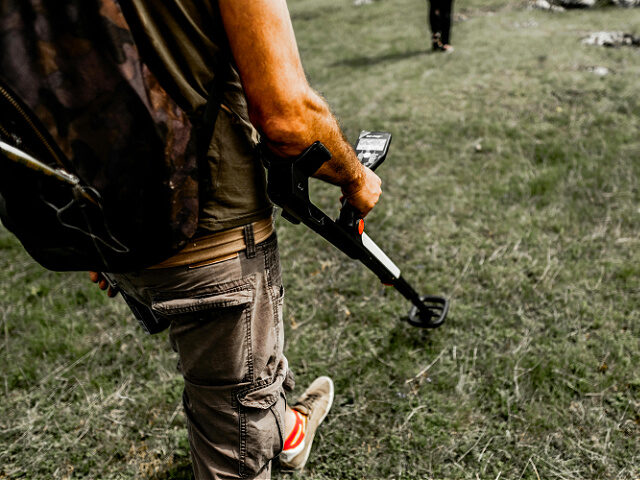

A metal detectorist discovered a beautiful religious artifact dating back to 1100 A.D. while walking in a field in Andalsnes, Norway.
While Kim Erik Dybvik and Warren Schmidt were searching for treasures on November 1, Dybvik found a figurine of Jesus Christ moments after his device alerted to something under his feet, Fox News reported Monday.
Dybvik recalled, “Warren was almost at the car, and I was a bit behind, when I suddenly got a strong signal from my detector. A strong signal usually indicates a large object and is often not a good sign — it can easily be trash.”
To his surprise, it was the figure of Jesus with his arms outstretched. The artifact is made of bronze and covered in gold, according to All Things Interesting.
Social media posts show the figurine:
Experts believe it belonged to a “stave” church that was near the site. Those buildings were made of wood in medieval Norway.
Video footage shows an example of a stave church in Bergen:
When he found the Jesus figure, Dybvik was overcome with emotion. Recalling the moment, he said, “I bent down, and right beneath the surface, he revealed himself to me — I looked Jesus straight in the eyes.”
He quickly alerted experts because the rule is that artifacts from before 1537 have to be reported.
Field archaeologist Aaron Johnston examined the piece, and it has since been placed under the care of a county archaeologist. Per the Interesting article, experts believe it dates back to the High Middle Ages.
According to an article published on ThoughtCo.com, “The High Middle Ages saw such significant events as Norman conquests in Britain and Sicily, the earlier Crusades, the Investiture Controversy, and the signing of the Magna Carta. By the end of the 11th century, nearly every corner of Europe had become Christianized (with the notable exception of much of Spain), and the Papacy, long established as a political force, was in constant struggle with some secular governments and alliance with others.”
COMMENTS
Please let us know if you're having issues with commenting.