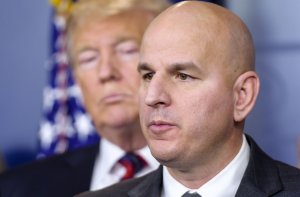

Oct. 8 (UPI) — A new diplomatic controversy erupted in Chile after U.S. Ambassador Brandon Judd suggested that American cooperation in protecting Chile’s rights over the Strait of Magellan depended on closer collaboration with Washington, prompting criticism across the political spectrum and leading the diplomat to clarify his remarks hours later.
The controversy began Wednesday when Judd spoke at Global Trade Day, an event organized by shipping company Compañía Sud Americana de Vapores (CSAV), where he discussed bilateral relations and Washington’s strategic interests.
“If you want the resources we have to fight organized crime, if you want a country that will help you protect your rights over the Strait of Magellan, if you want all those things, then you’re going to have to work with us on the things that are important to us as well,” he said.
His remarks drew criticism from President José Antonio Kast’s administration and lawmakers across the political spectrum, who rejected the suggestion that bilateral cooperation could be tied to Chile’s exercise of national sovereignty.
Foreign Minister Francisco Pérez Mackenna responded that Chile does not need foreign assistance to defend its territory.
“The Strait of Magellan was, is and always will be Chilean,” he emphasized.
“We can defend our sovereignty ourselves. We don’t need anyone’s support. That’s how we’ve been doing it for 200 years,” he added.
Pérez Mackenna said the government would assess whether to lodge a formal diplomatic protest over the U.S. ambassador’s remarks.
The criticism also extended to Congress. Senate President Paulina Núñez and Vice President Iván Moreira reaffirmed in a joint statement that Chilean sovereignty does not depend on support from other countries.
“Our country’s sovereignty is not up for discussion, nor does it depend on the backing, support or recognition of any foreign nation,” they said.
Independent Sen. Karim Bianchi, who represents the southern Magallanes region, also criticized the diplomat’s remarks.
“The United States can be a partner, we can have the best of relations, but it is not our guardian,” he said.
In response to the criticism, Judd issued a statement Wednesday night denying that he had made Chilean sovereignty conditional on cooperation with Washington.
“I enjoy a good TV series as much as anyone, but this drama is being misrepresented. My words were clearly taken out of context, and at no point did I make Chile’s sovereignty conditional,” he said, according to a statement reported by Chilean news outlet Radio Bío Bío.
The ambassador also said his remarks at the CSAV event were intended to reaffirm bilateral ties and opportunities for cooperation between the two countries on security and economic development.
Defense Minister Fernando Barros had previously urged consideration of the context of Judd’s remarks, noting that the ambassador had acknowledged Chilean sovereignty over the strait and highlighted bilateral cooperation on trade, technology and security.
The controversy comes amid diplomatic tensions between Chile and Argentina over statements by Argentine military officials concerning the Strait of Magellan, a strategic waterway connecting the Atlantic and Pacific oceans at the southern tip of South America.
In September, Kast and Argentine President Javier Milei reaffirmed in a joint statement that existing treaties recognize Chilean sovereignty over the strait.
The dispute over the Strait of Magellan adds to a series of controversies involving Judd and Chilean authorities since he arrived in the country in November 2025.
One of the first incidents occurred when the diplomat publicly criticized remarks by then-President Gabriel Boric about U.S. President Donald Trump. Chile’s Foreign Ministry subsequently lodged a formal diplomatic protest, describing Judd’s comments as interference in domestic affairs.
In February, Judd again sparked tensions when he supported Washington’s decision to revoke the visas of three Chilean officials over a proposed submarine cable project with China, a move Boric’s administration described as a violation of Chilean sovereignty.
More recently, in September, the Foreign Ministry summoned the ambassador after he claimed intelligence information linked left-wing organizations to violence during Chile’s widespread social protests in 2019.
Judd later acknowledged that the United States had not conducted its own investigation into those events and that his claims were based on news reports.
COMMENTS
Please let us know if you're having issues with commenting.