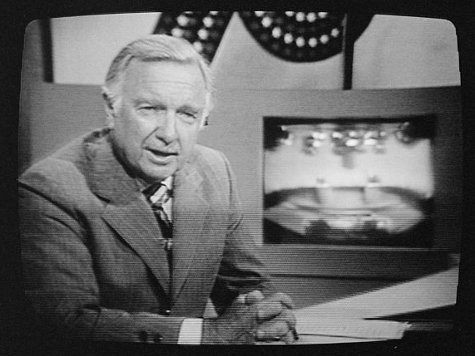


A thorough new biography of Walter Cronkite by Douglas Brinkleyreveals that he was not the unbiased journalist his supporters havealways claimed him to be. In fact, he was a liberal who used his positionas America’s top anchor to promote the left and damage the right. And that’s the way it is.
All of this apparently comes as a surprise to Howard Kurtz,who grew up idolizing Cronkite and can’t quite shake off the worship ofhis false idol, even when confronted with the facts. Still, there is aninteresting admission early on in Kurtz’s piece about how the medialandscape has changed:
Had Cronkite engaged in some of the same questionable conduct today–hesecretly bugged a committee room at the 1952 GOP convention–he wouldhave been bashed by the blogs, pilloried by the pundits, and quitepossibly ousted by his employer. That he endured and prospered,essentially unscathed, until his death in 2009 reminded me of howimpervious the monopoly media were in those days, largely shielded fromthe scrutiny they inflicted on everyone else.
Indeed, he would have been. Kurtz might have spent more timediscussing the new media landscape and how it benefits the country byallowing alternative points of view to penetrate the public’s awareness.Instead, he mostly cops out.
Cronkite’s idea of ethical behavior seems to have been pretty broad.Kurtz opens his account of the new book with the fact that Cronkite had asecret deal with Pan Am, which flew his family around the world tovacation spots like the South Pacific for free. The President of the CBSNews Division knew about the arrangement but did nothing about it.
Cronkite’s behavior wasn’t just personally unethical; it was alsoprofessionally unethical. It was Cronkite who persuaded RobertKennedy–during a private meeting in his office–to run for President in1968. Cronkite wanted someone to run to the left of LBJ in oppositionto the Vietnam War. Cronkite then interviewed Kennedy about thepossibility of running just three days before he announced his candidacy. No doubt Kennedy believed having the support of America’s most trusted anchor would be an asset to his campaign. Indeed, it might have been if Kennedy hadn’t been killed in June of 1968 by Sirhan Sirhan.
Despite overwhelming evidence that Cronkite never deserved thereputation he was given,Kurtz suggests that perhaps we shouldn’t judge a 1960s icon by modernstandards. But the basic ideas of journalistic ethics, i.e. remainneutral when covering partisan politics, haven’t changed in 50 years.What Cronkite did was just as unethical then as it would be now. Thedifference is that now a wider swath of the American public would knowabout it. Liberal journalists who attempt to hide their personal biasbehind a claim of professional ethics can’t get away with it as easilyas they used to. But that doesn’t excuse Cronkite’s unethical, biasedbehavior simply because he could get away with it.
COMMENTS
Please let us know if you're having issues with commenting.