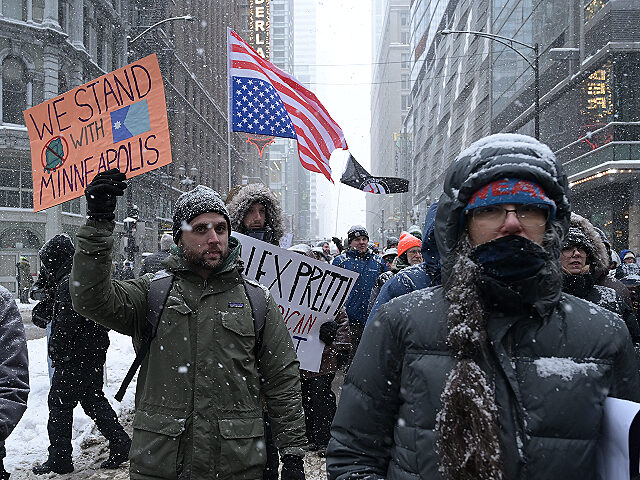

The CBP Use of Force policy relies heavily on constitutional law, as interpreted by federal courts, that apply a standard that requires any use of force to be “objectively reasonable” at the time force is applied. That measure is determined by examining what the agent knew or perceived when he pulled the trigger, not by public opinion influenced by politicians, or by an arduous review of enhanced video or a frame-by-frame analysis hours or days later.
Separate from any criminal investigations by the FBI, which has primary jurisdiction to investigate shooting incidents involving federal agents, the actions of Border Patrol agents who use force while performing their duties are measured administratively against the strict standards contained in the current CBP Use of Force (UOF) policy. Border Patrol agents receive months of use-of-force policy training, both at the U.S. Border Patrol Academy at the start of their careers and on a recurring basis throughout each year of employment.
According to the policy, anytime an agent has a reasonable belief a person “poses an imminent danger of death or serious physical injury to the agent or another person”, the primary hurdle to using deadly force is cleared and the action is authorized. The limited facts available at the time of Saturday’s shooting of 37-year-old Alex Pretti by a Border Patrol agent that thus far have not been disputed indicate Pretti was armed during the struggle that led up to the shooting.
Video evidence indicates that at least one or more agents involved in the struggle could be heard shouting, “gun!” several times in the seconds before the first shot rang out. Whether the agent observed the weapon or not, a 1989 Supreme Court case, Graham v. Connor, supports the principle that information from other officers may be used to meet the reasonableness standard.
According to the Border Patrol, the agent involved in Saturday’s shooting is an eight-year veteran and a firearms training instructor. Border Patrol firearms training instructors are responsible for training agents not only to shoot accurately, but also to know when to shoot. That level of experience and knowledge of existing law and policy strongly suggests that the agent understood the threat posed by Pretti and the policy provisions governing the reasonableness of his response.
There are some angles of a widely circulating video that show an agent, perhaps carrying the firearm carried by Pretti, moving away from the group of agents engaged in the continuing struggle seconds before shots rang out. Other accounts on social media show enhanced video stills that show the slide in the rear position as the unidentified agent carries what could be Pretti’s concealed weapon seconds before as well. The posts imply the weapon may have been accidentally fired, potentially leading other agents to believe Pretti may have fired the weapon.
If any of these accounts are proven correct, they may impact the overall outcome of a criminal investigation, but the agent who fired his weapon, believing Pretti possessed a weapon he intended to use against the agents, is still measured against what the agent reasonably believed to be true at the split second he fired his weapon at Pretti. The CBP UOF policy supports this standard and reads, “Reasonableness will be judged from the perspective of a reasonable officer/agent on the scene rather than with the 20/20 vision of hindsight.”
The policy describes the tense situations that face officers and agents, saying, “the calculus of reasonableness embodies an allowance for the fact that law enforcement officers/agents are often forced to make split-second decisions – in circumstances that are tense, uncertain, and rapidly evolving – about the amount of force that is necessary in a particular situation.”
Available videos circulating on social media show the chaos imposed on the agents by a crowd of agitators who use loud whistles not to protest but to impede. The deafening whistles, blown at point-blank range at the agent’s height, heighten the tension the agents normally face when conducting an enforcement operation against a suspect that may be armed and pose a danger to them.
When applied to Saturday’s shooting of Pretti in Minneapolis, the tension can be felt as the agents sought to take the agitator into custody. The fact that Pretti may not have disclosed to the agents that he was carrying a firearm and his reluctance to submit to an arrest raised that tension. Another contributing factor to the tension is the absence of city or state law enforcement officials during the immigration operations. Such presence could have prevented the agitators from interfering with the lawful role of Border Patrol agents in enforcing immigration laws.
In the void of that presence, videos of the shooting appear to show Pretti, who we now know was armed, was almost assuming the role of a law enforcement officer as he attempted to direct traffic while filming several other agitators as they closed in on the group of Border Patrol agents to prevent them from performing their duties.
Insofar as any criminal prosecution of the agent, the standard set by the Department of Justice (DOJ) under the Biden administration for the prosecution of a federal agent involved in a shooting incident has been made clear. In April 2021, the DOJ closed the investigation into the shooting death of an unarmed Ashli Babbitt based on the lack of evidence to support a prosecution of Lt. Michael Byrd of the Capitol Police for his role in the shooting of Babbitt on January 6.
The letter in part states, “Specifically, the investigation revealed no evidence to establish that, at the time the officer fired a single shot at Ms. Babbitt, the officer did not reasonably believe that it was necessary to do so in self-defense or in defense of the Members of Congress and others evacuating the House Chamber. Acknowledging the tragic loss of life and offering condolences to Ms. Babbitt’s family, the U.S. Attorney’s Office and U.S. Department of Justice have therefore closed the investigation into this matter.”
Applying the same standard to Saturday’s shooting, it is unlikely the Department of Justice will be able to gather any evidence showing the agent, in the few seconds before firing his weapon, did not reasonably believe his life was in danger. The DOJ will likely consider the consequences of the agent hesitating to act as measured against situations like that which occurred in November, when two members of the National Guard were shot near the White House.
In that incident, 20-year-old Sarah Beckstrom of West Virginia was shot and killed within 24 hours of swearing in to protect the District of Columbia by Rahmanullah Lakanwal, an Afghan national. Lakanwal was shot during the attack that killed Beckstrom and severely injured Staff Sgt. Andrew Wolf, 24, also of West Virginia.
The speed at which Lakanwal attacked Beckstrom proved too quick for the soldiers to avoid being shot by the Afghan national as he screamed “Allahu Akbar!” In the case of Saturday’s shooting in Minneapolis, any hesitation on the part of the Border Patrol who fired at Pretti could have proved fatal to himself or others if he believed Pretti was attempting to engage the agents with a firearm during a close-quarter struggle.
Randy Clark is a 32-year veteran of the United States Border Patrol. Before his retirement, he served as the Division Chief for Law Enforcement Operations, directing operations for nine Border Patrol Stations within the Del Rio, Texas, Sector. Follow him on X @RandyClarkBBTX.
COMMENTS
Please let us know if you're having issues with commenting.